
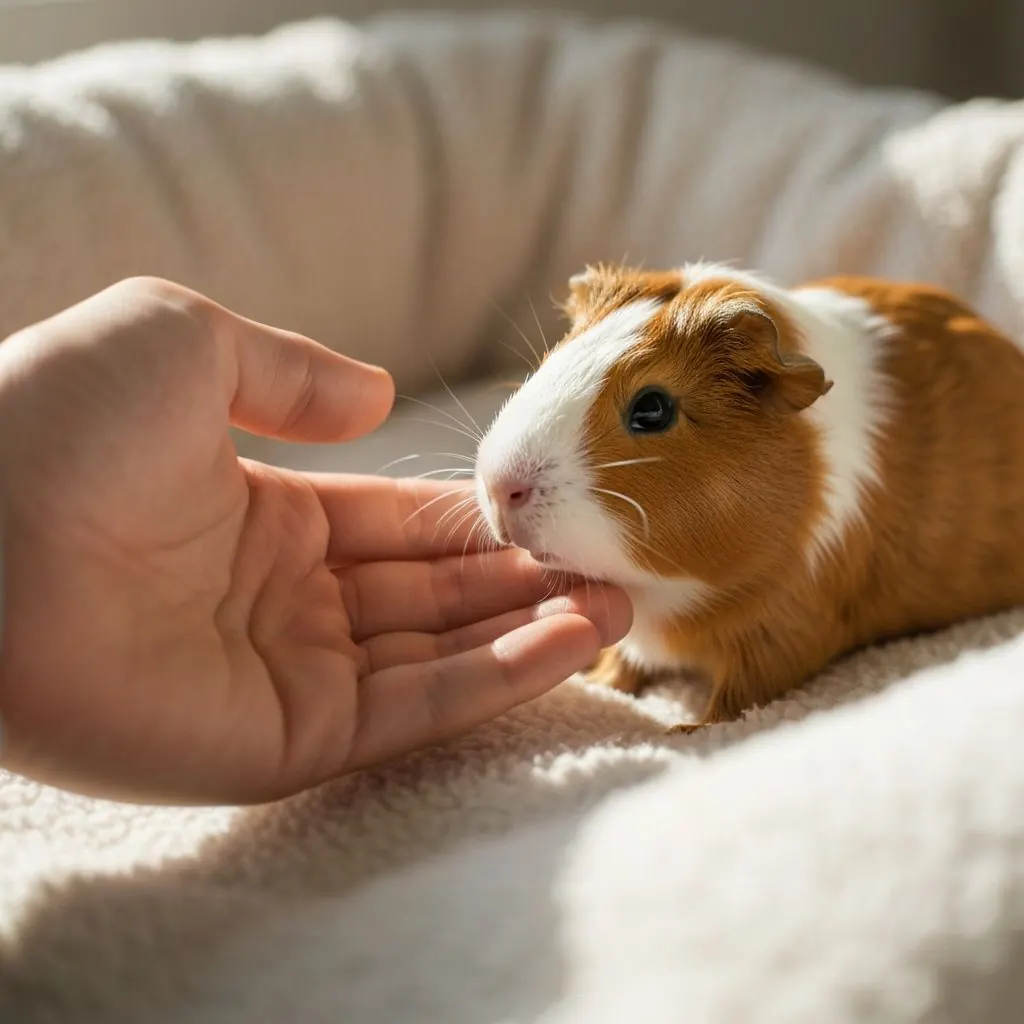
Why Guinea Pigs Bite: Fear, Pain, Hormones and How to Build Trust
Guinea pigs do not nip out of spite. A guinea pig who nips you is reacting to something: fright, discomfort, a hand that smells like dinner, or a social signal that got misread. Find the cause and you can usually fix it. Most cavies that nip regularly can be worked with, provided the underlying reason is identified and addressed.
It helps to remember what kind of animal you are holding. Cavies are prey animals, and in the wild they survive by hiding, freezing and running. Snapping at a much larger creature is a last resort, reached only when the other options have failed or been taken away. That makes every nip useful information about what your guinea pig was feeling a second earlier.
It also helps to tell a nip from a serious chomp. A nip is a quick pinch, often without breaking the skin, that means “stop” or “put me down”. A hard, clamped grip that draws blood is far rarer, and usually means panic or real discomfort. The two have different causes and need different responses.
Common causes
Fright and a lack of confidence
This is the most common reason. A guinea pig who is new, who has been handled roughly in the past, who is lifted without warning, or who is simply not yet comfortable with the person scooping them up, may nip when they feel they cannot escape. It is panic rather than aggression in any conventional sense.
Usually they have tried several other strategies first, such as freezing, squeaking and struggling, and found that none of them worked. Rescue animals with a rough history can take longer to come round, and that is fine. Confidence builds through repetition: the same calm voice, the same time of day, the same gentle scoop, until being picked up stops being an emergency and becomes merely tolerable, then eventually unremarkable. Sitting beside the enclosure and talking while they eat is a surprisingly effective first step, because it teaches your pet that you arriving means nothing bad happens. The advice for settling new guinea pigs includes how to build familiarity before handling becomes part of the routine.
Illness or a sore spot
An otherwise gentle guinea pig who starts snapping during handling, particularly when you touch one area, deserves a closer look for injury or illness. A skin condition, an abscess, sore joints, mites or an internal problem can all make a hand on the wrong spot genuinely unpleasant, and a nip is the only way they have to tell you.
If your guinea pig has started biting out of the blue after months of calm, treat it as a possible symptom first. Check for other changes in appetite, droppings, weight or coat, and contact an exotics vet before treating it as a handling problem. Pet insurance or a savings pot makes that call easier to make early. The health guide covers the warning signs that accompany illness-related behaviour changes.
Hunger mistaken for a hand
This is particularly common with new owners. Guinea pigs associate people with food delivery; the wheeking chorus when the fridge opens is the same association at work. Fingers that smell of fruit, veg or anything interesting will be investigated with the mouth.
These are gentle exploratory nibbles, but they can surprise people. Washing your hands before handling reduces them a great deal. Offer treats from a flat palm or a bowl, so a fingertip never looks like the next course. If you have just been chopping cucumber, rinse before reaching in.
Hormonal behaviour
Intact boars going through phases of hormonal assertiveness, and sows who are in season, can become less tolerant of handling. This kind of snap tends to be pushier than the frightened kind and may come with chattering or rumblestrutting, the slow, swaying walk with a low purr. It is usually temporary and does not mean the relationship is broken.
Overstimulation and needing a wee
Some guinea pigs have a limit for being touched or held. Once that limit is crossed, they say so, first by fidgeting and squeaking and eventually with a nip. Learning to read the earlier signals (see below) means the limit is never reached.
A guinea pig who has been sitting contentedly on your lap and then starts wriggling, nibbling at your clothes or nipping your arm often just needs to pee. Put them back in their enclosure for a few minutes and you will usually find out why.
Environmental changes and stress
A move to a new home, a cage moved to a different room, building work, fireworks, a new dog or cat in the house: any big change can leave a guinea pig jumpy for a while. A nervous animal is quicker to snap, so expect a dip in tolerance after an upheaval and go back to short, gentle sessions. Extra hides, a covered corner and a quiet household for a few days all help them feel safe again. Snappiness due to stress usually fades as they settle and the routine becomes predictable again.
Boredom and cramped housing
A guinea pig in a small cage with not enough room to run, few hides and nothing to do is more likely to be grumpy with everyone, including you. A single guinea pig without a companion of their own kind is at a further disadvantage, because so much of their social life is missing.
The fix is the welfare basics: more floor space, a cage or pen with several hides, plenty of hay to forage in, things to chew, and safe toys or tunnels to explore. Bored, frustrated animals often calm down noticeably once their surroundings give them something better to do. Scatter-feeding greens, stuffing hay into a cardboard tube and rearranging a hide or two each week all cost almost nothing and keep a busy mind occupied.
Squabbles with a cage mate
Some nips are aimed at companions. Guinea pigs sort out their hierarchy with rumbling, chasing, mounting and the occasional nip, and a quick nip at a companion who pushes in at the food bowl can be a sign of dominance that keeps the peace. Is it fighting or playing? Raised hackles, chattering, squaring up nose to nose and lunging are warning signs of a real pig fight.
If you see injuries, drawn blood, or one animal being prevented from eating, drinking or resting, separate them carefully with a towel or gloves, never bare fingers between two angry cavies. Check the setup first: a crowded group with one food bowl and one hide often settle once there are duplicates of everything. If not, the pair may need a careful re-introduction, and some boar pairs simply cannot live together.
Body language that predicts a nip
Guinea pigs nearly always give warnings first. The problem is that the warnings are easy to miss if you are not looking for them. Knowing the full picture is what the warning sounds and body language article covers in detail. Key early signals include:
- Chattering (a rapid click-clack sound): a direct warning, so stop what you are doing
- Freezing completely still under your touch, which signals tension
- Head turning toward your hand without moving away
- Increasingly rapid breathing
- Twitching skin or a rippling coat
- A low rumble or deep vocalisations
| Signal | What it means | Response |
|---|---|---|
| Chattering | Direct warning: back off now | Stop immediately and give space |
| Freezing stiff | Tension or alarm | Stop handling and let them settle |
| Rumble vocalisations | Annoyance or asserting status | Reduce stimulation or end the session |
| Twisting or struggling | Wants to leave; feels unsafe | Support them properly and put down calmly |
| Nudging your hand away with the nose | Gentle first request to stop touching | Respect it and pause |
How to handle safely and build confidence
Consistent, predictable, gentle handling builds a bond over time. A few practical tips:
- Approach from the front so your guinea pig can see you coming, and talk softly as you do.
- Let them sniff your fingers before you try to pick them up.
- Scoop with one hand under the chest and the other supporting the bottom, then hold them close to your body. A guinea pig who feels unsupported feels unsafe.
- Sit down low, so a sudden wriggle does not become a fall.
- Keep sessions short with new or nervous animals, and end them before your guinea pig asks you to.
- Pair handling with something good, such as a favourite leaf of romaine, so being lifted predicts something pleasant.
Floor time in a safe, enclosed space is often less stressful for nervous cavies than being lifted, and lets them approach on their own terms. Lie on the floor, scatter some greens nearby and let curiosity do the work. More on building this kind of routine is covered in the handling and routine care guide.
Progress is rarely a straight line. Expect a good week followed by a jumpy one, especially after a vet visit or a change at home. Keep notes if it helps you determine what sets your piggy off, and go back a step whenever they seem unsure.
Mistakes that make it worse
Pulling your hand away sharply startles the guinea pig further. Reacting loudly, or in a way that frightens them, teaches them that a nip produces an alarming response, which sets back the relationship. Forcing handling on a guinea pig who is clearly distressed makes future nips more likely.
Persisting through clear warning signals overrides the animal's ability to communicate at all, and removes their last option before using their teeth. Never tap them on the nose, blow in their face or shout. Punishment only teaches them to be wary of you.
In the moment, stay as still as you can, then lower them calmly to a safe surface. If a nip breaks the skin, wash it with soap and water and keep an eye on it, and seek medical advice if it becomes red, swollen or increasingly sore. Then think back over the last minute: what changed just before? Where were your fingers, how long had they been out, was anyone else in the room, had they eaten recently? That detail is usually the answer, and once you know it, you can usually avoid it next time.
More for new owners: best guinea pig breeds for beginners, bringing new guinea pigs home, guinea pig sounds and body language and how to bond guinea pigs.
Frequently asked questions
- My guinea pig has never bitten before and suddenly bit hard. What should I do?
- A sudden change in bite behaviour, particularly if it came when you touched a specific part of the body, warrants a vet check before anything else. Pain or illness is a common cause of sudden biting in otherwise gentle guinea pigs.
- Is it safe for children to handle guinea pigs that bite?
- Supervised, calm floor-based interaction is generally safer than unsupervised handling for children working with nervous guinea pigs. Teach children to read body language and to let the guinea pig approach them rather than always going to the pig. Forced handling by children is a common trigger for biting.
- How long does it take to build trust with a new guinea pig?
- It varies considerably. Some guinea pigs settle within a couple of weeks; others take several months of patient, consistent interaction. There is no shortcut that does not involve some amount of backsliding. Slow progress is real progress.
- My boar bites other guinea pigs, not me. Is this a separate issue?
- Inter-pig biting is usually about social hierarchy and is distinct from human-directed biting. Some of this is normal; persistent, aggressive biting that causes injuries needs the group dynamic reviewed. Boar group introductions need to be done carefully.