
Best Guinea Pigs: Breeds, Coats and Who Each One Suits
Quick answer
Key facts
The right guinea pig depends on who is asking. Smooth-coated American guinea pigs are the most popular breed and the easiest to keep, which makes them the classic beginner choice. Peruvians and other longhaired guinea pigs need grooming every day, and skinny pigs need specialist warmth. Whichever you choose, get two.
- American (English) guinea pigs have the lightest upkeep of any breed.
- Abyssinian rosettes need a quick brush a couple of times a week.
- Skinny pigs have almost no fur, so they need warm indoor housing and extra food.
- Every breed needs the same basics: unlimited hay, fresh veg with vitamin C, space and a companion.
- Colours and markings are cosmetic and tell you nothing about personality.
For most homes, the best choice is a pair of short-coated guinea pigs such as the American (English), Abyssinian or Himalayan. Longhaired breeds need combing every day and hairless skinny pigs need specialist warmth, so both suit experienced keepers.
Start with two, whatever the breed
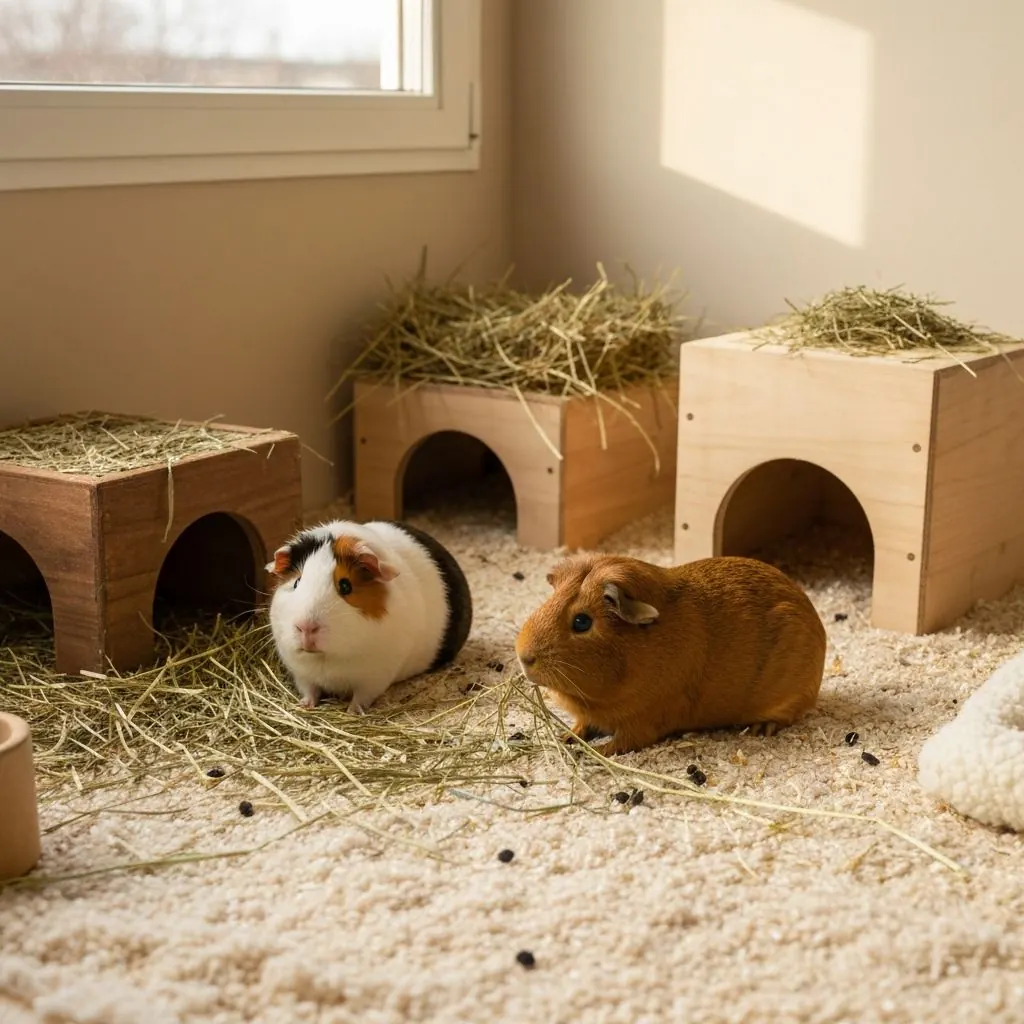
Whichever guinea pig you choose, choose two. Guinea pigs are herd animals, and company of their own kind is a welfare need. A single guinea pig, however doted on, has nobody to chatter at or flop next to at three in the afternoon.
If you are still planning, our first-time owners guide covers everything a new household needs before the animals arrive.
Guinea pig breeds differ mainly in fur and hardly at all in size or basic needs. The real question is how much brushing time you will honestly give, every week, for five to seven years.
Which guinea pig breeds make the best pets?
All guinea pigs are sociable, chatty pets, but easy fur leaves you free to concentrate on diet, space and company.
American guinea pig: the smooth-coated classic
The American guinea pig, called the English in the UK, is the most popular breed. Its short, smooth fur lies flat, so upkeep is a weekly once-over with a soft brush. No tangles, no trims, no drama, and about as easy as small pets get.
Abyssinian guinea pig: rosettes and opinions
Abyssinian guinea pigs grow swirled rosettes that give the permanent look of an animal just towel-dried and annoyed about it. The swirls trap hay, so brush them two or three times a week.
Himalayan: colour points on an easy coat
White and smooth, with dark points on the nose, ears and feet that develop with age and can deepen or fade with temperature. Care-wise, an American guinea pig in fancy dress.
Is there a friendliest guinea pig breed?
Not really. Temperament varies by individual, handling and history far more than by breed. The friendliest pig you will meet is usually one handled gently when young and living with a companion. Breed reputations, like the bold Abyssinian, are tendencies at best.
Textured breeds
Teddy
Dense, springy fur that stands up and bounces back under your hand. It holds on to hay, so brush it through regularly.
Rex
Coarse, curly and woolly. Rex and Teddy guinea pigs both look high-effort on a low-effort schedule. Our grooming guide covers the brushes and routine for every coat type.
Longhaired breeds: the commitment tier
This hair keeps growing until you intervene. Tangles form fast, and mats trap dirt and damp against the skin, which turns a cosmetic job into a health problem. None of these guinea pigs suits a young child as main carer, or anyone who might skip a day.
Peruvian
Peruvian guinea pigs grow long, flowing hair that parts along the back and falls over the face. Glamorous, and a grooming job every day plus regular trims.
Sheltie
Similar length to the Peruvian, but swept back from the face like a mane.
Texel
Long ringlets, and the most demanding of all: combing every day, trims, and curls that catch bedding.
Coronet, Alpaca and Merino
Less common longhaired breeds. The Coronet is a Sheltie with a crest on the head, and the other two carry curls through their length, one of them crested too. Budget the same time as for a Peruvian.
Skinny pigs and hairless guinea pigs
The skinny pig, bare apart from tufts on the nose and feet, and the fully hairless guinea pigs look like tiny hippos. No fur means no insulation, so they need a reliably warm indoor home, eat more to hold their body temperature, and their skin can suffer sunburn and scrapes. A specialist choice for well-researched owners.
Does breed affect health?
Mostly through the fur. Neglected long hair mats, pulls at the skin and hides early signs of trouble. Beyond that, every guinea pig shares the same vitamin C dependency, the same need for constant fibre and the same talent for hiding illness.
Breed comparison at a glance
| Breed | Coat | Upkeep | Suits |
|---|---|---|---|
| American (English) | Smooth, short | Light: weekly brush | Beginners, families |
| Abyssinian | Rosettes | Light to moderate | Beginners who want character |
| Teddy | Dense, springy, upright | Moderate | Something a bit different |
| Rex | Coarse, woolly | Moderate | As Teddy |
| Himalayan | Smooth, colour-pointed | Light | Beginners, families |
| Peruvian | Long, flowing | Heavy: every day | Experienced adults |
| Silkie (Sheltie) | Long, swept back | Heavy: every day | Experienced adults |
| Coronet | Long, crested | Heavy: every day | Experienced adults |
| Texel | Long ringlets | Heaviest of all | Dedicated, experienced owners |
| Skinny pig / Baldwin | Hairless | Skin checks, no brush | Specialist, indoor-only homes |
For fuller breed profiles, the Piglopaedia is our standing reference.
What every guinea pig needs
This is the part of guinea pig care that new pet owners most often underestimate:
- Unlimited hay. Constant fibre keeps teeth worn and guts moving, with fresh veg and a few pellets. The routine is in our feeding guide.
- Vitamin C every day. Guinea pigs cannot make their own. Our vitamin C guide explains which foods do the job.
- Space. More floor than pet shops suggest. See hutches and cages for realistic minimums.
- Enrichment. Hideys, tunnels and scattered forage.
- Health checks. A daily glance at appetite, droppings and behaviour catches problems early.
Choosing by age and sex
Boars, sows or a mixed pair
Two boars work well, especially litter brothers; their reputation for fighting mostly reflects poor introductions and cramped housing. Two sows are equally sound, and a neutered boar with sows gives mixed company with no litters. An unneutered mixed pair gives you reasons to regret it about ten weeks later.
Pups, adults and seniors
Pups are energetic chaos, but adult guinea pigs are often the smarter first choice because their personality is already visible. Senior pairs overlooked at a rescue repay a quiet home with settled company; give them easy ramps and soft bedding.
Rescue or shop?
Adopt first if you can. Rescues are full of pets from impulse purchases, the staff know each pig's temperament, and bonded pairs come pre-matched. A pet shop can tell you the price and, on a good day, the sex.
If a shop is your only option, check there is hay in with the animals and confirm the sexes yourself: mis-sexed “two sows” start a great many surprise litters. The price is a rounding error next to housing, food and vet bills.
Colours and markings
Self (one solid colour), agouti (each hair banded like wild colouring), Dutch (the panda-ish blaze and saddle) and roan (white hairs mixed through a base colour) are all lovely and all cosmetic, though every guinea pig's markings are unique. Pick the coat length for your lifestyle, the source for your conscience and the markings for fun.
More for new owners: bringing new guinea pigs home, why guinea pigs bite, guinea pig sounds and body language and how to bond guinea pigs.
Frequently asked questions
- What breed suits a beginner?
- The American (English) guinea pig, the most popular breed, needs only a light weekly brush. The Abyssinian is a close second if you can spare a little more time for its rosettes.
- Which guinea pigs suit a family with young kids?
- Short-coated breeds such as the American, Himalayan or Abyssinian, with an adult doing the actual care. Longhaired guinea pigs are a poor fit because they need combing every day.
- Is it okay to keep just one guinea pig?
- No. Guinea pigs are herd animals and make poor solo pets. Human attention, however generous, does not replace another guinea pig, so plan for a pair from the start.
- Are skinny pigs harder to look after?
- Yes. With no fur for insulation they need warm indoor housing, more food, and protection from sunburn and scrapes.
- Should I adopt or buy?
- Adopt if you can. Rescues know their guinea pigs’ personalities and often have bonded pairs, including settled seniors.