
Guinea Pig Vitamin C Explained: Daily Needs, Best Foods and Common Mistakes
Guinea pigs cannot produce vitamin C in their own bodies, a biological quirk they share with humans. Without a regular supply from what they eat, they develop scurvy, a serious, painful and progressive deficiency that affects joints, skin, healing and immunity. Thankfully, a menu built around leafy greens, peppers and a good pellet meets their needs without much fuss.
Why guinea pigs cannot make their own
Most mammals produce vitamin C (ascorbic acid) internally through a metabolic process. Guinea pigs, like humans, some primates and a few other species, lack a key enzyme in that pathway. Unlike a dog or a rat, your cavy has no internal factory to fall back on, and the body does not hold on to much of it either. Whatever ascorbic acid they get comes from the bowl.
This is not a minor footnote. It is one of the most important things to understand about cavy nutrition, and it is why any serious feeding guide puts vitamin C near the top of the conversation.
How much is enough?
The MSD Veterinary Manual puts an adult's need at roughly 10 to 25mg of vitamin C per kilogram of body weight each day, and 30mg per kilogram or more for pigs who are growing, pregnant, nursing or ill. It is a small amount, but it has to arrive every single day.
These numbers sound precise, but measuring to the milligram is neither practical nor necessary. What matters is having rich sources in the bowl every day so the supply is consistent rather than sporadic. In practice, a cavy with unlimited hay, a good handful of mixed leafy greens with a strip of pepper, and a measured portion from a recently opened bag of nuggets is in a strong position. The RSPCA also notes that cavies who are growing, pregnant, nursing or underweight may need a larger pellet portion, which is one more reason to check in with your vet when circumstances change.
The best sources: fresh produce first
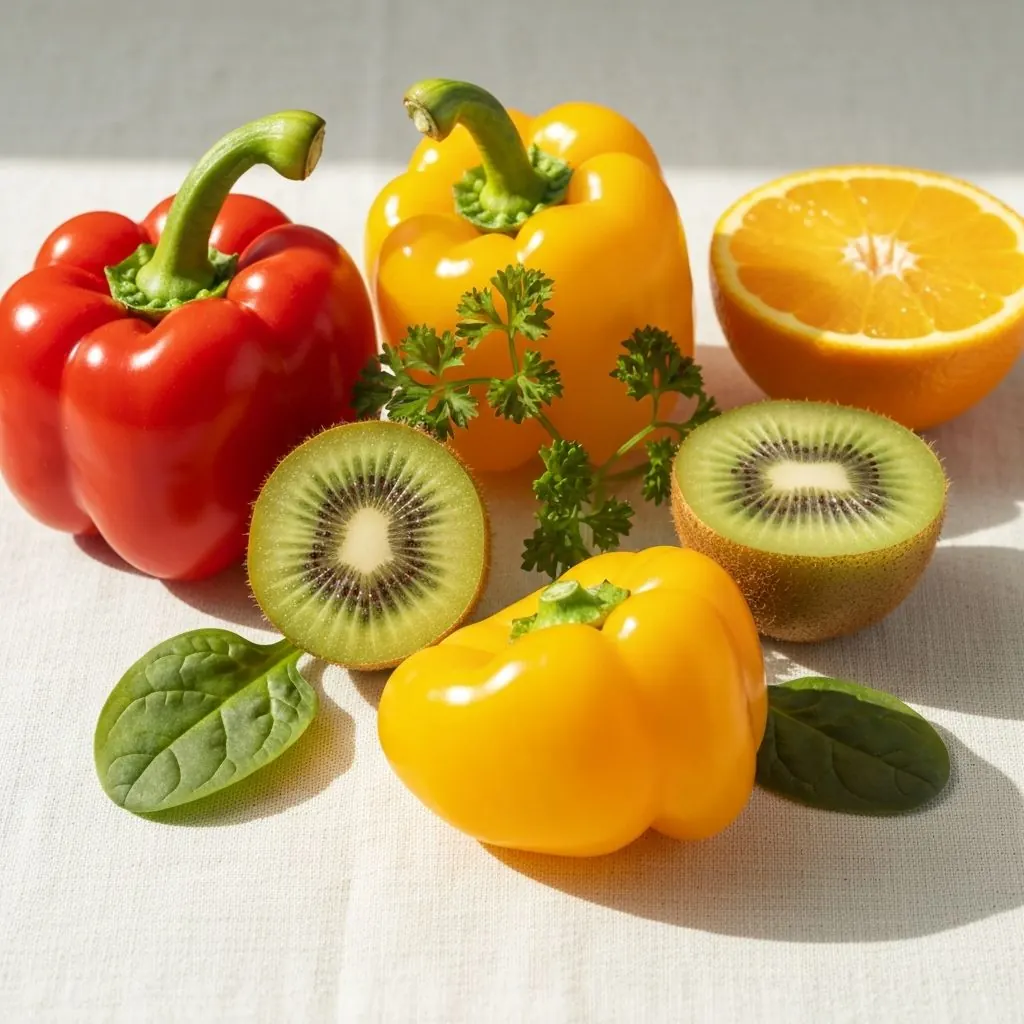
The RSPCA describes vegetables and herbs as excellent sources of vitamin C, and the table below shows why. Figures are approximate, per 100g of raw produce.
| Source | Approx. vitamin C per 100g | Notes |
|---|---|---|
| Red pepper | ~128mg | Excellent everyday choice; low sugar |
| Yellow pepper | ~183mg | One of the highest sources available |
| Green pepper | ~80mg | Good, though lower than red or yellow |
| Parsley | ~133mg | Very high; offer in moderate amounts |
| Kale (curly) | ~120mg | Rotate with other greens; higher in calcium |
| Broccoli | ~89mg | Occasional use; can cause gas in some pigs |
| Strawberry | ~59mg | Useful but higher sugar; treat quantities |
| Kiwi | ~93mg | Good source; acidic, so small portions |
| Romaine lettuce | ~24mg | Lower in it, but a great volume leaf |
Peppers
Red and yellow bell peppers stand out as the most practical everyday sources. They are low in sugar, widely available, inexpensive, and most cavies tuck in willingly. A strip of red pepper alongside leafy greens each day takes care of requirements for most healthy adults without any need for extra products. Green peppers still provide a decent amount, just not at the same high level.
Leafy greens, herbs and fruit
Parsley is one of the best herb sources, and kale and broccoli contribute plenty. The RSPCA puts kale, spinach and broccoli in its “as a treat” group, though, because their sugar or calcium content can cause health issues when overdone. Rotate them so no single one dominates. Romaine is lower in ascorbic acid but makes a good, filling base for the bowl.
Strawberry and kiwi contain a useful amount, but the sugar (and in kiwi's case, the acidity) keeps fruit in the occasional-treat category. A thumbnail-sized piece now and then is plenty.
Is a fortified pellet enough?
A good-quality brand does contribute, with a significant caveat: vitamin C is unstable. The RSPCA notes that it is destroyed over time, and more quickly with exposure to the air, so pellets should be used by their best-before date. Woodgreen goes further: once a bag is opened, the vitamin C content will halve within three months.
Nuggets kept in a cool, dark place and used within six weeks of opening hold on to more of it than a bag left open on a shelf for months. That is a reason to treat the pellet as a useful top-up and make leafy greens the foundation. Buy smaller bags unless you have a large herd, and keep them sealed between servings. Writing the opening date on the bag helps: if it is creeping past the six-week mark, use it up quickly or replace it.
Supplements: when they might help
For most cavies on hay, greens and decent nuggets, extra products are unnecessary. Woodgreen's view is that a good-quality natural diet removes the need for them altogether. The exception is a pig who is recovering from illness, is pregnant or nursing, is elderly, or is going through a spell of eating less for any reason.
If you do need to add some, skip drops mixed into the drinking bottle. Ascorbic acid breaks down quickly once dissolved and the dose becomes unreliable within hours. Powders or liquid given directly onto a piece of veg are more reliable. If you suspect a deficiency, speak to an exotics vet first, because the symptoms overlap with other conditions that need a proper diagnosis. Any product should be a short-term measure agreed with your vet, with a better menu as the long-term answer.
Signs of vitamin C deficiency
Scurvy develops gradually, and the early signs are easy to miss: slight weight loss, less enthusiasm at mealtimes, and a cavy that seems to move a little less freely than usual. As it progresses, more obvious signs appear: joint swelling and pain (particularly in the back legs and hips), a rough or dull coat, slow healing of minor wounds, bleeding from the gums or around the teeth, and increasing lethargy. Guinea pigs are prey animals and tend to hide discomfort, so a pig that is quieter than usual deserves a closer look.
A guinea pig showing pain when moving, or reluctant to bear weight on their hind legs, needs a vet visit as well as a change of menu. Deficiency is treatable, but the health guide explains why these symptoms need professional assessment: some look similar to other conditions that need different treatment entirely.
If you have noticed coat changes alongside other symptoms, our article on hair loss and deficiency signs covers the overlap.
Common mistakes to avoid
- Relying on an old bag of nuggets. Once opened, the content falls steadily, so a bag that has been open for months gives far less than the label suggests.
- Dosing the drinking bottle. The vitamin breaks down quickly once dissolved, so the amount your pig actually gets is guesswork.
- Buying rabbit nuggets. Rabbit products lack the added vitamin C that cavies need.
- Muesli-style mixes. Pigs pick out the sweet bits and leave the fortified ones behind.
- Topping up with juice or sugary fruit. Orange juice is too acidic and too sugary to be a sensible source.
- Waiting for obvious signs. By the time joints are swollen, the deficiency is well advanced, which is why a steady supply matters so much.
The simplest habit that works
A small strip of red or yellow pepper as part of the everyday veg rotation, alongside hay and a reliable pellet, is all most healthy adults need. It does not require extra products, exact measurements or a spreadsheet. It requires consistency, which is both the simplest and most important word in cavy nutrition. Our daily diet plan shows how to build that consistency into a practical routine.
More on the everyday diet: what guinea pigs should eat every day, healthy guinea pig treats and safe herbs and forage.
Sources
- RSPCA: advice on cavy nutrition
- Woodgreen Pets Charity: day-to-day guide
- MSD Veterinary Manual: housing and nutrition of guinea pigs
Frequently asked questions
- Can I just give my guinea pig orange juice for vitamin C?
- No. Orange juice is too acidic and too sugary. Fresh food sources are always preferable, and a piece of bell pepper is both more nutritious and less likely to cause digestive upset.
- How do I know if my guinea pig is getting enough vitamin C?
- A healthy, active guinea pig with bright eyes, good appetite, clean coat, and normal movement is generally getting enough. If any of those markers change, and particularly if movement seems uncomfortable, contact an exotics vet.
- Do guinea pigs need more vitamin C in winter?
- Not specifically because of winter. But illness, stress, and reduced appetite — all of which can increase during cold periods — raise the need for reliable dietary vitamin C. Ensuring fresh vegetables are offered daily year-round covers this.
- Can I give too much vitamin C?
- Excess vitamin C from food is generally excreted rather than stored, so it is difficult to overdose through fresh vegetables. High-dose supplementation is a different matter — if you are concerned about intake, fresh food rather than supplements is the safer route.