
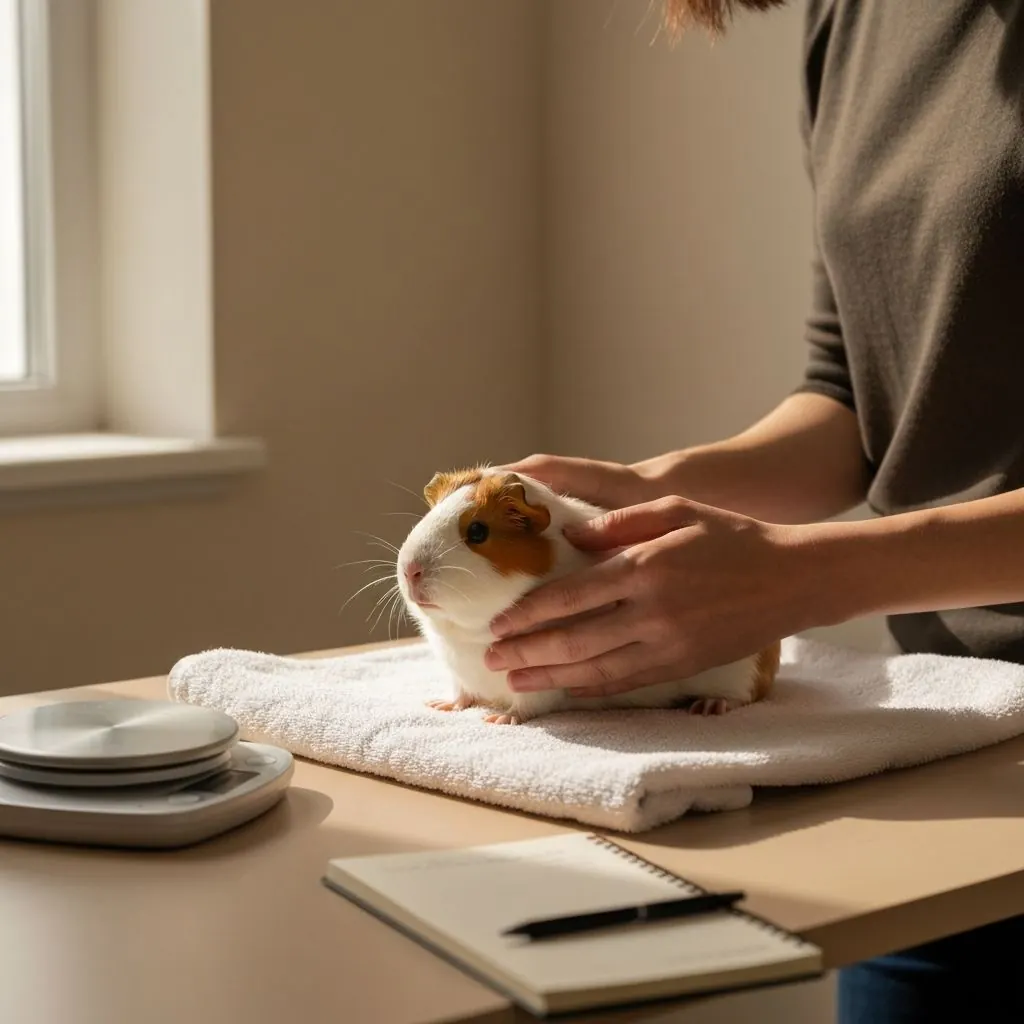
Guinea pig health: small changes matter
Quick answer
Key facts
Guinea pigs hide illness well. Do a short daily check of appetite, droppings, energy, eyes, breathing, and movement, and seek vet help quickly if something changes.
- Not eating or producing fewer droppings can become urgent within hours.
- Check eyes, nose, coat, bottom, and movement every day.
- Weigh weekly so gradual weight loss is easier to spot.
- This site is educational and does not replace veterinary care.
Guinea pigs are prey animals, which means they often hide illness until they are feeling genuinely rough. That is why the little signs count. A quieter pig, a smaller appetite, a different posture, or a messy back end can be more meaningful than people realise.
This page is a guide to noticing problems early. It is not a replacement for a vet.
The daily health check
A useful daily check does not take long. Look for:
- normal appetite and enthusiasm for food
- normal droppings in normal amounts
- easy breathing with no obvious effort
- bright eyes and a clean nose
- normal movement and posture
- a dry, clean rear end
- comfortable interaction with cage-mates
- no sudden swelling, wounds, or obvious pain
Weekly weighing adds another layer of information. A pig can lose weight before the eye really notices.
Signs that need urgent help
Treat these as urgent and call an exotics-savvy vet immediately.
- not eating
- struggling to breathe
- collapse, severe weakness, or marked lethargy
- a swollen or bloated-looking tummy
- heavy bleeding
- repeated seizures or severe distress
- inability to pass urine or obvious straining with pain
- sudden severe diarrhoea, especially with weakness
If your instincts are shouting that something is very wrong, trust that and call.
Signs that deserve same-day attention
These may not look dramatic, but they still matter:
- reduced appetite
- smaller droppings
- weight loss
- crusty eyes or nose
- sneezing, wheezing, or unusual breathing sounds
- limping or reluctance to move
- hair loss, scratching, or skin scabs
- dirty bottom or urine scald
- lumps, swellings, or sores
- persistent head tilt or balance changes
“Let’s just see how they are tomorrow” is often the sentence people regret.
Common health themes guinea pig owners should know
Appetite and gut problems
A guinea pig who is not eating is always a serious concern. Appetite loss is a symptom, not a personality quirk — it is often the first visible sign of gut stasis or dental pain.
Dental trouble
Dropping food, wetness around the mouth, odd chewing, or weight loss can point to dental issues. Guinea pig teeth grow continuously, so anything that stops normal chewing — and normal hay intake — snowballs fast.
Respiratory problems
Breathing changes, nasal discharge, crusty eyes, or a pig who seems quieter than usual all deserve attention.
Skin and parasite issues
Scratching, dandruff, bald patches, or sore-looking skin need investigation rather than guesswork. Mites and lice are common culprits, can make a pig genuinely miserable, and are very treatable once properly diagnosed.
Feet and mobility
Sore feet (pododermatitis, or bumblefoot), swollen joints, overgrown nails, or reluctance to move can all reduce quality of life quickly if ignored.
Bladder and urine issues
Blood in urine, squeaking when peeing, or urine scald around the back end are not things to shrug off. Bladder sludge and bladder stones are common in guinea pigs, and a persistently soiled rear also invites flystrike in warm weather — which is every bit as grim as it sounds.
Make the vet visit more useful
When you call or travel, bring useful information:
- when you first noticed the change
- whether the pig is still eating and drinking
- any recent diet change
- current weight or recent weight trend
- photos of unusual droppings, swelling, or posture if helpful
Do not improvise with medication
Do not use leftover medication from another pet or old internet advice. Guinea pigs are small, sensitive, and very good at making guesswork expensive. If a treatment plan is needed, it should be for that guinea pig, at that time, from a vet.
Build a health record before you need one
A simple note on your phone is enough. Track:
- weekly weights
- recurring symptoms
- nail trims
- notable behaviour changes
- medication dates
- vet visits and diagnoses
That tiny record becomes surprisingly useful when something changes.
Frequently asked questions
- How often should I health-check my guinea pigs?
- Do a quick check every day and a fuller hands-on check regularly. Weekly weighing helps catch quieter problems early.
- What are urgent guinea pig health signs?
- Not eating, very few or no droppings, laboured breathing, extreme lethargy, collapse, or sudden severe pain signs need emergency veterinary help.
- Why do guinea pigs hide illness?
- As prey animals they often look fairly normal until they are quite unwell, so small changes in appetite, droppings, or behaviour matter.
- When should I call a vet?
- Call the same day for concerning changes, and urgently if eating stops, droppings reduce sharply, or breathing looks hard.