
What Should Guinea Pigs Eat Every Day? A Simple Feeding Plan That Actually Works
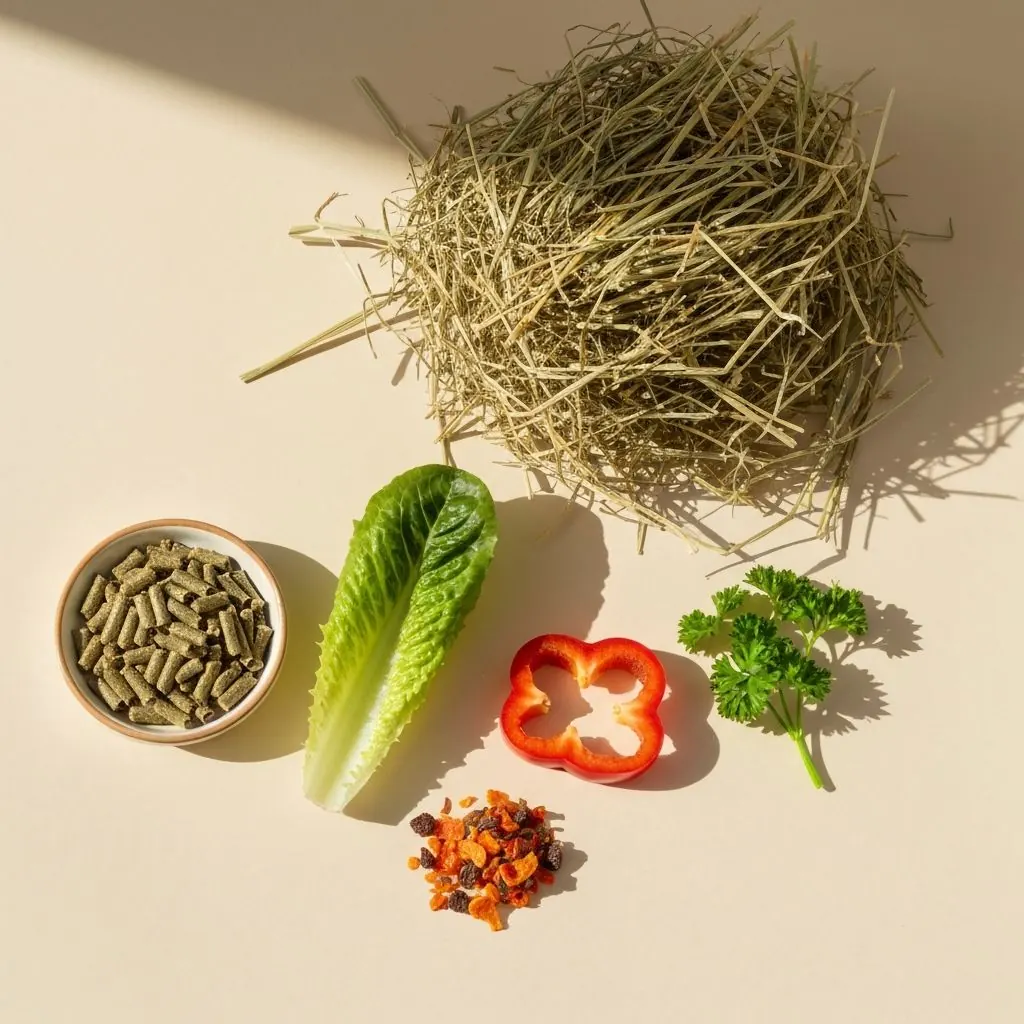
Every 24 hours, a guinea pig needs unlimited hay, a small measured portion of pellets, about one cup of leafy vegetables, and constant access to clean water. Fruit is an occasional treat. That is the whole plan. The detail is in making each part consistent.
Hay comes first, always
Hay should make up roughly 80–85% of a guinea pig's diet, and it should be there at all times. Not topped up once and left to run down. Available, fresh and plentiful, around the clock. Guinea pigs are grazing animals with continuously growing teeth and a digestive system that depends on constant fibre movement to work properly, and chewing hay is what keeps both in order. When hay runs low, gut motility slows. When gut motility slows, problems follow.
Which hay to buy
Timothy hay is the most widely recommended choice for adult guinea pigs. Meadow hay and orchard grass are good alternatives. Avoid alfalfa as a staple for grown pigs: it is higher in calcium and protein and better suited to pregnant, nursing or very young animals.
When a pig turns its nose up
If the hay is being ignored, check its freshness first. Good hay smells sweet and grassy, never dusty, mouldy or flat. Most guinea pigs that "don't like hay" are being given something that would not appeal to any sensible animal. Store it somewhere dry and airy so it stays appetising.
Pellets: a measured top-up
Their job is to fill the nutritional gaps that hay and vegetables cannot fully cover, particularly the one nutrient guinea pigs cannot make for themselves. That makes them a supporting act, so treat them that way.
How much to give
A standard grown guinea pig needs around one to two tablespoons of plain, fortified pellets, given once each evening. A bowl refilled whenever it looks low is how pigs end up overweight.
Why plain beats muesli-style
Choose a plain variety, not a muesli-style mix. Muesli mixes allow selective eating: guinea pigs pick out the sweet bits and leave the nutritious ones. Plain compressed nuggets mean every bite is the same.
| Food | Amount | When | Notes |
|---|---|---|---|
| Hay | Unlimited | All times | Must never run out |
| Pellets | 1–2 tbsp per pig | Evening | Plain, no muesli |
| Veg | Large handful per pig | Once or split across two meals | Mainly leafy greens |
| Water | Unlimited | All times | Rinse and refill bottle or bowl each morning |
| Fruit | Thumbnail-sized piece | 2–3x per week max | Optional treat only |
Vegetables: variety through the week
Aim for roughly a large handful of fresh vegetables per guinea pig. Variety across the week matters more than any exact list. Different leaves offer different nutrients, and rotating stops any single food dominating the menu.
Good everyday choices
Romaine lettuce, green leaf lettuce, curly kale, parsley, coriander and cucumber all work as regular options. Red or yellow bell pepper is one of the richest sources of that hard-to-get nutrient and most guinea pigs tuck into it enthusiastically, so include a small amount most of the time.
Veg to rotate in
Spinach, spring greens and Swiss chard are nutritious but contain oxalates or calcium in amounts that matter when given constantly. A little, regularly, beats a lot every time.
Our full feeding guide has a detailed breakdown of which vegetables work well and how to think about variety. If you are setting up your new guinea pig setup for the first time, that guide is the place to start.
Water around the clock
This is the one people most consistently underestimate. Guinea pigs need access to fresh water at all times. Water that has been sitting in the bottle since Tuesday does not count. Use a bottle or heavy ceramic bowl, rinsed and refilled each morning, and check that it is actually dispensing.
A guinea pig that is not drinking enough tends to lose appetite, has harder droppings and becomes lethargic. Dehydration in small pets escalates faster than most owners expect.
Fruit as an occasional snack
A thumbnail-sized piece of fruit two or three times a week is plenty. Most fruits are high in sugar, and a sweet tooth is easy to build and hard to undo.
Foods to avoid entirely
Toxic foods
Some foods are genuinely toxic to guinea pigs. Keep these away completely: onion, garlic, chives, leeks, rhubarb, avocado, potatoes, uncooked beans, and anything in the nightshade family beyond ripe tomatoes.
Foods with no value to a cavy
Iceberg lettuce is not toxic but has almost no nutritional value and a high water content that can cause loose stools. Processed human food of any kind (crackers, bread, anything with sugar or salt) has no place in a guinea pig's bowl. Dog food, cat food and rabbit food are no substitute either.
A simple feeding schedule
You do not need to be precise to the minute, but a set rhythm helps you notice when something is off.
Morning
Check and top up hay. Refill water. Feed the first veg portion. Remove any uneaten veg from the previous evening if it is looking tired.
Evening
Top up hay again. Give the measured pellet portion. Add a second small veg portion if your schedule allows it. Do a quick visual health check on each pig: appetite, droppings, behaviour.
The evening check is where you spot early signs of digestive issues. A change in droppings is often the first signal that something in the daily care routine needs attention, or that the diet needs adjustment. Our guide on what to do if stools change covers the warning signs to know.
Common mistakes guinea pigs pay for
Too many sugary treats, given too often. Muesli-style mixes that encourage selective eating. Veg cold from the fridge; let it come to room temperature first. Not noticing when a guinea pig is getting through much less hay. Topping up the pellet bowl without measuring, so the pig takes in far more than needed.
Why small slips add up
None of these are catastrophic in isolation, but they compound. A diet that is consistently too sugary, too low in hay or too calorific leads to a guinea pig who is overweight, short of key nutrients, or both. Neither condition announces itself loudly, which is exactly why the vitamin C guide is worth reading alongside this one.
More on the everyday diet: vitamin C for guinea pigs, healthy guinea pig treats and safe herbs and forage.
Frequently asked questions
- How much hay should a guinea pig eat per day?
- There is no fixed gram measurement — hay should simply be available at all times and never run out. A healthy guinea pig will work through a generous portion daily. If hay is disappearing quickly, that is a good sign.
- Can I feed guinea pigs once a day?
- You can offer vegetables and pellets once a day, but hay and water must be available continuously. Once-a-day feeding for hay is not sufficient — it will run out, and your guinea pig will go without between refills.
- Do guinea pigs need supplements on top of their food?
- A diet that includes fortified pellets and leafy vegetables should cover the needs of most healthy adults without extra supplementation. Do not add drops to the water bottle: the vitamin degrades rapidly in water and the dosage is unpredictable. Getting it from the bowl is always preferable.
- How often should I change my guinea pig's water?
- Every day, without exception. Rinse the bottle or bowl, refill with fresh water, check the spout is dispensing freely. Stale water is ignored by many guinea pigs and can harbour bacteria.
- Can guinea pigs share food with rabbits?
- They can eat many of the same fresh vegetables, but rabbit food is not suitable for guinea pigs because it lacks the added vitamin C cavies need. Always buy a species-specific pellet.