
How to Bond Guinea Pigs: A Step-by-Step Guide to Introductions
Quick answer
Key facts
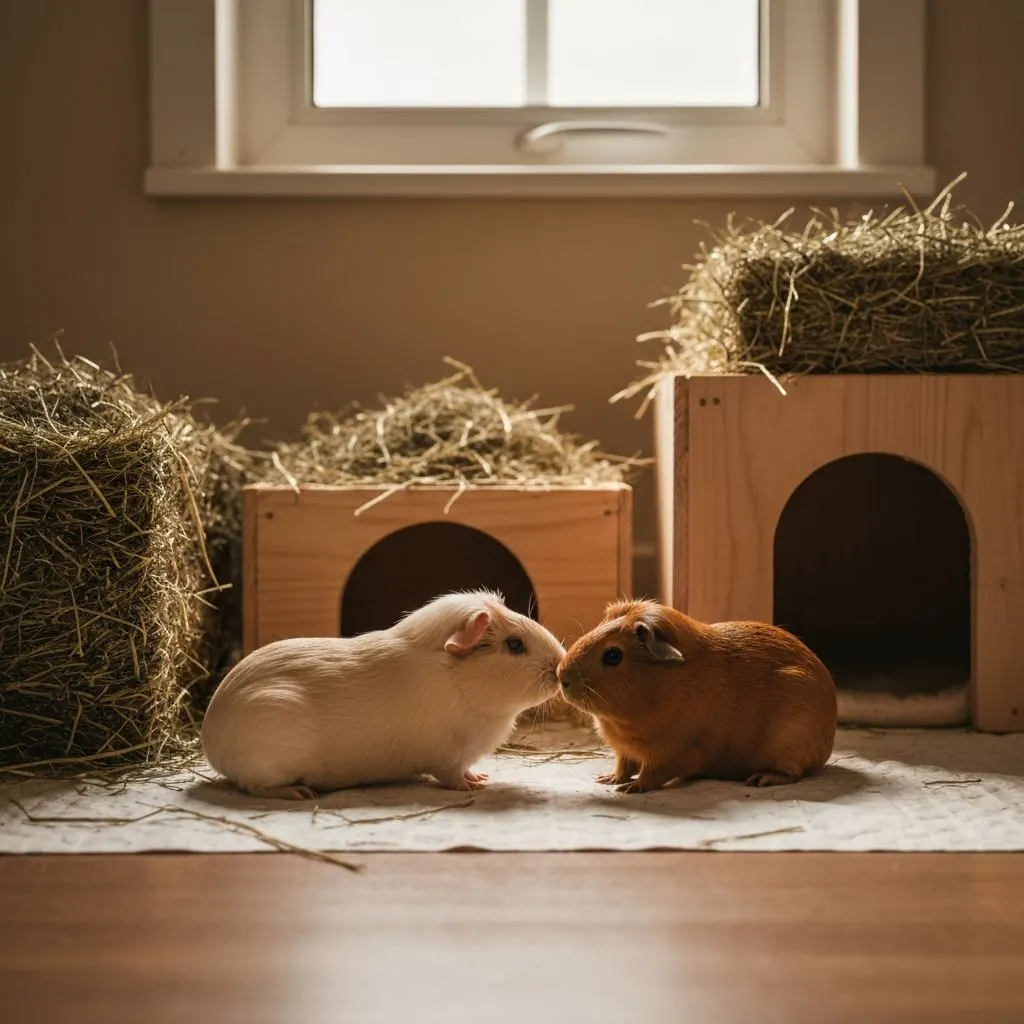
Introduce guinea pigs gradually, under supervision, on neutral ground that neither pig has lived in. Set up the space first with plenty of hay, food scattered around, and open hides with two exits, at least one per pig. Watch closely for the first day. Rumbling and chasing are normal as they sort out who is in charge; attacking the face or rump, or drawing blood, means separate them straight away.
- RSPCA: keep every guinea pig with at least one friendly companion.
- Good pairings (RSPCA): a neutered male with one or more females, two females, or brothers reared together.
- Wood Green: introduce on neutral territory, and start in the morning so you can watch all day.
- Neutering does not change a male’s behaviour or stop fighting, say both the RSPCA and Wood Green.
To bond guinea pigs, put them together at the same time in a space that is new to both, set up with hay, scattered food and open hides, and supervise them closely for the first day. Expect some rumbling and chasing while they settle a pecking order. Separate them immediately if one attacks the other's face or rump or you see blood.
Guinea pigs are herd animals, and the RSPCA asks owners to keep every guinea pig with at least one friendly companion. So if you have a single pig, or have lost one of a pair, a careful introduction is the next job. Here is how to do it, based on RSPCA and Wood Green Pets Charity advice.
Choose a pairing that is likely to work
The RSPCA lists these as suitable combinations:
- a neutered male and one or more females
- two females
- brothers that have been reared together
Pigs brought up together usually get on, says the RSPCA, which is why brothers reared together make the list. Unrelated males can be introduced, but the RSPCA says it can be tricky and may take a few attempts to find the right match. Wood Green adds that a young boar under a year old may compete for dominance as he matures, and that three sibling boars together carry a high risk of one being bullied. Personality matters more than sex, according to the RSPCA, so a rescue that offers a mixing service can help you find the right companion. Tell the rescue your current one's age, sex and history with past companions, as that helps them suggest a likely match.
Any boar going in with sows must be neutered first. The RSPCA says males should always be neutered if paired with females, because pregnancy and birth carry many risks for the sow. Wood Green notes that vets do not usually agree to neuter females unless it is needed to treat an illness, and advises choosing a vet who specialises in small pets.
Pick neutral ground
Wood Green stresses that introductions must happen in a neutral area, to stop either pig from defending its patch. It should also be safe from predators. A run moved onto fresh grass works well in fine weather. Indoors, use a large sectioned-off pen in a room neither pig has lived in. Avoid somewhere you walk through all day, like a kitchen or bathroom, so the pair are left in peace. Make it roomy, too, so either one can walk away during early bonding attempts.
Set up the space before they arrive
- Clean the pen with a pet-safe disinfectant.
- Add open hides, such as a wooden bridge, with two exits: at least one per pig, plus a spare if it fits. Keep them away from the walls so nobody gets squeezed.
- Scatter hay everywhere, plus a pile under each hide and more at opposite ends.
- Scatter pellets and veggies around the floor instead of using one bowl.
- Put down two water bottles or bowls.
- Have a towel ready to separate them safely if a real fight starts.
Wood Green's tip is to leave out feed bowls and single-entrance hides, because a pig trapped in a box by another pig is how a squabble becomes a fight.
The introduction, step by step
Carefully introducing unfamiliar pigs takes a full day of your attention, so clear the diary first.
- Start in the morning, ideally on a weekend, so you can watch them for the whole day and the next.
- Place each pig in at once and let them explore and meet at their own pace.
- Stay close and keep watching through the day. Keep other pets, loud noise and visitors away so nothing startles them mid-meeting.
- If it is going well by late afternoon, Wood Green suggests leaving them together overnight in the mixing pen. Separating them means starting again from scratch the next morning.
- Check both pigs for injuries the next day, and every day for the first week.
Signs of successful bonding
Wood Green lists these as signs a pair are accepting each other:
- eating close to each other
- grooming each other's faces
- happy, gentle squeaks
- calmly following each other
Some dominance behaviour, such as rumbling, mounting and chasing, is normal in the first days. The RSPCA explains that pigs living together form a pecking order, with some more dominant than others. One pig will end up boss. The other will pretend not to mind, and both will monopolise the best hide in turn. Our guide to guinea pig sounds and body language explains what each noise means.
Warning signs, and when to separate
Wood Green lists these as signs a pair may not accept each other:
- rearing heads up at each other with open mouths
- teeth chattering
- walking sideways with the rump raised
- fur standing on end
- rumbling or chasing that does not settle after a few days
Separate them immediately if one attacks the other's face or rump, or if you see any injury or blood, and call a vet who knows cavies. The RSPCA also notes that adult boars that have never met may fight. If an introduction fails, a behaviour expert or a rescue mixing service can advise on another try. Incompatible pigs are not a failure on your part; some individuals simply never settle together, and a different group mate may work fine. Biting between pigs is covered in more detail in why guinea pigs bite.
After the first night
The bonding process carries on well past the first night. Keep them in the mixing pen for a few more days, still scatter feeding, and health check both pigs daily, which Wood Green recommends to spot hidden injuries. Once they are relaxed, clean their main home and move the hay and hides from the mixing area across, so it smells of both of them. Wood Green advises waiting a week or two before adding enclosed hides like tunnels, and a couple of weeks before free-roam or run time, so the bond can settle first.
The home itself matters too. The RSPCA says they need places to escape each other and enough shelter, food and water for everyone, or they can become stressed and bully lower-ranking pigs. Our cage size guide and hutches and cages guide cover housing, and the first-time owners guide covers the rest.
When your guinea pig is on their own
If one of a pair dies, the survivor needs a new friend. The RSPCA warns that pigs left alone for long periods can start behaving abnormally and may suffer, so it is worth starting the search for a new companion fairly soon. If yours has to live alone for a while, the RSPCA says it is vital to give them company by interacting with them every day.
Sit beside the enclosure, talk to them, offer a few veggies by hand, and let them climb onto your lap if they choose. The RSPCA says pigs handled well from a young age can learn that people are friends, while those handled little when young, or roughly at any age, may find contact distressing. Gentle, predictable handling builds trust. A person still cannot do the social job of another cavy, which is why the next step is finding the right match, and why a rescue's mixing service is worth asking about before you buy.
More for new owners: best guinea pig breeds for beginners, bringing new guinea pigs home, why guinea pigs bite and guinea pig sounds and body language.
Frequently asked questions
- How long does it take to bond guinea pigs?
- The first day shows most of what you need to know. Wood Green suggests keeping a successful pair in the mixing pen for a few days, then waiting a week or two before adding tunnels and a couple of weeks before run time.
- Is it normal for guinea pigs to chase each other when bonding?
- Some chasing, rumbling and mounting is normal while they form a pecking order. Chasing that does not settle after a few days is a warning sign.
- When should I separate guinea pigs?
- Straight away if one attacks the other’s face or rump, or if there is any injury or blood. Part them safely, without putting your hands between them, and contact a vet.
- Can two male guinea pigs live together?
- Yes, brothers reared together often do well, and unrelated males can be paired, though the RSPCA says it can take a few attempts. Neutering does not change how they act.
- Should I introduce guinea pigs in their cage?
- No. Wood Green says introductions should happen in a neutral space that neither pig has lived in, so neither feels it has a home patch to defend.
- How do I know if my guinea pigs like each other?
- Wood Green lists the positive signs as eating close together, grooming each other’s faces, happy gentle squeaks and calmly following each other.
- Can a baby guinea pig be bonded with an older one?
- Often, yes, but watch young boars. Wood Green warns that a mix with a male under a year old may work at first, then break down as he matures and starts to compete for dominance. Keep a close eye on the pair as he grows up.
- What should I do if bonding fails?
- Separate them, check both for injuries and call a vet if you find any. The RSPCA says some pairings, especially unrelated males, can take a few attempts, and a rescue mixing service or a specialist can help you plan another try or find a better-matched companion.
- Do guinea pigs bond with their owners?
- They can. The RSPCA says guinea pigs well handled from a young age can learn that humans are friends, and indoor guinea pigs can see people as important companions. A human is never a substitute for another guinea pig.
Sources
- RSPCA, Keeping guinea pigs together (checked 19 November 2026).
- Wood Green Pets Charity, How many guinea pigs should I get? (checked 19 November 2026) and Caring for guinea pigs (checked 14 November 2026).