
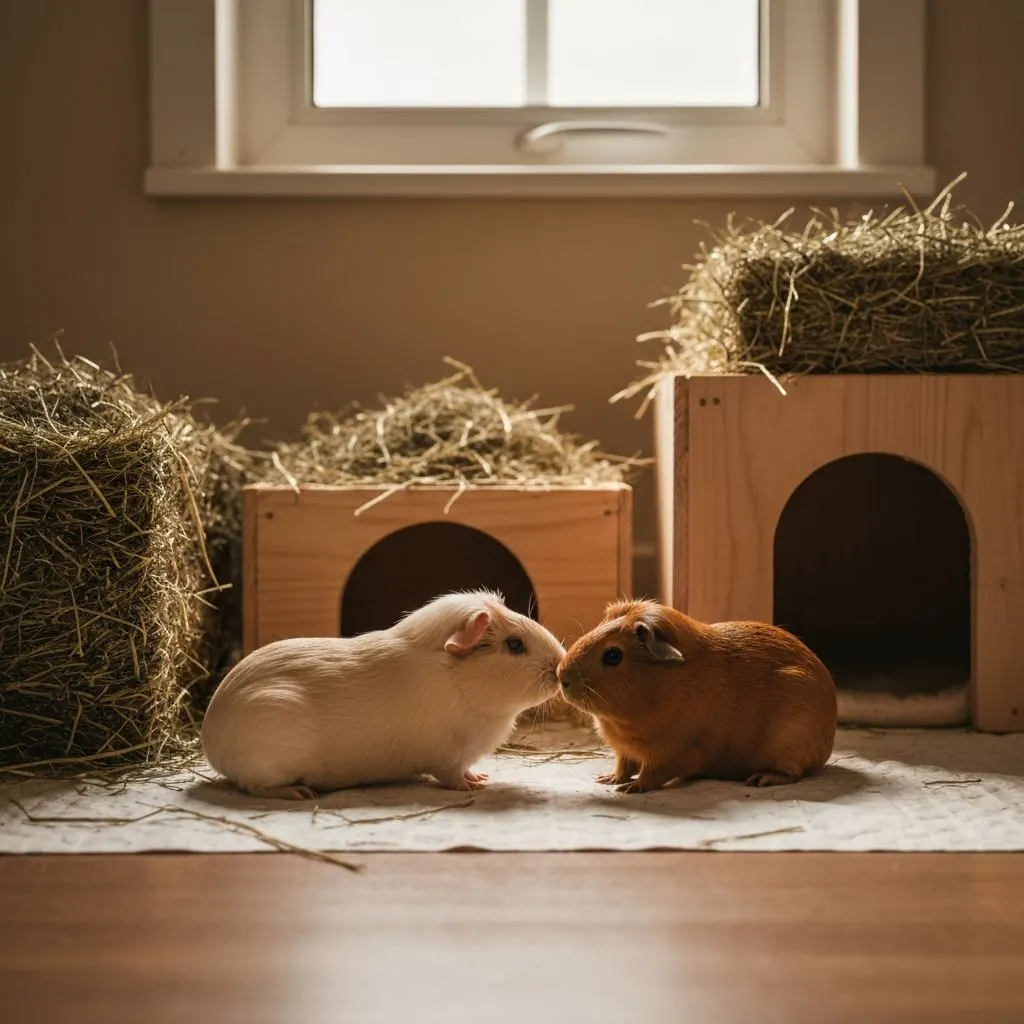
How to set up a calm arrival day with new guinea pigs
Quick answer
Key facts
Prepare the enclosure before arrival, keep the first day quiet, offer hay and water immediately, and avoid overhandling in the first 24 hours.
- Set up housing fully before the guinea pigs travel home.
- Give hideouts, hay, and water as soon as they arrive.
- Limit visitors and handling on day one.
- Watch for red flags: not eating, distress, or injury.
Arrival day is exciting for you and overwhelming for them. The most useful thing you can do is make it deliberately boring: set the enclosure up before they come home, put them straight in with food, water and hides, keep the house quiet, and leave handling for a few days.
Calm, prepared and unhurried is the aim. Guinea pigs are a prey species, so a new room full of unfamiliar smells, voices and looming shapes registers as possible danger until proven otherwise. Two nervous animals will settle much faster if nothing is demanding their attention except the fact that there is food and somewhere to hide.
Most of the care happens before the day itself. Get the setup, the room and the journey right, and arrival becomes a short, quiet handover followed by a lot of watching from your sofa.
Before they arrive
The enclosure should be ready before you collect them, not assembled while they sit in a box listening to you swear at flatpack instructions. Set it up a day or two early, so you can spot the wobbly ramp or the leaking bottle while nobody is living in it.
For most first-time owners, a setup in a quiet room is the easiest start. Pick a cool room that people use but do not race through: a calm corner of a living room often works better than a spare room nobody visits, because the guinea pigs learn your voice and routine without being in the middle of the traffic.
Keep the enclosure out of direct sunlight, away from radiators, fires and draughts, and not right next to a television, speakers or a door that slams. Guinea pigs cope poorly with heat, so a sunny window that is pleasant for you can turn into an oven for them by mid-afternoon.
If they will live in a hutch or an outdoor area, the same rules apply with weather on top: sheltered from wind and rain, shaded in summer, protected from predators, and checked by you at least twice a day. Many owners keep new arrivals indoors for the first few weeks so they can watch them closely, then move them out in mild weather once they are settled.
Check that you have:
- the main enclosure set up on a solid base, with fresh bedding (wire mesh floors can hurt their feet, so a solid surface helps prevent foot injuries)
- a generous pile of good-quality hay already in place, enough that they could hide in it
- clean water in a bottle or a heavy bowl, ideally both, until you know which they prefer
- at least two hides with more than one exit each, so nobody gets cornered
- a quiet spot away from heavy foot traffic, other pets and loud noise
- a small first food offering of the vegetables they were eating before
Hold off on piling in every accessory you bought. A few tunnels and hides are plenty for the first week. Rearranging the furniture can wait until they have learned the layout and stopped bolting at every rustle, and toys can come later.
If you are rehoming guinea pigs, ask the previous owner or rescue what they were eating, and bring a bag of their old bedding and food if you can. Keeping the menu and the smells consistent in the first week removes one variable from an already variable time.
Backup plans. Before the day, find an exotics-savvy vet who sees guinea pigs, save the number in your phone, and check their out-of-hours arrangement. Keep a spare bag of food and bedding in the cupboard, plus a pet-safe cleaner for the enclosure. Preparing for a problem you never have is a great deal less stressful than searching for a vet at nine on a Sunday night with an unwell new guinea pig on your lap.
The journey home
Use a sturdy, well-ventilated carry case with a solid bottom, padded with bedding and a handful of forage to nibble. Keep it dark and quiet, and keep bonded companions together in the same case, because their company is the most reassuring thing they have.
Short journeys are usually fine. Longer ones may call for a small piece of cucumber or leafy greens tucked in for moisture, plus a gentle driving style. Wedge the case in the footwell or seatbelt it in place so it cannot slide about. Keep the car cool, keep the case out of the sun, and never leave guinea pigs alone in a parked car, even for a few minutes.
Talk quietly if they seem distressed. Do not keep lifting the lid to check on them. Darkness is calming, and the sound of a familiar voice in the background helps too.
When they arrive home
Put them straight into their prepared enclosure.
That is it.
Do not stop to introduce them to family members, show them around, or try to get them used to your hands in the first hour. Open the case in the enclosure, let them walk out in their own time, close the front quietly, and let them get on with it.
A guinea pig who arrives somewhere new and immediately has a pile of forage to burrow into and a hide to disappear behind is processing the situation on their own terms. That is exactly what you want. A common first reaction is freezing completely still or bolting for cover. Both are normal survival behaviour, so resist the urge to coax them out.
The first 24 hours
Keep it slow.
- Offer normal food without introducing anything unusual
- Keep noise and bright lights low, especially in the evening
- Watch from across the room and note whether they are exploring, eating or hiding
- Check food has gone down and fresh droppings are appearing
- Do not try to handle them unless there is a welfare reason to do so
- Do not panic if they spend most of the first day behind a hide
Some guinea pigs are curious and out exploring within an hour. Others take a full day before they emerge properly. Both are normal. What you are looking for is that they are eventually eating, pottering about and appearing to settle.
Resist the cuddle. It is tempting to scoop up your new pet for a photo, but lap time on day one teaches a frightened animal that the big shape reaching in means being grabbed. Waiting a few days costs you nothing and buys a great deal of trust.
Children, cats and dogs
Explain the plan to children before the day: the new arrivals need peace first, and the fun starts once they are settled. A child who knows why the guinea pigs are hiding is far less likely to tap the bars or reach in. Later, the safest handling for small hands is sitting down with the guinea pig on a towel in their lap, with an adult supervising.
Keep the cat and dog out of the room for the first few days. Even a gentle, curious dog is a predator to a guinea pig, and a cat sitting on top of the enclosure staring down is a nightmare scenario from their point of view. When you do allow other pets near, keep the meeting brief and calm, with the enclosure secure and the animal on a lead or held. Never leave them unsupervised together.
Guinea pigs should not share housing with a rabbit. Rabbits are larger, have different dietary needs, and can injure a guinea pig with a single kick, so each species is best kept with its own kind.
Adding to an existing herd
If you already have guinea pigs at home, the new arrivals do not go straight in with them. Keep them in separate housing at first for a period of quarantine, ideally in a different room, and wash your hands between the two groups. That gives any illness the newcomers brought with them time to show before it can spread.
When the time comes, introduce the additional guinea pig to the existing guinea pig or group on neutral territory that smells of nobody: a freshly cleaned pen with several hides, plenty of forage piles and more than one exit. Expect some chasing, rumbling and mounting while they sort out the hierarchy. Real fighting with bites and drawn blood means separate them, carefully, with a towel or gloves.
Have a plan in case the bonding fails. Keep the second setup ready until the group is living together peacefully, because a rushed introduction is far harder to fix than a slow one. If you are unsure, many rescues offer a bonding service.
What counts as a red flag
A new guinea pig who is hiding is probably just being sensible. A new guinea pig who is not eating, barely moving, breathing noisily or with effort, or seems limp or unresponsive is a different matter.
Other signs that need a vet include no droppings, runny or very small droppings, discharge from the eyes or nose, sneezing that does not stop, a hunched posture with fluffed-up fur, or any sign of injury from the journey.
If your new pigs came from a reputable rescue, breeder or pet shop, they should be healthy. But animals can arrive already unwell, or be stressed into showing existing issues. Know the difference between nervous and unwell. A guinea pig that stops eating is always urgent, because their digestion relies on a constant supply of food.
If you are concerned, call the person you got them from, and contact an exotics-savvy vet if the signs are genuinely worrying. Read more in Health.
The first week
Let the daily care routine do the talking.
- Refresh forage, water and veg at the same times each day
- Sit quietly near the enclosure so they begin to associate you with calm
- Let them approach your hand in their own time, with a piece of veg as a gentle bribe
- Start very short, low-key handling sessions once they are eating well and pottering freely
- Keep notes on droppings, appetite and weight
When you do start handling, sit down low so a wriggle does not become a fall. Scoop with one hand under the chest and the other supporting the bottom, hold them close to your body, and keep the first sessions to a few minutes. Put them back before they start to fidget, so the session ends on a good note.
Weigh each guinea pig once a week on kitchen scales and write it down. A steady weight is reassuring, and a gradual drop is often the first sign that something is wrong, long before you would see it by eye.
Supervised floor time can come once they are confident in the enclosure. Start with a small, enclosed patch and a couple of hides, and let them explore at their own pace. Some will race about; others will sit under a hide for twenty minutes, then try a cautious lap of honour.
The goal of the first week is simply for them to feel safe enough to be themselves. Tameness follows. Taking care of guinea pigs well is mostly patience, consistency and good observation, and the bond you build in these quiet early days is the foundation everything else builds on.
For the setup, supplies and routine to sort out before arrival day, start with our guide for first-time guinea pig owners.
More for new owners: best guinea pig breeds for beginners, why guinea pigs bite, guinea pig sounds and body language and how to bond guinea pigs.
Frequently asked questions
- How long do new guinea pigs take to settle in?
- It varies. Some are out exploring within an hour, others hide for most of the first day or two. Most are eating, pottering about and showing some confidence within the first week, but shy or rescued guinea pigs can take longer. Patience and a steady routine help more than anything.
- Should I handle my new guinea pigs on the first day?
- No. Unless there is a welfare reason, leave them be for the first day or so. Let them eat, explore and learn the sounds of the house, then start with very short sessions once they are eating well.
- Where is the best place to put a new guinea pig enclosure?
- A quiet, cool room that people use but do not rush through, away from direct sunlight, radiators, draughts and loud noise. Keep it out of reach of cats and dogs.
- Can I put new guinea pigs straight in with my existing ones?
- No. Keep newcomers in separate housing for a quarantine period first, then introduce them slowly on neutral territory with several hides and exits.
- When should I worry about a new guinea pig?
- Hiding is normal. Not eating, no droppings, laboured breathing, discharge from the eyes or nose, or a limp, unresponsive guinea pig all need a vet promptly.