
Guinea pig bedding: dry, low-dust, comfortable, and realistic to maintain
Quick answer
Key facts
Choose bedding that stays dry, low-dust, comfortable underfoot, and practical to clean. The best system is the one you can maintain every day.
- Dry, absorbent bedding protects feet and reduces ammonia smell.
- Low-dust options are kinder for breathing.
- Spot-clean wet patches daily instead of waiting for a full mess.
- Avoid dusty sawdust and scented litter marketed for other pets.
There is no single magic bedding that suits every home. The right choice is the one that keeps the enclosure dry, supports healthy feet and airways, and fits the routine you can actually sustain on a Tuesday night when life is being annoying.
Good bedding is not just about softness. It affects smell, moisture, cleaning time, respiratory comfort, and whether your pigs end up spending half the week with damp feet.
What good bedding should do
A useful bedding system should:
- stay dry between cleans
- keep dust down
- give guinea pigs a comfortable place to rest
- support healthy feet and joints
- work with the layout of the enclosure
- match your laundry, storage, and budget reality
Common bedding systems
Paper-based bedding
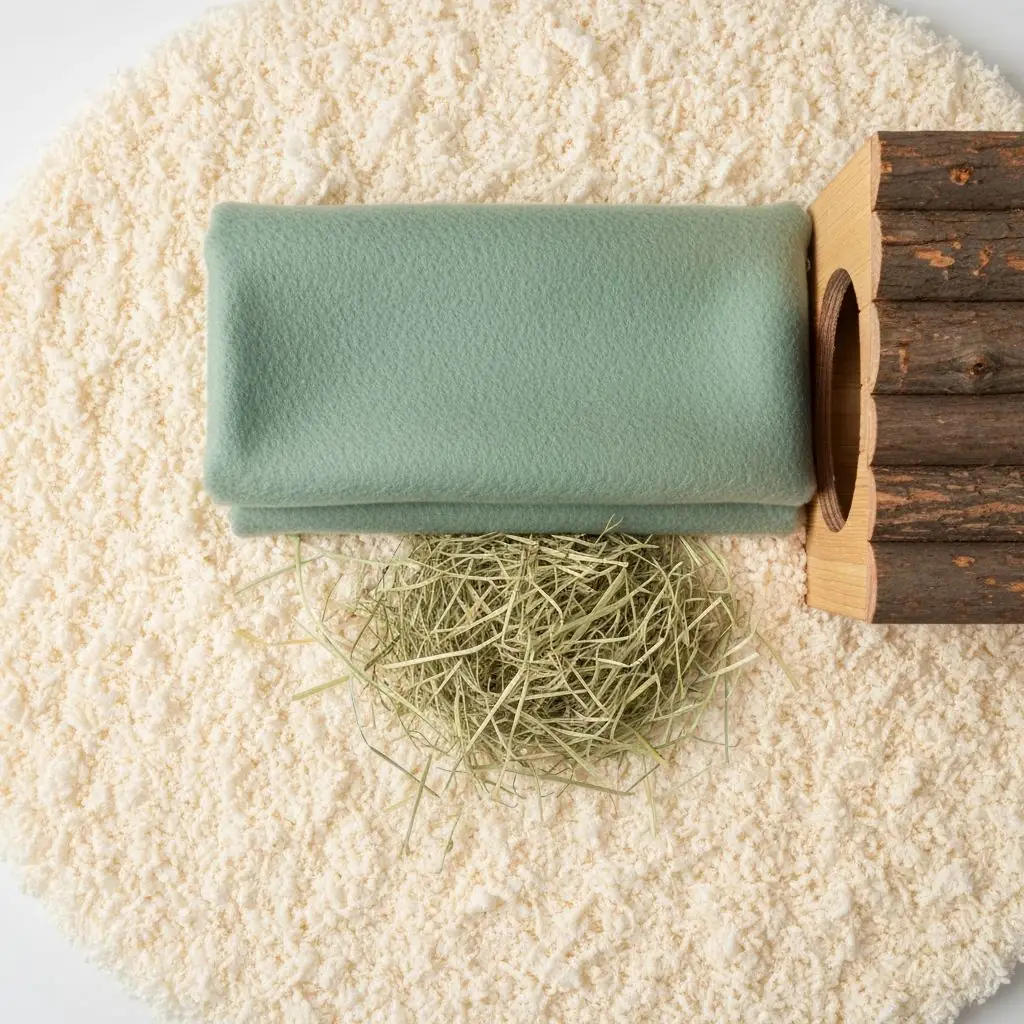
Paper-based bedding is often the easiest starting point for beginners. It can be absorbent, soft underfoot, low in dust, and simple to replace during spot-cleans and weekly changes.
Fleece systems
Fleece liners can be brilliant if you are happy to wash regularly and build a layered setup underneath them. The catch is maintenance. Fleece only works well when it wicks urine through to an absorbent layer beneath — towelling or a purpose-made pad — and the wet areas are dealt with promptly.
Shavings and other loose substrates
Loose substrates can work if they are low dust, clearly suitable for guinea pigs, and managed carefully. Kiln-dried or aspen options are the sensible end of the shavings spectrum; the aromatic oils in cedar (and untreated pine) are not kind to small lungs. Avoid anything heavily scented, visibly dusty, or marketed vaguely for “small pets” without clear suitability.
Choose bedding for your actual life
- If you hate laundry, do not build a full fleece system out of guilt.
- If you have limited bin space, think about how much loose bedding you will remove each week.
- If one of your pigs is older or messy, prioritise dryness and easy spot-cleaning.
- If anyone in the house is dust-sensitive, choose the lowest-dust option you can manage.
Bedding trouble signs
Your bedding strategy probably needs adjusting if:
- the home smells strong before the week is out (that sharp tang is ammonia, and it irritates airways)
- bottle areas stay wet
- feet look dirty or irritated
- one corner turns into a damp crater every day
- coats around the back end stay grubby
- you notice sneezing, dust clouds, or stale air during cleaning
What to avoid
Avoid:
- cedar bedding
- strongly scented products
- fluffy nesting fibres that tangle or trap damp
- damp, mouldy, or stale substrate
- clumping cat litter
- bare wire floors
Layer the enclosure thoughtfully
A comfortable home often uses different textures in different zones.
- Make eating areas absorbent and easy to refresh.
- Keep resting spots soft and dry.
- Put extra protection under bottles and favourite corners.
- Expect the hay area to get messy and design around it instead of pretending it will not.
Frequently asked questions
- What is the best bedding for guinea pigs?
- There is no single brand winner. Look for absorbent, low-dust, comfortable bedding you can spot-clean daily and change on a realistic schedule.
- Is straw good bedding?
- Straw can be scratchy and less absorbent than dedicated bedding. Many owners use hay for eating and a separate softer substrate underneath.
- How often should bedding be changed?
- Spot-clean wet areas daily and do a fuller change on a weekly rhythm, or sooner if it smells, clumps, or stays damp.
- Can bedding cause health problems?
- Yes. Damp, dusty, or scented bedding can contribute to sore feet (pododermatitis, better known as bumblefoot), breathing irritation, and poor hygiene.