
Why Is My Guinea Pig Losing Hair? Common Causes, First Checks and Vet Treatment
Hair loss in guinea pigs usually comes from parasites, a fungus, barbering by a cagemate, hormonal changes in sows, or a poor diet. Identifying the right cause matters because the treatments are completely different. Most need professional confirmation, particularly if the patch looks sore, your pig is scratching intensely, or the thinning is spreading.
What a thinning coat actually looks like
It can appear as smooth bald patches, thinning across a wide area, snapped or ragged hair shafts, or patches with rough, scaly, or reddened skin underneath. The location, the pattern and the state of the skin all give useful clues, though a firm answer usually needs scrapes or coat samples taken at the practice.
PDSA lists the symptoms worth acting on as bald patches, red skin, rashes, scaly patches, ulcers or scabs, and itching. It also points out that these problems can be very uncomfortable or painful and tend to get worse over time, so mild-looking cases still deserve attention.
Some seasonal shedding and coat thinning is normal, particularly around the face and behind the ears as they age. Symmetrical thinning on elderly sows can be hormonal. But spreading patches, intense scratching, or anything that looks sore or inflamed is always worth investigating promptly. Our health guide covers the general principles of when to act.
The most common causes
| Cause | Signs | Contagious? | Needs vet? |
|---|---|---|---|
| Mange mite (Trixacarus) | Intense scratching, visible distress, patchy fur | Yes, to other guinea pigs and sometimes people | Yes, urgently if severe |
| Lice | Moving lice or black specks at the base of the coat | Yes, between guinea pigs | Yes |
| Ringworm | Round patches, scaly crusts, snapped hairs | Yes, to other pets and people | Yes |
| Barbering | Chewed-looking hair shafts, specific areas | No | No, but review group dynamics |
| Hormonal (ovarian cysts) | Symmetrical thinning on flanks, mostly sows | No | Yes, can be managed |
| Pregnancy or nursing | Even thinning on a sow’s flanks | No | Usually regrows; mention at a check-up |
| Lack of vitamin C | Dull coat, weight loss, joint stiffness too | No | Yes if severe |
| Allergy | Widespread scratching and thinning | No | Yes if persistent |
| Natural ageing | Gradual thinning, particularly face/ears | No | Only if other symptoms appear |
Mange mites
Trixacarus caviae is a burrowing mite specific to guinea pigs. It causes intense, distressing itchiness, often severe enough that affected animals scratch frantically, may vocalise, or have seizure-like episodes from the discomfort. One UK clinical review describes the pain as excruciating. This is not something to manage at home. Mange needs prescription treatment chosen at the practice, and everyone in the group usually needs treating at the same time, along with a thorough clean of the enclosure.
The RSPCA advises using only medicines prescribed by a vet, because products made for other animals can be dangerous to guinea pigs. That includes leftover spot-ons from the family dog or cat.
Lice
Two kinds of running lice live on this species, and they feed on skin debris. You can usually see them moving at the base of the coat if you part it under good light. A tiny fur mite, sometimes called the hay mite or static louse, is also common and often arrives in a new bale of hay. PDSA lists black specks in the fur and insects crawling through it among the symptoms that need a vet check.
Lice tend to cause milder symptoms than mange: a scruffy coat, some scratching and thinning around the neck and ears in heavier cases. They still need proper care for the whole group, so book an appointment once you have spotted them.
Ringworm
Despite the name, it is caused by a fungus. It appears as round bald patches with crusty, slightly raised edges, often starting on the face and around the eyes, ears, or nose. It spreads rapidly between cagemates and can pass to people and other pets, so wash your hands after handling and keep children from cuddling an affected pig until it has cleared.
It is also very common. A Royal Veterinary College VetCompass study of 3,785 guinea pigs under UK veterinary care found it was the second most recorded disorder, affecting 6.02% of them over a year. Antifungal treatment needs to be prescribed, and a deep clean of the enclosure is essential. Check your grooming basics to understand how routine coat checks help catch this early.
Barbering
Barbering is when one guinea pig chews the hair of another (or their own). The hair shafts look snapped or stubby rather than falling out cleanly, and the skin underneath is usually completely normal. It has been linked to boredom, stress, dominance behaviour, too little space, and a lack of hay to chew. PDSA also lists stress and overgrooming among the causes of coat problems, so a recent change in the household can be enough to set it off. It is not a medical emergency, but it is worth reviewing the group dynamic, enclosure size and the hay supply. Our coat checks and brushing guide explains how to tell barbering from other types of hair loss.
Hormonal changes in sows
Sows with ovarian cysts often develop symmetrical thinning along the flanks. Other symptoms include a swollen abdomen and changes in behaviour. Ovarian cysts are very common in unspayed sows, particularly from middle age onwards, and they can usually be confirmed with an ultrasound scan. They are manageable with professional help, and the approach depends on the pig's age and overall health.
Pregnancy and nursing can also thin the coat on a sow's flanks. If she is otherwise well, it will usually grow back on its own once her babies are weaned. Mention it at her next check-up anyway.
Vitamin C deficiency
Guinea pigs cannot make their own vitamin C, so it has to come from their food every day. PDSA notes that a shortfall puts them at risk of scurvy, and that the vitamin in pellets slowly breaks down over time, so an old bag is less useful than it looks. A poor diet over months can leave a dull, rough coat that comes out more easily.
A lack of vitamin C rarely causes dramatic patches on its own, but it affects coat condition noticeably. If coat changes come with weight loss, reluctance to move, or joint pain, sort out the diet and book an appointment. PDSA does not recommend adding vitamin drops to the water bottle; fresh leafy greens and a good-quality pellet are the better route. PDSA says that with a balanced diet and daily greens that are high in vitamin C, most should not need any extra supplement.
What you can safely check at home
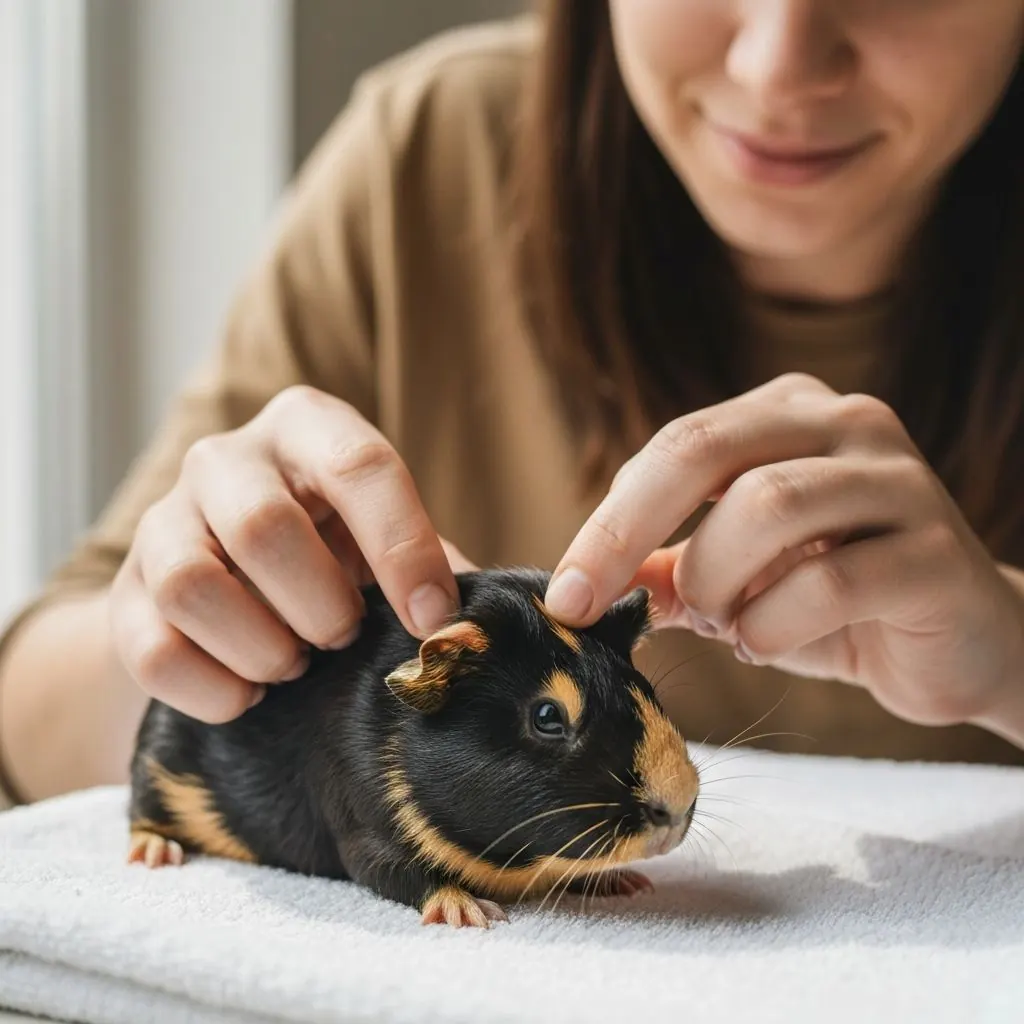
Gently part the coat in the affected areas and look closely. Is the skin clean and normal, or red, scabby, or thickened? Are the hair shafts cleanly moulted, or do they look chewed? Is there anything moving in the coat? The burrowing mange mite is microscopic and invisible to the naked eye, but running lice are just about visible along the hair shafts. Is your pig scratching more than usual?
Note where the thinning is, how quickly it spread, and whether the others in the group are affected. Take a couple of photos a few days apart. This information is genuinely useful at the appointment.
While you are looking, run your fingers over the whole body. PDSA says a healthy coat should be clean, with no bald patches, tangles or lumps. Lumps can come from abscesses, warts, or an infected or blocked scent gland near the rump, and any you find should be checked at the same visit, even if they seem unrelated.
Before the appointment, jot down anything that changed recently: a new bag of hay or bedding, a new cagemate, a trip to a boarding home, a house move. Mention whether anyone in the household has developed an itchy rash, since that steers the practice towards ringworm or mange straight away.
While you wait, PDSA suggests keeping an affected pig apart from the others until the problem is sorted, but where they can still see each other from a safe distance. They are social animals and one kept completely alone gets stressed, which does the coat no favours.
During treatment, change bedding more often than usual and wash fleece liners and fabric hides on a hot cycle. Wash your hands after each handling session, and handle the patient last if you have other pets in the house. These steps will not cure anything by themselves, but they stop the problem bouncing back and forth around the group.
Why professional diagnosis matters
Mange treatment applied to a pig with a fungus will not help, and the reverse is true too. Treating the wrong cause delays improvement and allows the real problem to progress. Skin scrapes, coat samples, and sometimes hormone tests or a scan are needed to confirm what you are actually dealing with. A guess, however educated, is no substitute.
Look for a practice that sees plenty of guinea pigs. Many mostly treat cats and dogs, and an experienced exotics vet will be quicker to recognise these conditions and safer with treatment choices.
Preventing coat problems
Most of these problems are easier to prevent than to treat. Clean the enclosure regularly, store hay somewhere dry, and give each pig a quick coat check during your daily routine. Feed plenty of good hay, fresh greens every day and a measured portion of plain pellets.
Long-haired breeds need regular brushing and the occasional trim around the back end. The RSPCA notes that a well-maintained coat is part of keeping them happy and well, and a coat that is brushed often is also one you will notice changing early.
Check any new pet carefully before introducing them to the group, since parasites and fungal infections often arrive with a new animal from a rescue, breeder or shop. The RSPCA also recommends a routine check-up at least once a year, which is a good chance to have the coat looked over properly.
More on spotting health problems: diarrhoea in guinea pigs, guinea pig eye problems, five-minute daily health check and guinea pig sneezing.
Frequently asked questions
- Can ringworm pass from guinea pigs to humans?
- Yes. It is zoonotic, which means it can be transmitted between guinea pigs, other pets, and people. Wash hands thoroughly after handling an affected animal. Anyone who develops circular, itchy rash patches should speak to their GP.
- Can I treat mites at home without a vet?
- Over-the-counter spot treatments marketed at guinea pigs are often ineffective against Trixacarus. A prescription treatment from an exotics vet is more reliable and correctly dosed. Given how distressing severe mite infestation is for the animal, professional treatment is always the right route.
- My guinea pig is losing hair but does not seem itchy. What might it be?
- Non-itchy hair loss is more consistent with hormonal causes, barbering, or nutritional deficiency than mange or a fungus. Still worth getting checked, particularly if the loss is spreading or the skin looks abnormal.
- Should I separate a guinea pig with hair loss from the others?
- PDSA advises keeping an affected pig apart until the skin condition has been sorted out, but where the group can still see each other from a safe distance. Ask at the appointment whether the cagemates need treating too, as they often do.
- Will the hair grow back?
- In most cases, yes — once the underlying cause is treated. Mite-related and fungal hair loss typically regrows fully after treatment. Hormonally-caused hair loss may partially regrow depending on the management approach. Very long-standing deficiency-related coat damage may take longer to recover.