
Sneezing in Guinea Pigs: Harmless Tickle or Infection?
Quick answer
Key facts
An odd sneeze in a bright, hungry piggy can simply be a tickle from dusty forage or bedding. Sneezing with discharge, crusty eyes, wheezing, laboured breathing or a poor appetite points to an airway illness that needs a prompt appointment.
- PDSA lists wheezing, discharge from the nostrils and struggling for air among the signs of an airway problem.
- PDSA warns that an airway bug can quickly become fatal if left untreated.
- A piggy struggling to breathe is an emergency: phone your practice straight away.
- Low-particle forage and lining, a clean, dry cage and good airflow lower the risk.
Occasional guinea pig sneezing in a piggy who is otherwise bright and eating well can simply be a tickle from dust in hay or litter, so note it and keep watching. Frequent bouts, or any that come with a runny nose, crusty or watery eyes, noisy breathing, wheezing or a pig who is eating less, can mean an upper respiratory infection. Book a vet the same day.
Our Health guide covers the wider set of checks every owner should know. This post sticks to the sniffles: what causes them, which extra signs change the picture, and what to do next.
Why guinea pigs sneeze
Like us, guinea pigs can clear something irritating from their airways with a quick snort or achoo. Sneezing is on PDSA's list of signs of breathing problems, so it always deserves a closer look, but what matters most is how often it happens and what comes with it. Their faces spend most of the day buried in food and lining, so the odd tickle comes with the territory. The UK charities point to a few things in the home that are worth checking first.
Hay dust and dusty lining
The RSPCA asks for dust-free hay and recommends dry, absorbent wood shavings for litter, while warning against softwood products such as pine, which can cause illness. PDSA says paper-based bedding or fleece blankets tend to be lower in fine particles. If the snuffling started the week you opened a new bale or a new bag of litter, that is a useful clue to mention at the appointment. A Vet Times review of airway disease in rodents also records lung inflammation in guinea pigs after they have breathed in litter material, one more reason to pick a lining that does not break up into fine bits. The BSAVA suggests a floor covering 2 to 5cm deep, with options such as wood shavings, cellulose fibre, pelleted recycled paper or newspaper.
Smoke, fumes and room conditions
The BSAVA's owner guide advises keeping them away from areas with a risk from fumes, such as smoking, fires or cars, which rules out a spot next to the garage door or the wood burner. It gives ideal conditions of 16 to 24°C with a relative humidity of 30 to 70%. If the sneezing started when the heating went on or the pen moved rooms, mention that too, because any change in their surroundings is useful for the practice to know about.
Ammonia from a dirty enclosure
The same BSAVA guide says the floor covering needs changing often to keep things dry and to reduce the build-up of ammonia. The RSPCA advises spot cleaning daily and a deep clean at least once a week. Wet patches around the food area and in favourite corners soak through first, so lift those spots each day. A strong smell when you lean over the cage is a sign it is overdue.
When sneezing is a warning sign
The pattern matters more than any single achoo. Repeated bouts across a day, or a sniffle that comes with other changes, is the point to stop watching and start phoning.
Signs of a respiratory infection
PDSA lists these among the signs of an airway problem:
- a frequent sneeze or cough
- discharge from the nostrils, or a runny nose
- wheezing or other noisy breathing
- laboured, heavy breathing, or struggling to breathe
- loss of appetite and losing weight
- lack of energy, or sleeping more than usual
PDSA also flags a runny eye or nose, especially if the eyes are red or the discharge is thick, and the BSAVA lists discharges from the eyes or nostrils and difficulty breathing among the signs that mean you should contact your practice. The RSPCA adds being quieter than normal, hiding more and not eating. Crusty eyes alongside the sniffles deserve the same attention as a dripping snout.
One thing that is not a worry on its own: the RSPCA says small amounts of white discharge around the eyes are common while they groom. It is a sign of illness if that amount changes or it appears at other times.
Why speed matters with a guinea pig
PDSA says these problems are most commonly caused by pneumonia or infections, though heart problems and stress can play a part, and that an airway bug can quickly become fatal if left untreated. It also warns that guinea pigs often try to hide symptoms, because looking weak makes them an easy target, so by the time you notice, they may have been unwell for a while. Picking up the phone over a few snorts can feel like making a fuss, and it is still the right call.
What to do today if your guinea pig is sneezing
- Watch for a few minutes and note how often the achoos come.
- Check the eyes and nostrils for discharge or crusting, and listen for any rattle or wheeze.
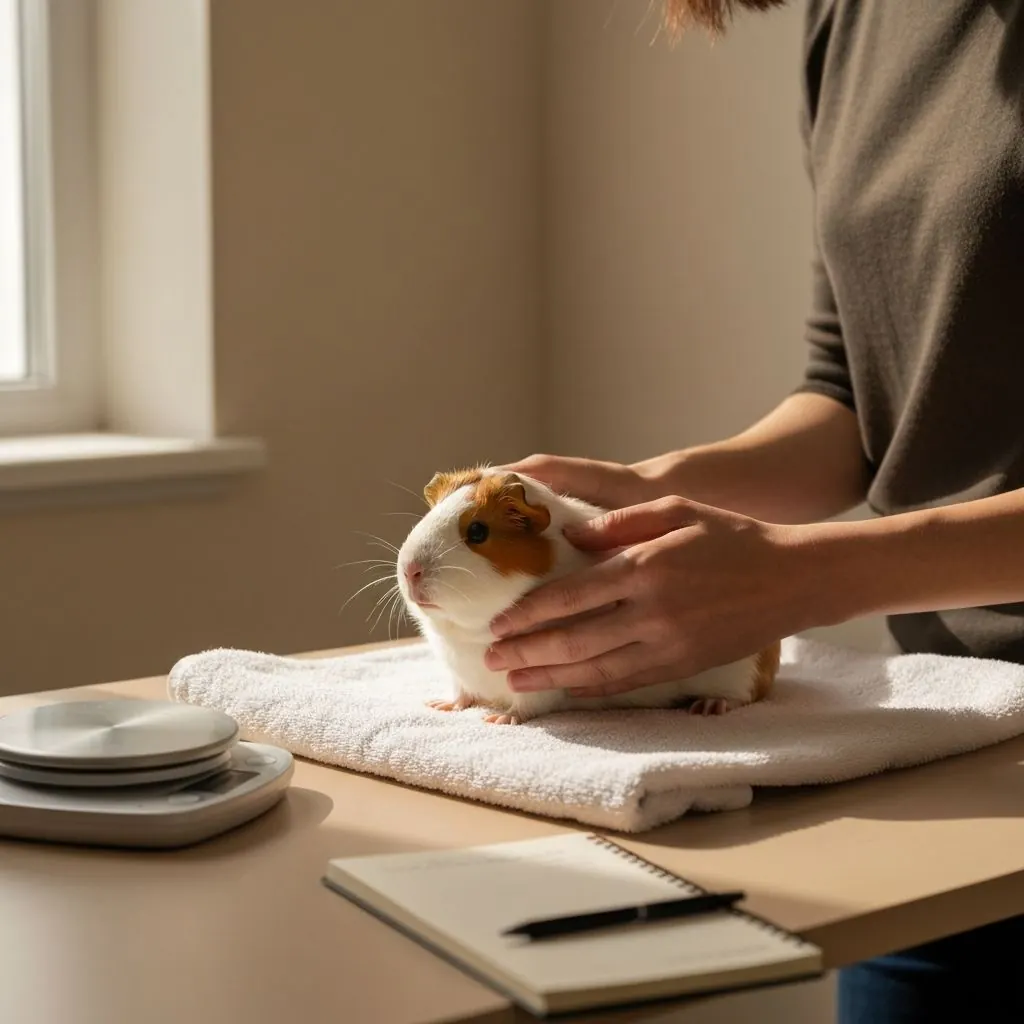
- Check they are eating and drinking, and weigh them on kitchen scales if you can.
- Phone the practice and describe what you have seen.
If it turns out to be nothing, all it cost you was a phone call and a short trip; if it is the start of something, your piggy has gained valuable time.
Before you see the vet
Only your practice can tell a dusty tickle from an illness and decide on treatment, so do not try human cold remedies or anything from the back of the cupboard. Bring your notes, the weight, and a clip of the noise if you can catch it. Ten seconds of footage on your phone often says more than trying to describe a wheeze from memory.
Keeping the rest of the herd safe
PDSA says respiratory infections can spread between piggies, or through contaminated items and unsuitable bedding. Ask the practice whether to keep the pair together, since separating bonded companions has its own stress, and wash your hands and any shared bowls between handling them.
Cutting down the sneezes at home
Choosing lower-particle hay and lining
Look for the cleanest, least powdery forage you can find, whether you buy it from a farm, a pet shop or online, and choose a lining the charities describe as low in particles, such as paper-based litter or fleece. The RSPCA also says to avoid coarse materials like straw, which can cause eye injuries. Never cut back on forage to keep the air clean, though, because it is the main part of their diet.
- Shake out and refill the rack away from their faces, not right above them.
- Spot clean wet corners of the cage every day so ammonia cannot build up.
- Rinse cage trays well after cleaning and let them dry before the herd moves back in.
Ventilation, temperature and stress
The RSPCA wants indoor housing that is well ventilated and protected from draughts, with room temperatures of 17 to 20°C ideal, and says below 15°C they can become chilled. It also notes that stressed guinea pigs are more likely to become ill, so a quiet spot and a steady routine help their defences as much as anything you buy. For outdoor herds, the BSAVA suggests hutches raised off the ground to avoid damp and draughts.
Rabbits, vitamin C and a guinea pig's defences
PDSA explains that rabbits can carry a type of bacteria that causes serious respiratory illness in guinea pigs while being harmless to the rabbit, which is one reason the charity never recommends housing the two together. A veterinary review of airway disease in rodents also names vitamin C deficiency as a risk factor in guinea pigs, so a daily supply of fresh vegetables and a good pellet matters.
More on spotting health problems: guinea pig eye problems, diarrhoea in guinea pigs, guinea pig hair loss and five-minute daily health check.
Frequently asked questions
- Is it normal for a guinea pig to sneeze?
- An odd achoo, especially after burrowing in fresh food, is usually just irritation. Repeated bouts, or any with discharge, wheezing or a poor appetite, need checking promptly.
- Can a guinea pig catch a cold?
- They can get airway infections, which PDSA says can quickly become fatal if left untreated. Treat cold-like signs as a reason to book an appointment promptly.
- Can a snuffly piggy pass it to its friend?
- PDSA says these illnesses can spread between piggies and through shared items or unsuitable lining, so ask your practice how to manage the pair.
- Will changing the litter stop it?
- If irritation was the cause, a lower-particle lining may help. If there are any other signs, get them examined first rather than waiting to see.
Sources
- PDSA, Guinea pig health (checked 21 November 2026).
- PDSA, Five common health problems in guinea pigs and how to prevent them and Vet Q&A: can I keep rabbits with guinea pigs? (checked 21 November 2026).
- RSPCA, Guinea pig health and welfare and Guinea pig environment (checked 21 November 2026).
- BSAVA PetSavers, Guinea pig owner guide (checked 21 November 2026).
- Elisabetta Mancinelli, Veterinary Times, Respiratory diseases in rodents (checked 21 November 2026).