
Guinea Pig Eye Problems: Redness, Discharge, Cloudiness and When to Call the Vet
The most common guinea pig eye problems are hay pokes and ulcers, conjunctivitis, dust irritation, cataracts and swelling from dental roots. Redness, discharge, cloudiness, squinting or puffy lids all need a same-day call to a vet experienced with guinea pigs, because PDSA warns that eye problems can progress very quickly. Healthy eyes are bright, clear and fully open, and most problems are treatable when caught early.
What healthy eyes look like
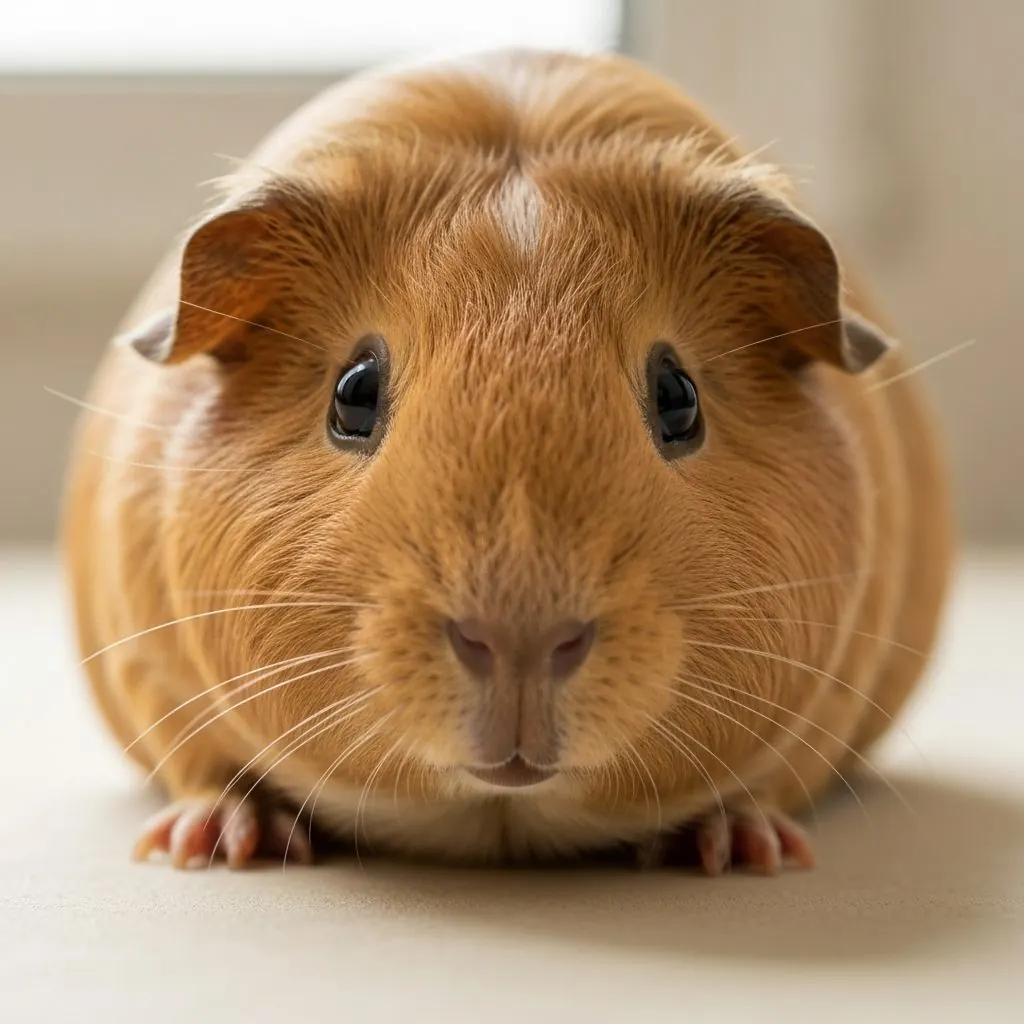
Healthy eyes are bright and dark, with a clear, glossy front and clean surrounding fur. A small amount of crusty material at the inner corner after sleep is normal and can be gently wiped away with a clean damp cloth. The eye should open fully, and your pig should not be squinting or pawing at their face.
You may also notice a little milky fluid in the corners while they groom. The RSPCA says small amounts of this are common during grooming. If it becomes more frequent, dries up, or shows up at other times, it may mean they are unwell.
Making eye condition part of your routine daily check, alongside appetite, droppings, and general behaviour, is one of the most reliable ways to catch problems early. The daily checks section of the general care guide explains how to build this into a practical habit.
Common problems and their signs
| Symptom | Possible cause | Urgency |
|---|---|---|
| Watery discharge, one eye | Hay or dust irritation, early infection | Get checked if not resolved quickly |
| Thick yellow/green discharge | Bacterial infection | Vet promptly |
| Pink or bloodshot whites | Conjunctivitis, injury, infection | Same day |
| Cloudiness or a pale patch | Cataract, ulcer, or serious infection | Urgent |
| Squinting or pawing at face | Pain, foreign body, scratched cornea | Same day |
| Puffiness around the socket | Abscess or dental root issue | Urgent |
| Looks sunken or smaller | Pain, dehydration, or serious illness | Urgent |
Hay, dust, and bedding irritation. Fine hay dust or loose bedding particles are a common cause of mild irritation: a watery eye, slightly pink at the edges. Switching to better quality, less dusty hay often helps. Choosing safe bedding options that do not create fine particulate matter reduces this risk considerably. If it remains watery or worsens after 24 hours, book an appointment rather than continuing to monitor.
Conjunctivitis (pink eye). Bacterial conjunctivitis produces redness, puffy eyelids, and discharge that may be clear initially before becoming thicker. It can affect one or both sides. It needs prescribed treatment from the practice; human products and saline rinses are no substitute. If it spreads to the other side or does not improve within 48 hours of starting treatment, go back for a follow-up check.
Scratches and ulcers. The clear front of the eye, the cornea, can be scratched by hay (the classic “hay poke”), bedding, or a scuffle with a cagemate. A scratched cornea is painful and your pig will squint or paw at it. It looks like minor irritation from the outside but can worsen rapidly without treatment, which the practice will prescribe once they have examined it.
Cataracts. A whitish, cloudy appearance inside the eye itself, on the lens, can indicate cataracts. These are more common in older animals and in those with diabetes-like metabolic conditions. Cataracts are not painful in themselves, but they do impair vision. A pig with reduced vision benefits from a stable, unchanged layout and a consistent handling approach.
Dental causes. This one surprises many people: overgrown or infected tooth roots can cause puffiness, discharge, and watering around the eye because the roots sit so close to the socket. If eye trouble comes with changes in chewing, weight loss, or drooling, the cause may be dental rather than ocular. This requires specialist assessment.
Why ulcers and scratches are so common
Ulcers are one of the most frequently recorded problems in UK pets of this species. A Royal Veterinary College VetCompass study of 3,785 animals under UK veterinary care in 2019 found corneal ulceration in 4.99% of them over a year, behind only overgrown nails and ringworm. Females were more susceptible to these disorders than males.
Most of these injuries come from the environment, which means you can lower the risk. PDSA suggests offering hay at a lower level of the enclosure rather than at eye height, choosing softer hay, and avoiding straw. Do not take hay away, though: they need it to eat and to feel safe.
What you can safely do at home
You can gently wipe away discharge from the corner using a clean damp cloth or cotton pad, with a separate one for each side. You can improve bedding quality and hay type to reduce dust exposure. You can note the symptoms carefully and phone the practice. That is the limit of safe home management. Do not apply human products, saline solutions, or any over-the-counter preparation without veterinary guidance. The eye is not a place to experiment.
Keep the enclosure cleaning routine regular; a clean environment reduces the bacterial load that contributes to infection. Alongside reading about grooming and face checks, regular cleaning makes a real difference.
When not to wait
Contact a vet experienced with guinea pigs the same day if: the eye is cloudy or has a pale patch on the front; there is thick, coloured discharge; your pig is squinting and will not open it fully; there is any visible puffiness around the socket; or one eye appears smaller or sunken compared with the other. Read the health guide for the broader framework for triage decisions.
More on spotting health problems: diarrhoea in guinea pigs, guinea pig hair loss, five-minute daily health check and guinea pig sneezing.
Frequently asked questions
- Can guinea pigs get conjunctivitis from each other?
- Some bacterial causes of conjunctivitis can spread between guinea pigs sharing an enclosure. If one pig develops an eye infection, monitor others closely. Wash hands between handling animals.
- Are there breeds more prone to eye problems?
- Rex and some shorter-faced guinea pig varieties can be slightly more prone to eye irritation due to coat type or face structure, but eye problems can occur in any breed and are mostly related to environment and age.
- My guinea pig has a milky film over their eye but seems fine. Is it urgent?
- Any cloudiness or white area on the eye surface warrants same-day vet contact. Corneal ulcers and cataracts can look similar from a distance. A guinea pig that "seems fine" with a cloudy eye may still be experiencing pain — guinea pigs hide discomfort very effectively.
- Can I use human saline eye wash?
- Not as a treatment. Gentle rinsing to remove loose debris before a vet visit might be appropriate in some cases, but this does not replace vet assessment, and the wrong approach can introduce further irritants.