
Paper Bedding for Guinea Pigs: Types, Absorbency, Dust and Cleaning
Quick answer
Key facts
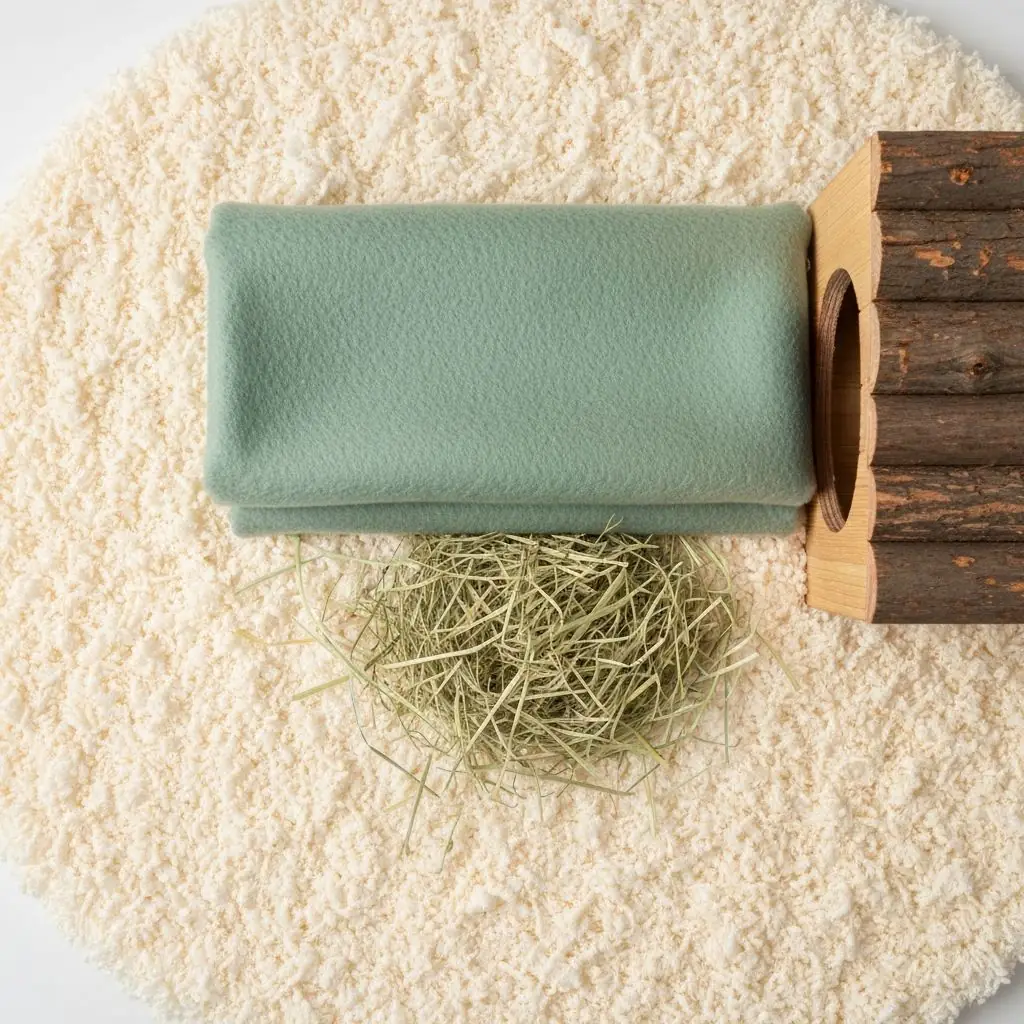
A dust-extracted, unscented recycled lining is a sound floor for most herds. Compressed nuggets soak up wee well but feel firm, so cover the sleeping spots with fresh hay. Spot clean daily and clear everything out at least once a week.
- PDSA says compressed paper bedding is softer and less dusty than sawdust, and absorbs wee well.
- A lab test of six rodent beddings found that absorbency claims made by weight can mislead, because cages are filled by depth.
- The Rabbit Welfare Association warns that printed sheets carry ink your animals may eat.
- The BSAVA guide suggests a floor covering 2 to 5 cm deep, with extra dust-free bedding on top.
- RSPCA: spot clean daily and deep clean at least once a week.
Yes, a recycled paper lining is a good choice for most guinea pig owners, as long as it is dust-extracted, unscented and comfortable to lie on. Pressed nuggets soak up wee well but feel firm underfoot, so add a soft top layer where your herd sleeps. Spot clean daily and change it all at least weekly.
It is easy to find in UK pet shops, and it has real points in its favour: it is light, it is made from waste, and the better versions are low in dust. The catch is that the word on the bag covers several quite different products, and they do not all behave the same way in a guinea pig cage. For how it stacks up against every other option, our guide to bedding for your herd sets the main systems side by side.
The main types of paper bedding
Walk down the small animal aisle of any pet shop or farm shop and you will meet four broad kinds. They are all recycled or reclaimed fibre, but they are processed differently, and that changes how soft, absorbent and dusty each one is.
- Shredded or confetti-style. Loose, fluffy strips or flakes. The Rabbit Welfare Association says this kind varies in texture and absorbency depending on what was shredded, and that the gentler the sheet, the better, both for comfort and for soaking up wee.
- Compressed nuggets. Hard little granules of pressed fibre. The RWA calls them highly absorbent and great for toilet areas, but less comfortable as a bed.
- Pulp or cellulose. A springy, fibrous lining made from reclaimed pulp. The RWA describes pulped products as safe, highly absorbent and dust-extracted, with good environmental credentials because they are a waste product of the industry.
- Newspaper. Flat sheets used under everything else. The RWA notes it is commonly used to line sleeping and toilet areas for absorbency and insulation.
You may also see shredded office waste from home. That falls under the first type, with the same warning about ink that we cover below. Here is how the four compare at a glance:
| Type | Feel | Best used for | Watch out for |
|---|---|---|---|
| Shredded | Fluffy, light | Nesting and sleeping areas | Ink on printed sheets; absorbency varies |
| Compressed nuggets | Firm, gritty | Toilet corners and the base layer | Uncomfortable on its own |
| Pulp or cellulose | Cushioned, springy | The whole floor | Scented or treated versions |
| Printed sheets | Flat, thin | The bottom layer only | Ink, and it gets soggy fast |
In bigger cages you can also mix two: firm granules where the herd wees, and something cosy where they sleep. That is not a rule, just a sensible way to play to each type's strengths.
Absorbency: what the label does not tell you
PDSA says compressed paper bedding is softer, less dusty and will absorb wee well, which is why it suggests it over sawdust. The RWA rates both the pressed kind and pulp as highly absorbent. So far, so good. The trouble starts when you try to compare one bag with another.
In 2005, Burn and Mason tested six rodent beddings, including two loose pulp products and a reclaimed pulp, and measured how much salty water each could hold. They worked it out two ways: by weight and by volume. The rankings flipped. The reclaimed pulp looked almost three times as absorbent as corncob by weight, yet by volume it came last, with corncob holding about twice as much.
Their point was simple. Makers usually quote absorbency per unit of weight, but nobody fills cages by weight; you fill them to a depth. So the volume figure is the one that tells you how a layer will cope in real cages. A bag that boasts about holding many times its own weight is answering a question nobody filling a tray ever asks. The two loose pulp linings, by the way, came second by volume, behind corncob, and the authors linked that to the low ammonia levels seen with them in earlier work.
An older lab study, by Potgieter and Wilke in 1996, compared a eucalyptus pulp lining with pine shavings and vermiculite. The pulp produced the least dust, the lowest ammonia and absorbed the most water of the three; pine gave the highest ammonia. Neither study used guinea pigs, so treat them as a guide to the materials rather than proof of how your pair will get on.
What this means for smell. Ammonia is the sharp smell of stale wee, and a lining that locks wee away slows it down. Purdue's vet school says the great strength of one pulp bedding is odour control, because its base inhibits ammonia forming, and calls compressed nuggets excellent for smell too. No lining fixes a toilet corner that is left for a week, though. The practical test is your nose and the bottom of the tray.
Dust, ink and chemicals
Dust matters because a guinea pig spends most of the day with their noses a few centimetres from the floor. PDSA says dusty materials can cause breathing problems in small pets, and that you should choose bedding labelled dust-free or dust-extracted and untreated. The RSPCA's benchmark, written for shavings, is a floor covering that is dry, dust-free and absorbent. Open a new bag somewhere you can see the air: if a cloud comes up when you pour, use something else.
Ink. The RWA points out that printed sheets may cause problems if eaten, and newsprint is obviously covered in ink, so keep an eye on what your guinea pig chews. Old newspapers cost nothing, though a herd tends to read them with its teeth. Plain, unprinted products avoid the question entirely.
Scents and chemicals. PDSA says any chemical treatments can cause health issues and that deodorising chemicals are not suitable for small pets. Scented versions exist because humans like a nice smell, and the small noses closest to it never got a vote. Skip anything perfumed, coloured with dyes you cannot identify, or sold as odour-neutralising with added chemicals.
Stringy textures. The RSPCA says not to give nesting materials that separate into thin strands, such as cotton wool. A good shredded lining should break into flakes, not threads, so pull a pinch apart before you fill the cage.
The BSAVA PetSavers guide lists breathing difficulties and discharges from the eyes or nose among the signs that mean you should contact your vet, so do not put respiratory issues down to a dusty bag and wait.
Comfort: will your guinea pigs like it?
This is where the pressed kind loses points. The RWA says they are less comfortable as a bed than some other products and recommends covering them with something softer. Purdue says the compressed kind can be a little rough as the only lining. The granules crunch underfoot like gravel, which suits a toilet corner far better than a bed.
There is one small piece of research on what guinea pigs themselves prefer. In a 2003 Japanese lab study, Kawakami and colleagues gave each guinea pig a choice of timber flakes or cut sheets. In the light, they rested far more on the flakes. In the dark, they crossed between the two more often and stayed rather longer on the sheets. The authors suggested that guinea pigs prefer different bedding in light and dark. It was a short study of one kind of sheet, so it does not say paper is bad, only that comfort matters to them and is worth watching.
The fix is easy and is what the charities recommend anyway: a cushioned, edible top layer. The RSPCA wants a dry floor covering supplemented with forage so the animals can tunnel and hide, and warm bedding that is safe to eat. Woodgreen goes further and says fresh, sweet-smelling, green forage is the most suitable bedding of all, and the deeper the better. Paper underneath, hay on top.
Check each guinea pig's feet as part of your weekly handling. The BSAVA guide lists wounds or sores on the feet among the signs to take to your vet, so if you spot red or sore patches after a change of floor, add more padding and get them checked.
How to lay it in a cage or hutch
The BSAVA PetSavers guide says the floor can be covered 2 to 5 cm deep with an absorbent substrate, naming pelleted recycled material, cellulose fibre and newspaper among the options, and adds that extra dust-free bedding such as shredded sheets should be provided as well. Here is a simple way to set it up in guinea pig cages and hutches:
- Start with a dry base. Make sure the tray or floor is completely dry. PDSA says not to let the animals back in until it is.
- Add a few sheets underneath, if you like. Woodgreen suggests lining the enclosure with a thick layer of it first, which makes lifting everything out on cleaning day much quicker.
- Spread the main lining 2 to 5 cm deep. Cover the whole guinea pig cage floor, and go towards the deeper end in toilet corners. Using pellets just in those corners is a tidy way to make a bag last.
- Pile forage over sleeping and hiding areas. Be generous round the hide boxes so they can burrow and nibble.
- Keep some open floor. Leave space to run about, then add food, water and a hide for each guinea pig.
If the tray underneath is damp by the next morning, lay it thicker or clear the corners more often. Forage gets eaten, flattened and kicked about, so the soft layer shrinks faster than you expect and needs topping up every day.
Paper or fleece liners?
The other big system for indoor cages is fabric. Woodgreen says you can use fleece for indoor herds as long as they have several piles of fluffy hay to graze from, but warns that fleece blankets need changing every couple of days, so be ready for a lot of washing. PDSA notes that indoor pigs are often kept on veterinary bedding and suggests shaking off dry droppings before it goes in the machine.
So the choice comes down to what you would rather do: buy and bin a disposable lining, or wash liners and keep spare liners drying. Liners are a bigger buy at the start; a recycled lining is cheaper to begin with, but over the long run you keep buying it. Neither is wrong. Our guide to fleece, linked below, covers fabric in detail.
How often to change it
The RSPCA says guinea pig cages and hutches should be spot cleaned daily and deep cleaned at least once a week, but not so often that the animals are constantly disturbed. PDSA's routine is similar. Here is how that works with a recycled lining:
- Every day: scoop out droppings, wet patches and soiled forage, then top up. PDSA says to get rid of any wet or dirty bedding and to wash food and water bowls before refilling.
- Every week: lift everything out, wipe the base with a pet-safe cleaner, let it dry, then lay fresh. Woodgreen says a bigger herd, or winter when they spend less time in their run, may mean doing this more often.
- Every month: PDSA suggests emptying the hutch completely and scrubbing it inside and out, toys and shelters included.
Purdue suggests that where forage sits on top of compressed nuggets, the top layer can be changed every one to two days while the base lasts longer. That fits the RSPCA advice as long as the base still gets a full change at least weekly. Thirsty granules can look dry on the surface and be soaked further down, so lift a corner during the daily scoop. Good cage cleaning is mostly about those toilet corners.
Disposing of used bedding
One nice thing about paper bedding is where it ends up, and it is one of the easier floors to compost. Suffolk's councils say hutch waste from vegetarian animals, including shredded sheets, straw, forage and droppings, can go in a home compost bin, and they name guinea pigs among the animals it covers.
Keep any cat or dog waste out, and check your own council before using a garden waste bin, as the rules differ by area.
More on bedding choices: fleece bedding for guinea pigs, hemp bedding, whether wood shavings are safe and whether guinea pigs can sleep on straw.
Frequently asked questions
- Is a recycled lining safe for my guinea pig?
- Yes, if it is dust-extracted, unscented and untreated. PDSA says dusty materials and deodorising chemicals are not suitable for small pets. See your vet if you notice sneezing or noisy breathing.
- How deep should it be?
- The BSAVA guide suggests covering the floor 2 to 5 cm deep, a little deeper in toilet corners, with soft forage on top where they sleep.
- Can I use shredded newsprint?
- It can be used, but printed sheets carry ink. The Rabbit Welfare Association says to keep an eye on animals eating it, so plain products are a safer choice.
- Are pressed nuggets comfortable enough on their own?
- Not really. They are firm, so cover them with a cosy, edible layer, especially round hides and sleeping spots.
- How often should I change it?
- Remove droppings and wet patches every day and change it all at least once a week, as the RSPCA advises. Bigger herds and winter can mean more often.
Sources
- PDSA, Lining your pet's cage: suitable substrates for small pets and The ideal home for your guinea pig (checked 22 November 2026).
- RSPCA, Guinea pig environment (checked 22 November 2026).
- Rabbit Welfare Association & Fund, Bedding and litter (checked 22 November 2026).
- Woodgreen Pets Charity, Caring for guinea pigs (checked 22 November 2026).
- BSAVA PetSavers, Guide to guinea pigs (2015) (checked 22 November 2026).
- Burn C.C. and Mason G.J., Laboratory Animals (2005), Absorbencies of six different rodent beddings: commercially advertised absorbencies are potentially misleading (checked 22 November 2026).
- Potgieter F.J. and Wilke P.I., Laboratory Animals (1996), The dust content, dust generation, ammonia production, and absorption properties of three different rodent bedding types (checked 22 November 2026).
- Kawakami K. and others, Experimental Animals (2003), Preference of guinea pigs for bedding materials (checked 22 November 2026).
- Purdue University College of Veterinary Medicine, Care of guinea pigs (checked 22 November 2026).
- Suffolk Recycling, Vegetarian pet bedding and waste (checked 22 November 2026).