
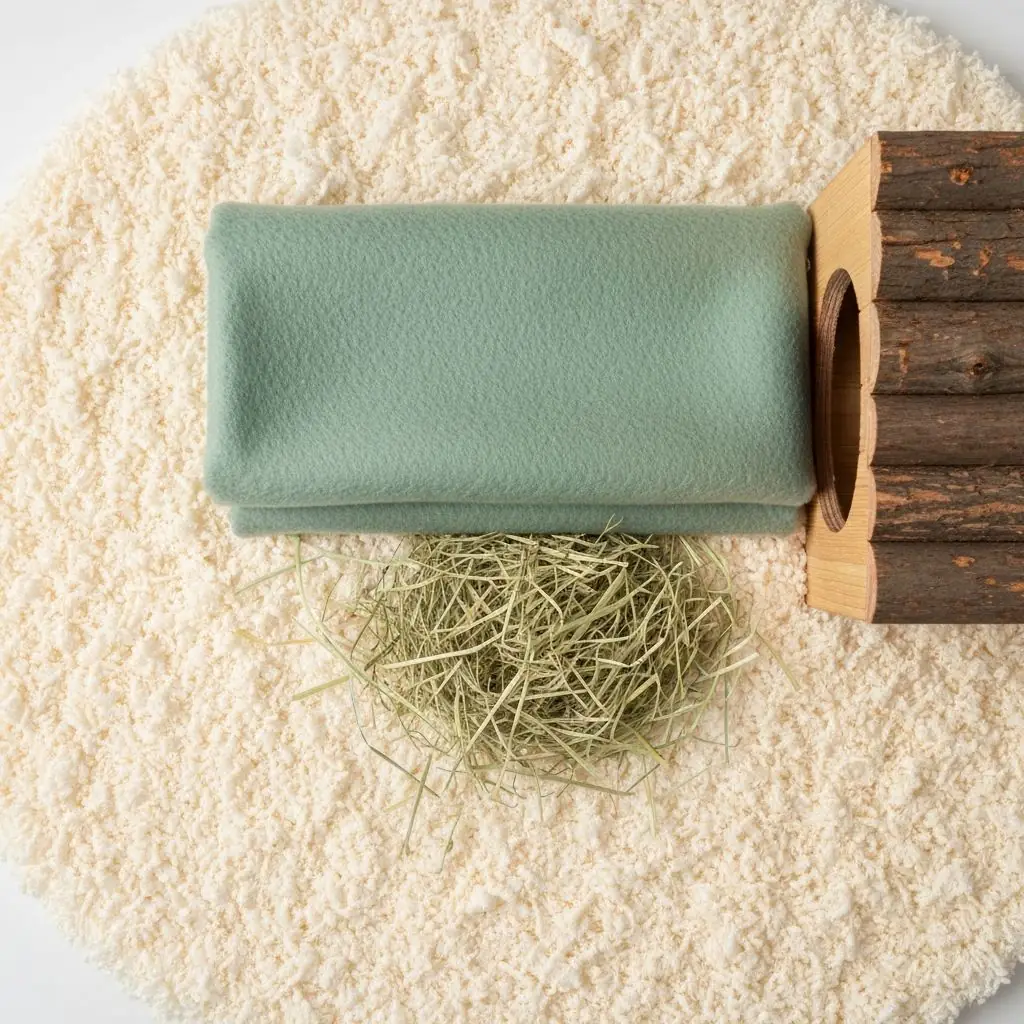
Fleece Bedding for Guinea Pigs: Layers, Daily Sweeping and Laundry
Quick answer
Key facts
Fabric liners can work well indoors if they sit on an absorbent pad, have been pre-washed so wee passes straight through, and get swept every day. Woodgreen says to expect changes every couple of days, and your herd still needs plenty of forage piles to graze and hide in.
- Woodgreen accepts it for indoor guinea pigs as long as they have several forage piles to graze from.
- The fabric lets wee pass through to a pad below, so the top stays drier underfoot.
- New fabric usually needs several hot washes before liquid will soak through it.
- Rescue guides say fabric softener and dryer sheets stop it wicking.
- RSPCA: spot clean daily and deep clean at least once a week.
Yes, fleece can work as bedding for indoor guinea pigs, as long as you set it up as a system. The fabric sits on top of an absorbent pad, lets wee soak straight through, and stays fairly dry underfoot. In return it needs sweeping every day, laundering every few days and generous piles of forage on top.
Woodgreen Pets Charity is happy with it for indoor piggies as long as they have multiple piles of fluffy hay to graze from. It also tells owners to be prepared to sweep and wash lots of blankets in the machine, because they will need changing every couple of days. If you are still weighing up the options, our guide to bedding systems puts the main choices side by side.
This guide covers how the fabric works, how to build the layers in a cage, the daily sweep, the laundry, and the problems that tell you it is not working. We will not name brands or products. What matters is the type of material and how you look after it.
Does it suit your herd?
Charity advice on fabric is short and careful. Woodgreen accepts it indoors, with conditions, and PDSA notes that many people with indoor guinea pigs use vetbedding, a washable pet bedding fabric. Neither says it is the best choice for every home, and Woodgreen still calls its preferred floor of newspaper and deep dried grass the most suitable option.
So the honest answer depends on your house and your routine. It tends to suit owners who:
- Keep their herd indoors. The charity advice above is about indoor piggies. Outdoor hutches need warm bedding they can burrow into, and the RSPCA says bedding should be safe to eat.
- Can face extra laundry. Every few days you will be laundering and drying large pieces of fabric, plus spares to use while the others dry.
- Have time for a daily sweep. Droppings sit on top rather than sinking in, so they have to be swept up every day.
- Want less waste in the bin. A rescue fleece guide says it can save money in the long run, because you are not buying bags of shavings or paper every week.
It suits people less well if they have no room to dry big sheets of fabric, or if a herd member is unwell and needs a floor that can be changed in full at a moment's notice. One rescue also points out that you notice droppings far more than you do with paper, and that seeing poo bothers some people. Piggies drop pellets wherever they happen to be standing, so a clean sheet in the morning is a spotty one by lunchtime.
How the wicking works
Fabric liners work by letting wee pass through the top sheet into something absorbent below. Metropolitan Guinea Pig Rescue, which publishes a detailed bedding guide, puts it simply: set up properly, the fabric allows urine to pass through into absorbent material below, the top stays dry, and so do your piggies' bottoms. If the set-up is wrong, the wee sits on the surface and your herd walks through it.
That is why fleece on its own, laid straight on the base of most cages, will not keep anyone dry. It needs three things working together:
- A top sheet that wicks. The rescue recommends 100% polyester anti-pill fabric. Tuna's Guinea Pig Sanctuary and Rescue says fleece blankets meant for people are not recommended, because they are not designed to draw moisture away from the feet.
- An absorbent layer underneath. This holds the wee. MGPR says most owners find furniture pads and towels the most effective, and that you may need more than one of them in heavy toilet spots.
- A base that keeps the wet off your floor. A solid cage tray, or a waterproof layer under the pads on a DIY base, stops wee reaching the carpet.
Ready-made fleece liners from a pet shop usually stitch the top sheet and the pad together, which saves folding and lining up separate pieces. DIY set-ups cost less and let you double up the pads where your herd uses the toilet most. Both follow the same idea.
Setting up a fleece cage
Pre-washing comes first. New fabric often lets liquid bead on top. MGPR says that if it is not washed first, the fabric will not wick and urine will pool on the surface. Its method is detergent and hot water, repeated three to five times, with no fabric softener at any stage. Tuna's rescue gives a simple test: pour a little water on the sheet over a pad. If it sinks in, it is ready. If it sits on top, run it through again.
Check the care label too. Shop-bought sheets vary in fabric and finish, temperatures vary between products, and we could not find a UK charity or vet source that gives a temperature for this kind of bedding, so follow the maker's instructions.
Then build the floor:
- Start with a clean, dry base. PDSA says not to put your piggies back until their home is completely dry after cleaning. Wipe down plastic bases, including the coroplast trays used in C&C cages and many indoor cages.
- Lay the pads. Cover the whole floor, then add an extra pad in the corners and under the hides your herd uses as a toilet.
- Lay the top sheet over everything. Pull it flat and tuck the edges under or up the sides so nobody can burrow under them and chew the pads.
- Add forage piles, hides and food. Put several deep piles of dried grass around the cage, so each pig can graze and hide without competing.
The forage piles matter more than people expect. The RSPCA wants guinea pigs to have warm bedding that is safe to eat, and Woodgreen's condition for using fabric at all is that the herd has multiple piles to graze from. A bare sheet with one feeding rack looks tidy in photos and gives a guinea pig nothing to do.
Avoid anything that pulls into strands. The RSPCA says not to give nesting materials that separate into thin threads, such as cotton wool. Worn fabric that is pilling or fraying needs replacing for the same reason.
Wire floors. If your cage has a wire bottom, PDSA suggests putting lino down before the bedding goes in, and the RSPCA advises against grid floors because they can hurt guinea pig feet.
Daily sweeping and weekly changes
The RSPCA says a guinea pig home should be spot cleaned daily and deep cleaned at least once a week, and that the right frequency depends on cage size and how many guinea pigs live in it. With fabric, the daily job is a sweep. MGPR says droppings need sweeping up once a day so the herd is not standing in them, and that most people use a small dustpan and brush because bits of grass clog a vacuum.
A daily routine might look like this:
- Sweep the droppings and any scattered grass off the top sheet.
- Check the toilet corners. Press a hand on the pads there. If they feel damp, swap that section for a dry one rather than waiting for the full change.
- Refresh the forage piles and clean the bowls and water bottle.
- Sniff test. If the cage smells sharp before the change day, the pads are holding too much and need changing more often.
On change day, lift everything out, wipe the base, let it dry and put in fresh sheets and pads. Woodgreen says to expect this every couple of days, MGPR says roughly every three to five days, and Tuna's rescue describes a full weekly swap with spot changes in between. The difference comes down to herd size, cage size and how well your pads soak. PDSA also suggests a monthly scrub of the whole home, toys and shelters with a pet-safe cleaner.
Good odour control comes from that rhythm. The BSAVA guide says the floor should be changed often enough to keep it dry, cut down the build-up of ammonia and clear away droppings. A heavy perfume on the fleece does none of those things, and a strong smell is a sign you need more frequent changes. Keep two or three full sets, because a damp sheet on the airer in November takes its time.
Laundry day without ruining the wicking
Most of the work with fleece happens on laundry day, and the main aim is to keep fur, grass and droppings out of it. PDSA says to shake off any dry droppingsbefore vetbedding goes in for a clean. Tuna's rescue suggests removing larger debris first with a stiff brush, a vacuum or a lint roller, and not overloading the washer or dryer.
Common habits from rescue guides:
- Brush or shake everything outside first. Whatever you leave on the sheets ends up in the drum and the filter.
- Use a laundry bag for animal bedding. Tuna's rescue mentions a bag kept for animal bedding as an option.
- No softener and no dryer sheets. MGPR says both stop the fabric wicking, and you end up with puddles of urine on top.
- Follow the care label for heat. We found no UK vet or charity temperature to quote.
- Dry it fully before it goes back. PDSA's rule about a completely dry home applies here too.
MGPR also warns that if you do not remove fur and grass first, you may need to wipe the inside of the washing machine afterwards. Expect to find dried grass in parts of the drum you did not know existed. If the sheets start to smell even when clean, or wee begins to pool on top again, run them through the pre-washing routine again before giving up on them.
Problems to watch for
Fabric only works if the surface stays dry. The warning signs are wee pooling on top instead of soaking through, which usually means softener build-up or new fabric that needs more washes; damp pads in the toilet corners by the end of the day; a sharp smell before change day; wet or stained fur on bellies and feet; and pads chewed or pulled out from under the edges. Any of these means the set-up needs changing.
Feet deserve a regular look whatever floor you use. PDSA's routine health check includes making sure their feet have no sores or wounds, and that your guinea pig moves around without stiffness or limping. The BSAVA guide lists wounds or sores on the feet among the signs that need a vet.
People in the house matter too. Woodgreen points out that owners can be allergic to bedding, which is no fun at all. The forage piles count as bedding too, so a sneezy owner may need to look at the forage as well as the floor.
If you try fabric and the laundry beats you, that is fine. Paper, hemp and other loose bedding all work with a good routine, and the welfare basics stay the same: a dry, dust-free floor, plenty to graze and hide in, enough space, and cleaning you can keep up.
More on bedding choices: hemp bedding for guinea pigs, whether wood shavings are safe, paper bedding and whether guinea pigs can sleep on straw.
Frequently asked questions
- Is fabric bedding safe for cavies?
- It can be, indoors, if it wicks wee into a pad below and is swept daily. Woodgreen says they also need several piles of hay to graze from. Replace pilling or fraying sheets.
- What goes under the top sheet?
- An absorbent pad. Rescue guides say towels and furniture pads work well, with extra pads in toilet corners. On a DIY base, put something waterproof below.
- Why is wee sitting on top?
- New fabric often needs several hot washes before it wicks, and fabric softener or dryer sheets stop it working. Rewash without softener and test with a little water.
- How often should I change it?
- Sweep droppings daily. Woodgreen says expect to change it every couple of days, and rescue guides range from every few days to weekly with spot changes in between.
Sources
- Woodgreen Pets Charity, Caring for guinea pigs (checked 22 November 2026).
- PDSA, Lining your pet's cage, Ideal home advice and Health advice (checked 22 November 2026).
- RSPCA, Guinea pig environment (checked 22 November 2026).
- BSAVA PetSavers, Guinea pig guide (2015) (checked 22 November 2026).
- Metropolitan Guinea Pig Rescue, Guinea pig bedding (checked 22 November 2026).
- Tuna's Guinea Pig Sanctuary and Rescue, Using fleece successfully (checked 22 November 2026).