
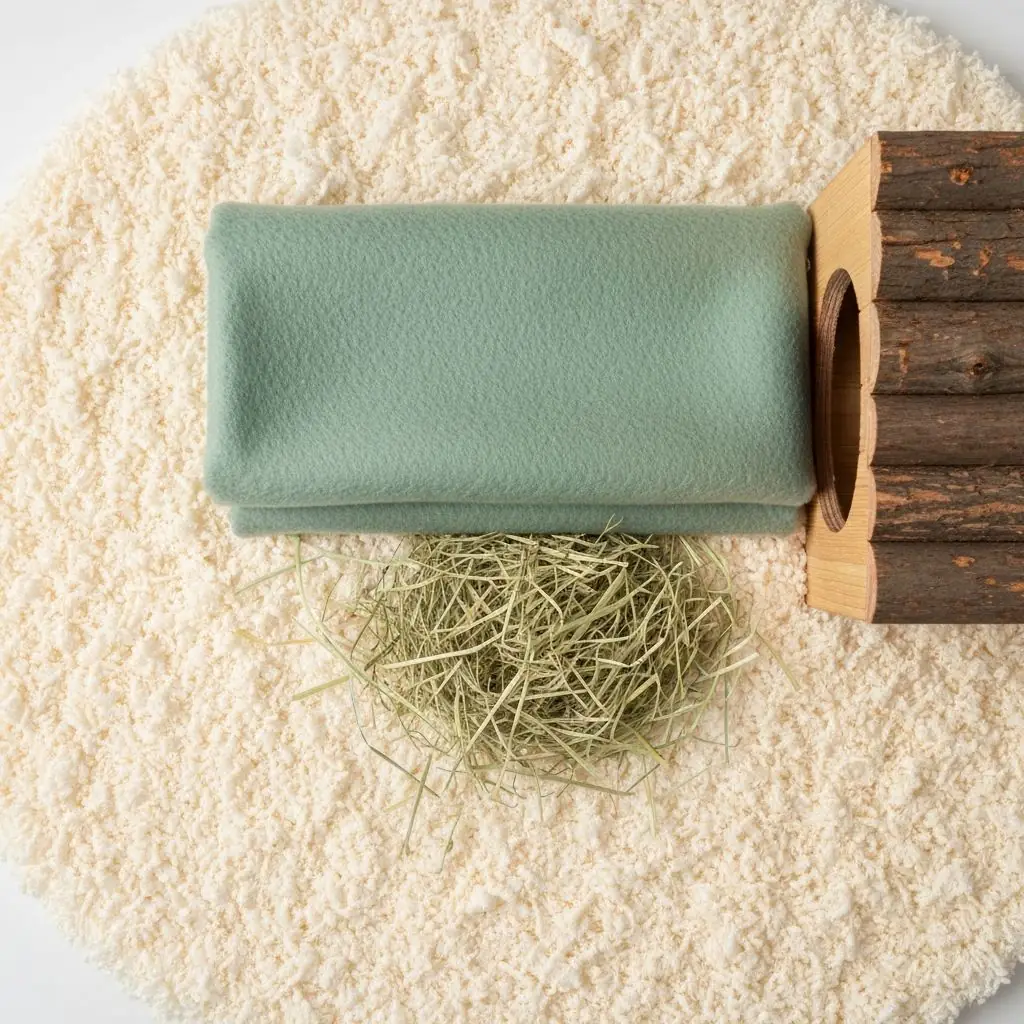
Can Guinea Pigs Sleep on Straw? Eye Risks, Winter Warmth and Safer Options
Quick answer
Key facts
Straw will keep a hutch warm, but the RSPCA says to avoid coarse materials like straw because they can cause eye injuries. Soft, dust-free hay is the bedding UK charities point to first, with an absorbent layer underneath.
- The RSPCA lists coarse straw among the materials to avoid, because of the risk to the eyes.
- PDSA names hay or straw pokes as a common eye problem and suggests avoiding straw all together.
- Wood Green says straw, shavings and sawdust can carry fur mites and cause respiratory, fungal and mange problems.
- The RSPCA says to move them indoors when it drops below 15°C.
Guinea pigs can sleep on straw, and it does hold warmth, but the RSPCA and PDSA's health advice both say to avoid it. The stiff, hollow stalks can poke and scratch their eyes, and soft hay over an absorbent base does the same job with less risk.
That is the short version. The longer one is that the advice is genuinely mixed, so it helps to know who says what and why. Our guide to bedding covers the full range of options. This page sticks to straw.
Why the welfare advice warns against straw
The main worry is eyes. PDSA explains that their eyes aren't very well protected, and lists hay or straw pokes among the common problems in this species: a hard piece of stalk catches the eye while they are foraging. Its advice for cutting that risk includes avoiding straw all together.
The RSPCA agrees. Its housing guidance asks for warm bedding that is safe to eat, such as dust-free hay, and says to avoid coarse materials like straw because they can cause eye injuries. Guinea pigs go into a fresh pile of bedding face first, so anything with a stiff end spends a lot of time right next to their eyes.
Wood Green Pets Charity raises a second concern. It warns that shavings, sawdust and straw can often contain fur mites, cause respiratory, fungal and mange conditions, and may trigger allergies. It calls hay the most suitable option.
So why do some guides still list it?
PDSA's own page on the ideal home lists clean, dry hay, straw or shredded paperas bedding, and its winter advice suggests plenty of hay or straw to snuggle into. It would help if the advice all said the same thing, but even a single charity's pages pull in different directions. Read together, the message is that straw is used, it is warm, and the eye risk is the reason the health-focused advice steers you away from it.
Straw and hay: what is the difference?
They look alike in a bag, which is where the confusion starts. Hay is dried grass. Straw is the dry, hollow stalk left once a cereal crop has been harvested. Straw is coarser and stiffer, and it is sold as bedding rather than food.
- Texture. Soft hay bends. Straw stalks tend to stay rigid, which is what makes a poke more likely.
- Safe to eat. The RSPCA wants bedding they can safely eat, and hay meets that.
- Absorbency. Neither is treated as the absorbent layer. The RSPCA pairs hay with dry, dust-free, absorbent litter underneath, and Wood Green uses a thick layer of newspaper topped with hay.
- Warmth. Both trap air. PDSA mentions either for snuggling into in winter, and Wood Green suggests extra hay for them to bury themselves in.
Straw is cheap, golden and looks lovely piled up in a hutch, which is exactly why it is tempting. If you are comparing costs, remember that soft hay doubles as something they can safely eat.
Is straw warmer for an outdoor hutch in winter?
This is usually why people reach for it. PDSA advises plenty of bedding hay or straw for outdoor guinea pigs in winter, changed regularly to keep the hutch fresh and dry, and the RSPCA says an outdoor enclosure needs sufficient bedding throughout the whole space to keep them warm. Warmth comes from depth and dryness, though, and a deep bed of soft hay gives you both without the stiff stalks.
Bedding is only one part of keeping a hutch warm. The charity advice also covers:
- When to bring them in. The RSPCA says to move them indoors when temperatures drop below 15°C. PDSA gives their ideal living temperature as 15 to 20 degrees.
- Shelter. PDSA suggests a sheltered spot away from wind, rain and snow, or a shed or car-free garage. Wood Green says a garage is fine only if no cars or vehicles use it.
- Covers. Wood Green suggests a fitted hutch cover, or blankets and tarpaulin, to keep frost and wind out. PDSA adds that there must still be enough airflow inside.
- Damp. Wood Green warns that a damp hutch can cause serious health issues. It also recommends daily spot cleans in winter, because they spend more time in their sleeping areas.
- Water. Both charities suggest wrapping bottles in bubble wrap to stop them freezing, and checking bowls for ice.
- Older or poorly pigs. Wood Green says they will benefit from living indoors over winter, and that you should not bring them in at night and put them back out by day.
If you still want to use straw
Some keepers do, especially in outdoor hutches. If that is you, the charity advice above still gives you a way to lower the risk:
- Keep their faces away from it. PDSA suggests offering hay at a lower level rather than at eye height, and choosing softer hay. Hay racks and hides lined with soft hay give them somewhere better to root about.
- Never use it as the only layer. Lay an absorbent base down first, as the RSPCA and Wood Green describe.
- Keep it clean and dry. PDSA says to get rid of wet or dirty bedding and clean the hutch more thoroughly once a week. Wood Green recommends daily spot cleans in winter.
- Do not take the hay away. PDSA is clear that you should not remove hay out of worry about pokes, because they burrow in it to stay warm and feel safe.
- Check eyes every day. A quick look at feeding time means you find a scratch early.
If you are switching away from straw, there are plenty of softer choices, and each has its own guide below.
Signs of an eye injury and when to see a vet
Book that appointment rather than treating it yourself. Then look at what is in the enclosure at face height and swap out anything stiff or sharp.
More on bedding choices: fleece bedding for guinea pigs, whether wood shavings are safe, hemp bedding and paper bedding.
Frequently asked questions
- Is straw safe for guinea pigs?
- It is used, but the RSPCA says to avoid coarse materials like straw because they can injure the eyes, and PDSA suggests avoiding it altogether.
- Is straw warmer than hay?
- Both trap warm air. A deep, dry bed of soft hay keeps a hutch warm without the stiff stalks, and PDSA and Wood Green both suggest extra hay in winter.
- Can they eat straw?
- Straw is sold as bedding, not food. The RSPCA wants bedding that is safe to eat, such as dust-free hay, which is one more reason to choose hay.
- What should I do if my piggy has a sore eye?
- See a vet. PDSA lists cloudy or red eyes, discharge, scratches or a closed eye as signs that need checking.
Sources
- RSPCA, Guinea pig environment (checked 21 November 2026).
- PDSA, Five common health problems in guinea pigs, The ideal home for your guinea pig and Keeping guinea pigs warm in winter (checked 21 November 2026).
- Wood Green Pets Charity, Caring for guinea pigs and Cold weather tips for guinea pigs (checked 21 November 2026).