
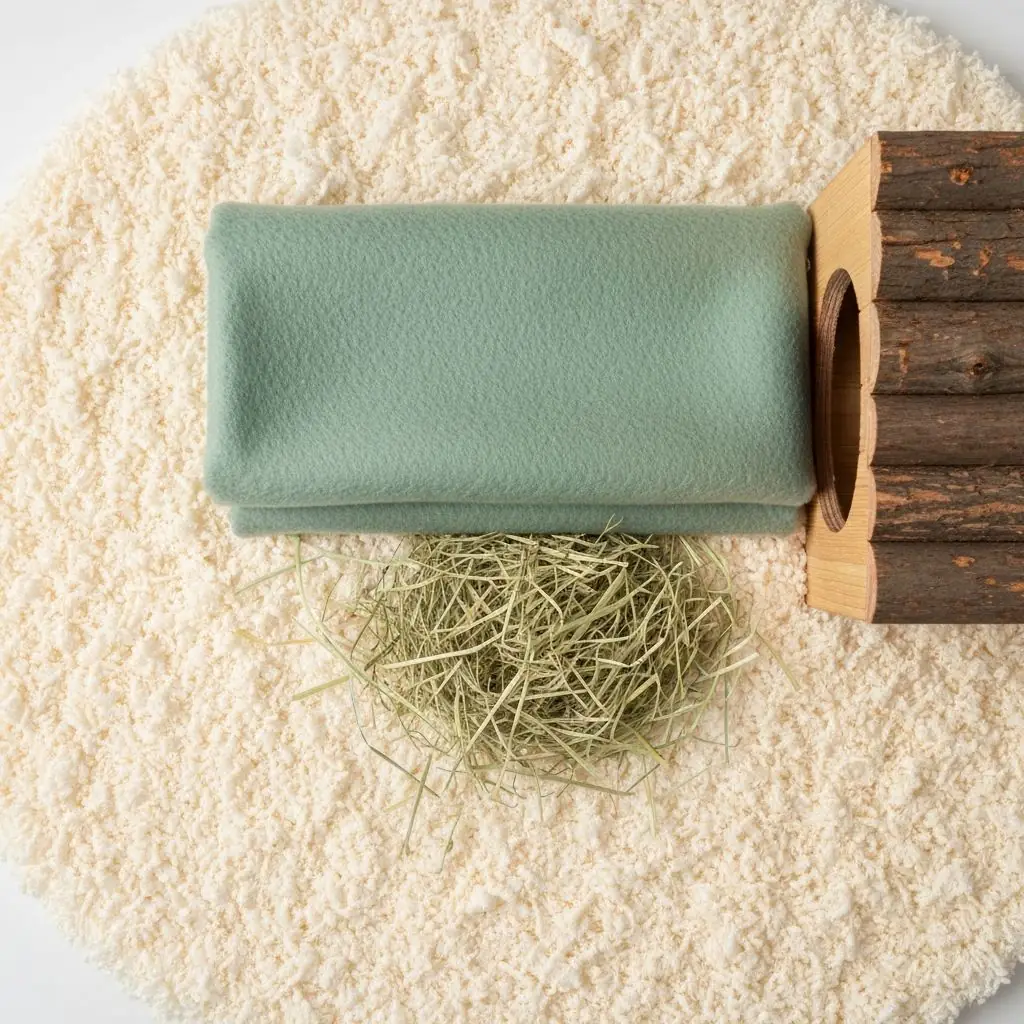
Hemp Bedding for Guinea Pigs: Absorbency, Dust, Layering and Cleaning
Quick answer
Key facts
Chopped stalk litter can work well as the absorbent base of an indoor or outdoor pen, as long as the bag says dust-extracted and you cover it with soft hay where your herd sleeps and burrows. Pick out droppings and wet spots daily and change it all at least weekly.
- Lab tests on ten varieties found the chopped stalk held about two and a half times its dry weight in water.
- The same study did not test dust, so choose a product labelled dust-extracted.
- Charities want litter that is dry, dust-free and absorbent, with hay added so they can tunnel and hide.
- RSPCA: spot clean daily and deep clean at least once a week.
- Used litter from plant-eating pets can go on a home compost heap, per Suffolk councils.
Yes, hemp bedding can make a good base layer for cavies. It soaks up wee well, it is plant stalk rather than softwood, and it composts. Buy a dust-extracted bag, spread it as the floor layer, then add a deep pile of fresh hay over part of it so your piggies have something soft to sleep in, burrow into and eat.
The trade-off is that it is not soft on its own, and we could find no studies of it in small animal pens. So treat it as one sensible option among several, set it up with care, and watch how your herd gets on. For the bigger picture on choosing a floor, our guide to bedding for your herd compares the main systems side by side.
So what is in the bag? When the long outer fibres are stripped from the stem, what is left is the inner part of the stem, called the hurd or shiv. A 2023 study in the journal Animals describes the hurd as basically the inner bark of the stem and notes it is usually treated as a waste product. Chopped into short pieces, it becomes a pale, chunky litter.
The Rabbit Welfare Association lists a hemp and flax product among its bedding options and points out that it is really sold for horses. Because it comes in large bales it can be economical, and it is natural and biodegradable. It is sold mainly for stables, so the bale you bring home may well be bigger than the hutch it is going in. You will also see it in smaller bags in shops and online. We are not going to name brands, because what matters is what is on the label, which we cover below.
You may also come across compressed pellets made from the same stalk. This guide is about the loose chopped kind.
Absorbency, dust and smell
How much wee it soaks up. This is where the stalk earns its place. In that 2023 study, researchers ground the hurd from ten Italian-grown varieties into 8mm pieces and tested it as animal litter. On average it held about 252% of its dry weight in water, so roughly two and a half times its own weight. The figures ranged from about 211% to 318% depending on the variety.
The authors compared this with figures from earlier work, which put fine shavings at about 266%. In other words, it soaks up wee in roughly the same league as good shavings. Their overall conclusion was that the shiv has good physical characteristics, similar to other commercial litters, though they also said on-farm trials are needed before anyone can call the assessment complete.
What that means for smell. The same team also measured how well the litter took up ammonia, the sharp smell from stale wee. It averaged about 50% in their lab test, with real differences between varieties, from 45% to 55.5%. An earlier study they cite, which used horse urine, put the stalk at about 60% against 44% for shavings and 4% for straw. The methods were different, so treat the comparison as a rough guide. Odour control in real life comes down to how often you clear the wet bits, whatever the litter.
The dust question. The Italian study did not measure dustiness at all, and the authors list it as something still to be tested. So we cannot tell you the stalk is low in dust as a fact, whatever the bag says. Packaging loves the word natural, which tells you precisely nothing about dust.
What the charities agree on is the standard to aim for. The RSPCA wants litter that is dry, dust-free and absorbent, and PDSA says any lining should be dust-free. So look for a bag that says dust-extracted, open it somewhere you can see the air, and if a cloud comes up when you pour, use something else. Woodgreen warns that shavings, sawdust and straw can carry fur mites and cause breathing, fungal and mange problems, and can trigger allergies in people too. That is a big part of why owners go looking for something else in the first place.
Before you buy, a quick check of the bag and its contents saves trouble later:
- Dust-extracted printed on the label, since dust-free is the charity standard.
- Nothing softwood mixed in. If it is a blend, make sure there is no pine or other softwood, which the RSPCA says can cause illness.
- Dry when you open it. Damp or musty litter has already failed the RSPCA's first test, so take it back.
- Somewhere dry to keep it. A big bale needs a dry shed or cupboard, or it will not stay dry for long.
Comfort underfoot and layering with hay
The honest downside is comfort: chopped stem is never going to feel like a duvet. The Rabbit Welfare Association makes a similar point about paper pellets, saying they make a less comfortable bed and suggesting a softer covering. For rabbits it suggests straw, but for cavies the softer layer should be hay. The RSPCA advises against straw for them because coarse material can cause eye injuries.
Hay over a firm base is exactly what the charities describe anyway. The RSPCA recommends a dry litter supplemented with hay so the animals can tunnel and hide, and wants something warm to sleep in that is safe to eat, such as dust-free hay. Woodgreen calls hay the most suitable choice of all and says the deeper you can make it, the better. Your pair will happily eat their bed, which is fine, as long as the hay is fresh, green and sweet-smelling rather than brown, dusty or mouldy.
Checking their feet is part of PDSA's routine health check: look for sores or wounds, and for any stiffness or limping. If you spot either after a change of litter, put a softer layer down and book a vet visit.
How to set up a layered floor:
- Start dry. Make sure the tray or hutch floor is completely dry before anything goes in. PDSA says not to put them back until it is.
- Add a layer underneath if you like. Woodgreen suggests lining the enclosure with a thick layer of newspaper before the hay goes in. It makes lifting everything out on cleaning day much easier.
- Spread the stalk litter evenly. Lay enough that wee soaks in before it reaches the floor, and a little deeper in the corners they use as a toilet.
- Pile hay over the sleeping and hiding areas. Go generous, especially round the hides, so they can burrow and nibble.
- Keep the run-around space clear. Leave some open floor for zooming, then add food, water and enough hides for everyone.
No charity gives a depth in centimetres for this kind of litter, so we will not invent one. The practical test is the tray: if the underneath is damp by the next day, lay it thicker or clear the toilet corners more often. Hay gets eaten, flattened and kicked about, so the soft layer shrinks faster than you expect and needs adding to every day.
Cleaning out and composting
The RSPCA says their home should be spot cleaned daily and deep cleaned at least once a week, but not so often that the animals are constantly disturbed. In practice that looks like this:
- Every day: scoop out droppings, wet patches and soiled hay, then add fresh hay. PDSA says to get rid of any wet or dirty litter and to wash food and water bowls before refilling.
- Every week: lift out all the litter, wipe the base with a pet-safe cleaner, let it dry, then lay fresh. Woodgreen says a bigger herd, or winter when they spend less time in their run, may mean doing this more often.
- Every month: PDSA suggests emptying the hutch completely so you can check the floor and corners properly.
A thirsty litter can look drier on the surface than it is further down, so lift a corner during the daily scoop and check. If it smells sharp and stale, it is overdue.
Composting the used litter. This is one of the nicer things about a plant litter. Suffolk's councils say hutch waste from vegetarian animals, including straw, hay, shredded paper and droppings, can go in a home compost bin, and they name these pigs among the animals it covers. The Rabbit Welfare Association describes the stalk litter as biodegradable, so it should break down on the heap along with the rest. Your compost heap will be the only part of the garden that looks forward to cleaning day.
Two cautions. Keep any waste from cats or dogs out, as the councils treat meat-eaters' waste separately. And check your own council's rules before putting it in a garden waste bin, because they differ by area.
Is hemp right for your herd?
It suits owners who want a plant-based, absorbent floor that is easy to compost, and who are happy to add hay daily. It suits pens with a solid tray, inside or out. It is less suited to anyone who wants a soft floor with no extra layer, or who has no space to store a bale. If someone in the house is sneezy around the cage, Woodgreen's point stands: you, or they, may be reacting to the litter or the hay rather than the animals.
Other owners use fabric liners, paper-based litter or aspen and other shavings, and each has its own trade-offs. Whatever you pick, the welfare basics do not change: a dry, dust-free base, deep hay to eat and hide in, enough space, and a routine you can actually keep up. A good litter cannot make up for a cramped cage that rarely gets mucked out.
More on bedding choices: fleece bedding for guinea pigs, whether wood shavings are safe, paper bedding and whether guinea pigs can sleep on straw.
Frequently asked questions
- Is hemp safe for cavies?
- It can be used safely as a base layer if it is dust-extracted and covered with soft hay where they sleep. Stop using it and see your vet if you notice sneezing, wheezing or sore feet.
- How deep should the stalk litter be?
- No charity gives a figure. Lay enough that wee soaks in before reaching the floor, a little deeper in toilet corners, and thicken it if the base is damp by the next day.
- Do I still need hay if I use it?
- Yes. Hay is their main food and the soft layer they burrow into. The RSPCA recommends litter supplemented with hay so they can tunnel and hide.
- How often should I change it?
- Remove droppings and wet spots every day and change it all at least once a week, as the RSPCA advises. Bigger herds and winter can mean doing it more often.
- Can I compost it?
- Yes. Hutch waste from plant-eating pets can go in a home compost bin. Keep cat and dog waste out, and check local rules before using a garden waste bin.
Sources
- Arango S. and others, Animals (2023), Physical characterization of ten hemp varieties to use as animal bedding material (checked 21 November 2026).
- Rabbit Welfare Association & Fund, Bedding and litter (checked 21 November 2026).
- RSPCA, Guinea pig environment (checked 21 November 2026).
- PDSA, Ideal home advice and Health advice (checked 21 November 2026).
- Woodgreen Pets Charity, Caring for guinea pigs (checked 21 November 2026).
- Suffolk Recycling, Vegetarian pet bedding and waste (checked 21 November 2026).