
Do Guinea Pigs Need a Run? Exercise, Grazing and Safe Set-Ups
Quick answer
Key facts
Yes. UK welfare charities and the BSAVA expect cavies to have space to roam beyond their sleeping quarters, ideally with daily access, and the chance to graze on grass when the weather allows.
- PDSA: sleeping quarters of at least 1.5m x 1m with a 2m x 1m pen attached, and constant access to it.
- BSAVA: at least 0.9 square metres per adult, with access to a larger space to roam.
- Wood Green: a pen of 6ft x 4ft x 18in (182cm x 121cm) on the lawn for a pair, with a removable or hinged lid.
- Shade, shelter, hides and secure mesh matter as much as the size.
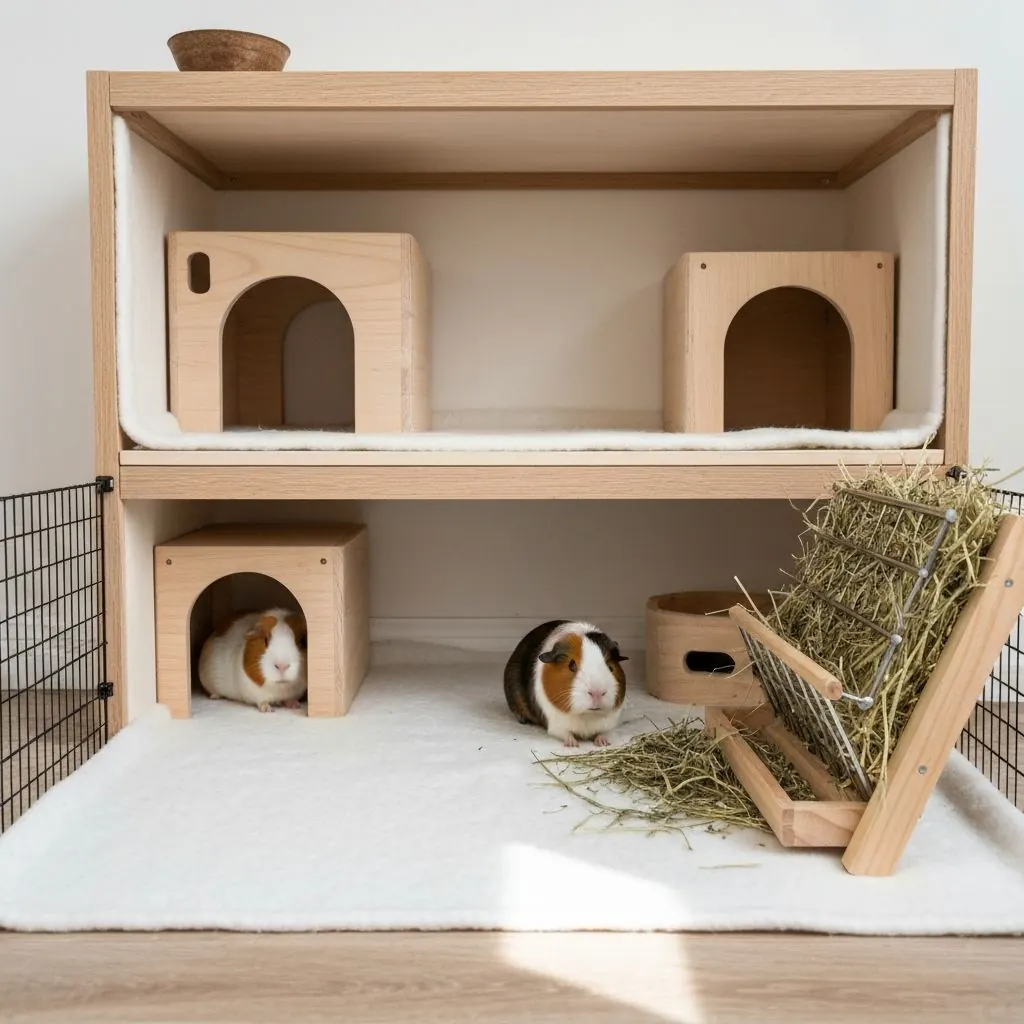
Yes, they do. Cavies need regular space to stretch their legs beyond their cage, and PDSA asks for constant access to a large exercise area. That can be a pen attached to their sleeping quarters, a separate enclosure on the lawn, or a safe pen inside the house.
A sleeping space and a place to potter about are two different jobs, and most setups need both. Our guide to hutches and housing covers the main living quarters; this post is about the extra space on top.
Why a hutch on its own is not enough
Cavies are ground dwellers built for short dashes, sudden turns and a lot of wandering about while they nibble. The RSPCA asks for a secure, large home where they can be active and stand fully upright, and Wood Green says they need plenty of space for running around, which keeps them active, healthy and happy.
The BSAVA PetSavers guide links regular activity to avoiding obesity and osteoporosis. It also says there are significant health benefits to allowing them regular grazing and sunlight. Cramped guinea pigs tend to sit still and eat, while guinea pigs with space tend to explore.
So even with a big home, guinea pigs still need plenty of room to roam somewhere, daily if you can manage it.
How big should the space be?
The UK advice varies a little in its figures, and the bigger the better is the message from all of them. Our cage size guide compares the living-space figures in full, so here are only the numbers that apply to the extra space.
- PDSA: a large hutch of at least 1.5m x 1m, with a 2m x 1m space attached, “but again the bigger the better”.
- BSAVA: a minimum enclosure of 0.9 square metres per adult, with access to a larger space. As they do not jump or climb, it says the sides need only be about 40cm high.
- Wood Green Pets Charity: a garden run of 6ft long by 4ft wide by 18 inches high (182cm by 121cm) for two sows or a neutered boar and sow, and a bigger one for four or more.
- RSPCA: youngsters need about 30cm of height for their popcorning hops.
Measure the floor your pair can actually reach. A pen that is mostly taken up by hides and a water stand is smaller than its label says.
Attached or separate: picking a guinea pig run
There is no single right design. What matters is the size, the security and whether your cavies can get to it often.
Attached to the hutch
PDSA's preferred layout is living quarters with the pen joined on, so the guinea pigs can come and go and choose for themselves when to rest and when to explore. Combination units and run extensions both work, as long as the joined floor meets the figures above and every gap is sealed. The downside is that the whole thing stays put, so the grass underneath wears out.
Separate pens and arks
A lighter pen you carry onto the lawn each morning lets you rotate the grazing. The BSAVA suggests a mobile pen or ark as the way to give cavies who mostly live in the house access to grass and sunlight. PDSA says you may need to move the pen frequently, especially once it gets dirty or the grass has been eaten down. Shifting a heavy frame every couple of days is a chore, and it is the job that is easiest to skip when it rains.
Where to put it
Placement matters as much as the frame. The BSAVA notes that guinea pigs have sensitive hearing, so it advises steering clear of noisy spots, and also of places with fumes from smoking, fires or cars. That rules out the patch next to the drive or the barbecue.
- A level, well-drained stretch of lawn, away from paving and concrete.
- Part shade from morning to evening, or a solid cover over one end.
- Somewhere you can see from the house, so checking on them takes seconds.
Check the ground is flat as well, because a pen on a slope leaves a gap under its low side, and a curious nose will always find it. The BSAVA also recommends an enclosed, solid-sided shelter for security, so give the pen at least one covered end where nervous guinea pigs can retreat if something spooks them.
Grazing on grass safely
The RSPCA describes them as natural grazers, feeding on grass and other leafy plants for long periods through the day and night, and says fresh grass should be offered as often as possible. A pen on the lawn is the simplest way to do that.
- Pick the right patch. PDSA asks for a grassy spot without too much mud and with no standing water. Choose a level, grassy area guinea pigs can explore freely.
- Never give lawnmower clippings. The RSPCA warns they upset the digestive system and make them ill. Let them crop the growing grass themselves.
- Go gradually. The RSPCA says to avoid sudden changes in diet, so start with short sessions if your pair have not had fresh grass for a while.
- Keep it year round if you can. Wood Green notes it is easier to let them graze throughout the year, as they stay acclimatised to the weather.
Once a pair spot fresh grass they will ignore you completely, which is about the only time being snubbed by your pets feels like a result.
Pens and floor time for indoors guinea pigs
Living in the house does not cancel out the need for space. The BSAVA says free roaming in the house should only happen under strict supervision, so a playpen or a sectioned-off corner is the safer option.
- PDSA asks for a non-slip, easy to clean surface that is not carpeted.
- The RSPCA says pots of growing grass are a way to offer grass to pets kept inside.
- Keep cats, dogs and ferrets away; the RSPCA lists other pets that may threaten them among the things to avoid.
- Check for cables, gaps behind furniture and anything chewable before the pen goes up.
On mild days, a portable pen on the lawn gives a house-based pair the grazing and daylight that the BSAVA recommends.
Keeping predators out
The BSAVA lists foxes, birds of prey, and pet dogs, cats and ferrets as threats, and Wood Green adds stoats and rats. PDSA advice is to check that their housing and pen are escape-proof and secure from prowling animals.
- A lid on top. Wood Green specifies a wooden framed pen with a removable or hinged lid. Solid or mesh run covers stop birds and cats getting in from above.
- Firm joins. Check the frame, the mesh fixings and any door catches before each use.
- Nothing left out overnight. Bring the guinea pigs back to their secure quarters before dusk.
Some pet shops still sell flimsy wire pens that a hungry fox would treat as a takeaway box, so buy on build quality, not the photo on the packaging.
Weather, shade and when to bring them in
The BSAVA asks for ample protection from rain and direct sunlight, and outdoor runs need both shade and a dry hiding spot at all times. PDSA says to make sure the pen has shaded areas in hot weather, and to keep the pen from getting too wet or muddy.
Wood Green advises against enclosed plastic igloos in hot weather, as they hold heat. PDSA also warns against concrete and very hard surfaces, which can give them sore feet.
For guinea pigs living outside in winter, PDSA suggests bringing them into the house or keeping them in a warm shed. Our seasonal care guide has more on both.
How much supervision is needed?
On a secure, covered pen in your own garden in daylight, you do not need to sit beside it the whole time, but you should be close enough to check often and spot a change in the weather. Free roaming in the house is different: the BSAVA says it should be strictly supervised.
Wood Green says cavies can be fantastic pets for children, but asks you to supervise at all times so the animals are not squeezed or dropped. It suggests children sit on the floor with a blanket on their lap, so a wriggling pet has no distance to fall. Pens are often where families spend time together, so the same care applies there.
Setting up the inside of the pen
- PDSA asks for lots of tunnels, shelters and hides so they can move around confidently and hide when they want to.
- The RSPCA asks for one more refuge than there are animals.
- Put hay and fresh water in the pen as well, so nobody goes without while they explore.
- Spread the hides out so the bossy one cannot guard the only doorway.
Wood Green says they need constant access to hay or grass, as they eat continuously, and suggests scattering hay through the whole enclosure, the pen and under the hiding spaces. Its list of cheap enrichment works just as well outside:
- Open-ended tunnels and hides, at least one per animal.
- Cardboard boxes with several holes cut in, so there are multiple ways in and out.
- Plant pots turned upside down with hay or fresh forage tucked underneath to work at.
- Bendy stick bridges, which double as extra hiding spaces.
Swap one or two items each time the pen goes out, and the same patch of lawn feels new again.
A suitable setup does not need to be fancy. A solid frame, a lid, shade, two or three hides and some hay will get plenty of use.
More on housing: C and C cages for guinea pigs, guinea pig cage size UK, indoor vs outdoor guinea pigs UK and how to set up a guinea pig cage.
Frequently asked questions
- Is a big cage enough without extra space?
- The charities still ask for space to be active on top of the living quarters. PDSA wants constant access to an attached space of at least 2m x 1m.
- How long should they spend out of the cage?
- PDSA prefers constant access through an attached pen. If that is not possible, give as much time as you safely can, daily.
- Can they stay out on the lawn overnight?
- Bring them back to a secure, weatherproof shelter before dusk. Foxes, stoats and rats are all risks if the enclosure is not secure.
- Do house pets need a pen as well?
- Yes. A playpen gives them space to roam, and the BSAVA says free roaming in the house should be strictly supervised.
Sources
- PDSA, The ideal home for your guinea pig (checked 21 November 2026).
- RSPCA, Guinea pig environment and diet (checked 21 November 2026).
- Wood Green Pets Charity, Caring for guinea pigs (checked 21 November 2026).
- BSAVA PetSavers, Guinea Pig Guide (2015) (checked 21 November 2026).