
How to Keep Guinea Pigs Warm in Winter, Indoors and Out
Quick answer
Key facts
The RSPCA says that below 15°C guinea pigs can become chilled and should move indoors. Wherever they live, keep them dry, out of draughts, deep in nesting material, with extra forage to eat and water that cannot freeze.
- RSPCA: 17 to 20°C is ideal indoors; below 15°C, move outdoor pigs inside.
- Never house them in a garage used by a car, as the fumes could be fatal.
- Wrap bottles in bubble wrap or an old sock and check bowls for ice at least twice a day.
- Only use animal-safe heat pads, covered and under the nesting material, never a hot water bottle against the body.
Bring them indoors, or into a car-free shed or garage, once it turns properly chilly; the RSPCA puts that point at 15°C. If they stay out, their home needs a sheltered spot, a cover that still lets air in, a deep layer of nesting material, extra forage and water that will not freeze.
UK winters are less about deep snow and more about months of damp, wind and frosty mornings, and that mix is what catches small animals out. Wood Green warns that a damp hutch can cause serious health issues, so dry matters as much as warmth. Our seasonal care guide covers the whole year; this page is the detail for the chilly half of it.
How chilly is too chilly for pigs?
UK welfare and vet bodies give slightly different numbers, so here they are side by side:
- RSPCA: room temperatures of 17 to 20°C are ideal, below 15°C they can become chilled, and below 15°C outdoor pigs should move indoors.
- PDSA: the vet charity gives an ideal living range of 15 to 20°C, about the same as our own homes.
- BSAVA: an ideal range of 16 to 24°C, adding that they may tolerate lower temperatures if adequate bedding and shelter are supplied and they have had time to acclimatise.
- BVA: a range of 5 to 20°C, avoiding big swings.
The figures do not line up neatly, which is mildly maddening when you are stood in the garden at 7am wondering which one applies. Where they do agree is on the conditions: dry, sheltered and steady. The RSPCA notes that sudden changes are hard on them too, and the BVA says rabbits and guinea pigs are vulnerable to hypothermia despite their fur, so the idea that a furry animal shrugs off a British winter is a myth worth binning. A thermometer near their sleeping area shows the actual temperature there.
Bringing outdoor guinea pigs inside
PDSA suggests protecting them from bad weather by bringing them indoors or keeping them in a shed or car-free garage. Wood Green adds that older or poorly pigs in particular benefit from living indoors over the coldest months, so if you have a mixed-age group, they are the first reason to move everyone.
- Away from radiators and draughts. The RSPCA wants housing well ventilated, dry and away from direct heat sources such as radiators or sunny windows, and warns that some parts of a centrally heated house get too hot.
- Off the floor where you can. The vet charity notes that heat rises, so a pen sitting on a stone floor feels chillier.
- Clear of fumes and smoke. The same charity lists non-stick frying pans, wood burning stoves and scented candles as things that could harm small pets. BSAVA adds smoking, fires and cars, and suggests avoiding noisy rooms, since their hearing is sensitive.
- Never a garage with a car in it. The vet charity and the BVA both warn about vehicle exhaust, and the charity says the fumes could be fatal.
Settling them in for the season
Wood Green says the winter space should be the same size as what they have outdoors, to prevent behaviour problems, and that you should not bring them in at night and put them back out during the day. Once they are in, they stay in until the weather is much warmer and steady. The RSPCA gives the same message: wait for the right temperatures before they go back outside. If you make the switch, make it for the season.
If your pigs already live indoors all year, the vet charity is clear: do not move them out to the garden in the colder months. Set the enclosure somewhere draught-free where they can stay snug without overheating, and it says fleece blankets, snuggle sacks and fabric huts work well for house pigs, changed regularly so everything stays fresh and dry.
If your herd stays outside
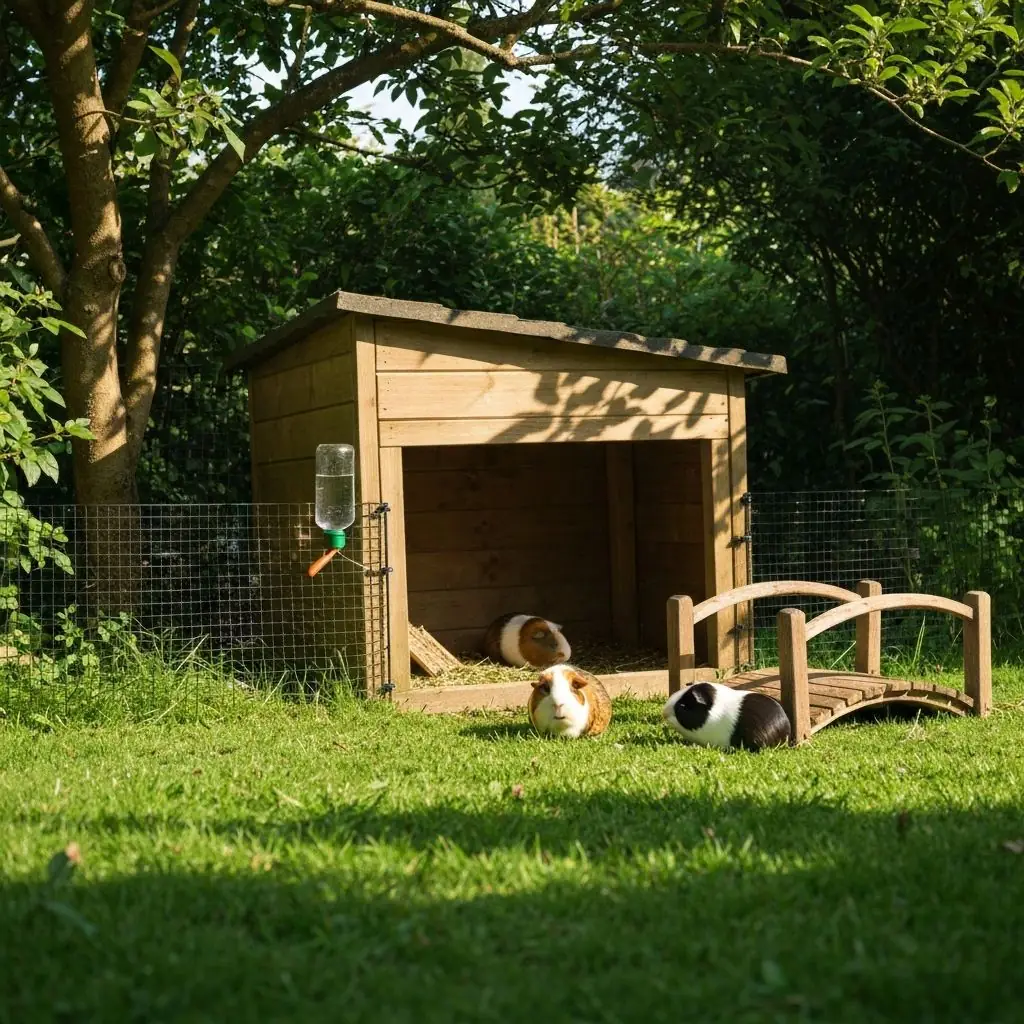
Some owners keep pigs outdoors year-round in a well-protected setup. PDSA's baseline for any outdoor home is a hutch of at least 1.5m x 1m with a 2m x 1m run attached, weatherproof and raised off the ground. It also notes that their bodies are very low to the ground, so they can get chilly and dirty on their bellies. A shed brings them under a proper roof, though insulating one is a separate job.
Shelter, covers and airflow
- Position. The vet charity wants it in a sheltered area of the garden where wind, rain and snow cannot get in, with windbreaks if needed. The BVA says the same, adding at least 10cm off the ground.
- Covers. Wood Green suggests a fitted hutch cover, or blankets and tarpaulin, to keep frost and wind out. The BVA mentions an old duvet, blanket or tarpaulin.
- Airflow. With any waterproof cover, the vet charity says to make sure there is enough airflow inside. A sealed box traps damp, which is the very thing you were trying to keep out.
- The run. Wood Green advises a run cover such as tarpaulin or corrugated plastic in case of sudden showers, and hides in the run that keep them off the hard frozen ground.
The BVA suggests lining the sleeping area with plenty of newspaper. The vet charity calls cardboard a very good insulator, with one warning: if your pigs eat a lot of it, it could lead to a nutritional deficiency, so take it out if they start nibbling. Wood Green suggests towels or blankets draped over the hides for extra warmth, and the RSPCA wants refuge areas that outnumber the animals by one, so nobody gets left out of the snug spot.
Do a daily spot clean. Wood Green notes that they spend more time in their sleeping areas when it is chilly, so wet patches build up faster, and wet means chilly. Frosty mornings, numb fingers and a dustpan are part of the deal with outdoor pigs.
Nesting material and extra forage
The RSPCA asks for sufficient bedding throughout the whole enclosure, safe to eat, such as dust-free hay. The vet charity says give extra when the weather turns really harsh, and Wood Green suggests filling the overnight area with enough for them to bury themselves in. A pair buried in a deep nest can look like a heap of forage with two noses poking out, and the vet charity's point is a good one: two snuggled together will be warmer than one.
Charities do not agree on straw. The vet charity and BSAVA list it as an option, while the RSPCA says coarse materials like straw should be avoided because they can cause eye injuries. The RSPCA also rules out softwoods such as pine, cotton wool and fluffy materials they can tangle in.
Food matters as much as the nest. The vet charity says they need extra calories through the winter months, and suggests extra hay to eat. Wood Green adds that fresh vegetables and forage should carry on daily, helping them stay healthy and resist chills. For pigs brought inside, it suggests trays of fresh forage alongside their usual feed, so the new space still gives them something to root through.
Stopping water freezing
A frozen drinker is easy to miss, because the bottle still looks full. The fixes from PDSA and Wood Green:
- Wrap water bottles in bubble wrap or an old sock.
- Move the ball in the spout regularly so it does not freeze in place.
- Check bowls for ice at least twice a day, as the vet charity advises; it notes that many prefer drinking from a bowl.
- An animal-safe heat pad under the bowl can help, the vet charity says.
BSAVA's year-round rule still stands: refresh bottles daily and check the mechanism works. Nothing makes you question your life choices like thawing a spout with your hands in the dark.
Heat pads and safe extras
PDSA suggests an animal-safe heat pad under the nesting material, with a suitable fabric cover to prevent burns. Self-heating pads, it explains, use the animals' own body heat, which avoids plug sockets and burn risk. Wood Green mentions pet-safe snuggle pads in freezing weather, wrapped in a towel and placed under a hide.
Exercise when the grass is wet
The vet charity says they still need natural light and exercise in winter, but on chilly, damp days to keep them off the grass, where they will get cold. A car-free garage or shed makes a dry exercise area instead, and it reminds owners to allow a large indoor exercise area too. On a dry, bright afternoon, BSAVA's note on the benefits of grazing and sunlight still applies.
Signs your pigs are too chilly
The RSPCA says your guinea pigs hide pain well, so changes in behaviour are the early clue. Watch for one who is quieter than usual, hiding more or eating less. The vet charity describes hypothermia as a pet's body temperature dropping dangerously low, and lists these signs:
- shivering, which may stop once the animal is severely chilled
- drowsiness, confusion or clumsiness
- pale gums
- collapse
It says the young, old, frail, small, skinny or poorly are at higher risk. Its first aid: dry a wet animal with a towel, wrap it in blankets above and below, offer lukewarm (not hot) water if it can drink, heat the room gradually, and call your vet immediately, even if they seem to recover.
When to see a vet
The RSPCA says to contact a vet straight away if eating or drinking changes, if droppings reduce or stop, or if you suspect pain or illness. BSAVA adds discharge from the eyes or nose and breathing difficultiesto that list. Wood Green suggests regular health checks and weighing through these months, and a vet experienced with guinea pigs if anyone seems unwell or not themselves. Do not wait to see if they perk up on their own. For any other worry, the BVA's line is to consult your local vet for advice.
More on seasonal care: guinea pigs in hot weather and keeping guinea pigs calm during fireworks.
Frequently asked questions
- How chilly is too chilly for pigs living outside?
- The RSPCA says below 15°C they can become chilled and should be moved indoors. Other UK bodies give lower figures, but all stress dry, sheltered conditions.
- Can guinea pigs live in a garage over winter?
- Only one with no car in it. The vet charity warns that car fumes could be fatal, and the space still needs light and room to exercise.
- How do I stop their water freezing?
- Wrap bottles in bubble wrap or an old sock, move the ball in the spout regularly and check bowls for ice at least twice a day.
- Are heat pads safe?
- Animal-safe pads with a fabric cover, placed under the nesting material, are what the vet charity suggests. Never put a hot water bottle directly against them.
Sources
- RSPCA, Environment and Health pages for guinea pigs (checked 21 November 2026).
- PDSA, Keeping guinea pigs warm in winter, The ideal home for your guinea pig and Hypothermia in pets (checked 21 November 2026).
- Wood Green Pets Charity, Cold weather tips for guinea pigs (checked 21 November 2026).
- British Veterinary Association, Vets offer advice to keep pets warm during the cold snap (checked 21 November 2026).
- BSAVA PetSavers, Guinea pig guide (checked 21 November 2026).