
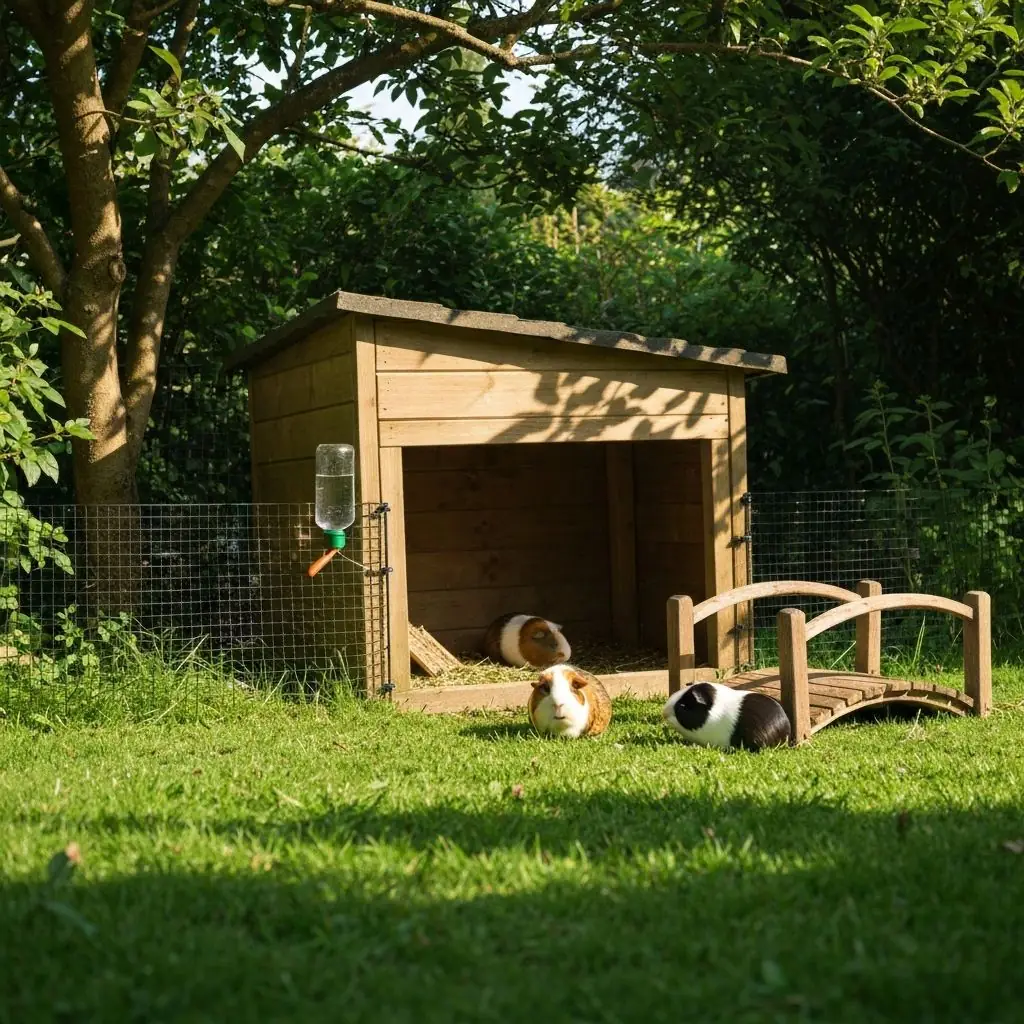
Guinea Pigs and Fireworks: How to Keep Them Calm and Safe on Bonfire Night
Quick answer
Key facts
Loud, sudden bangs can frighten small animals badly. Plan ahead: bring outdoor pigs inside if you can, cover the hutch if you cannot, and give them company, deep bedding and plenty of places to hide.
- The RSPCA warns that loud, unexpected noises can injure pets and can even kill them.
- Bring an outdoor hutch indoors for the season, or cover it with thick blankets and leave a gap for air.
- Give them one more hiding place than you have animals, plus extra bedding to burrow into.
- Speak to your vet if fear does not settle, or if they suddenly become frightened, as that can point to pain or illness.
To keep your cavies calm on Bonfire Night and New Year's Eve, bring an outdoor hutch inside or cover it with thick blankets, leaving a gap for air. Add deep bedding and extra hideaways, keep bonded companions together, close the curtains and play some music. If the fear does not settle afterwards, ring your vet.
Firework season is one of the few times of year when small pets need a proper plan, and it sits with the rest of our seasonal care guide. The good news is that nearly everything on this page can be sorted in an afternoon, well before the first rocket goes up.
Why the bangs hit small pets so hard
Cavies are a prey species. The RSPCA says they must be able to hide in a secure place away from things that scare them, and a sky full of bangs and flashes is about as scary as an ordinary evening gets. The BSAVA PetSavers guide also notes that they have sensitive hearing, which is why it warns against housing them in noisy areas.
The RSPCA says a firework can produce a sound between 120 and 175 decibels, and that because animals' ears are more sensitive than ours, that level of sound can be much more damaging. Its pet advice is blunt: the loud, unexpected noises can cause stress, injury and death. It also points out that many hutches for rabbits and other small animals are kept outside, which leaves them more exposed to the bangs. On the same page, the RSPCA reports that in its 2024 impact survey one owner said a private display caused their guinea pig to pass away due to stress, which is a sobering reminder of what is at stake.
The trouble is that displays rarely stick to one date. Bonfire Night and New Year's Eve are the obvious ones, but private displays pop up on weekends either side. In a 2024 RSPCA survey, 66% of responding pet owners said backyard displays are a major concern for them. Bonfire Night stopped being one night a long time ago, and nobody thinks to check with the herd before the garden-party rockets start.
So treat it as a season rather than a single night. Find out what is planned near you, keep an ear out for the neighbours, and have the indoor space or the hutch cover ready before the first weekend of November.
Bring an outdoor herd inside if you can
The RSPCA's first piece of advice for small animals is to bring outdoor hutches indoors during the firework season, as that reduces the risk. PDSA agrees: if they live outdoors, bring them in for firework season or whenever displays are going off. The charity advice on this point is consistent.
Choose the room with care:
- Keep it cool. PDSA says to use a cool room, so they are not stressed by a sudden change in temperature. A warm living room straight after a cold garden is a big jump.
- Keep it quiet. The RSPCA says they prefer routine and can become stressed around lots of noise and activity, so a spare room beats the busy kitchen.
- Keep other pets out. The RSPCA advises keeping them in quiet, calm areas away from dogs, cats, ferrets and other animals they may see as threats. A nervous dog pacing about on a firework night is the last thing a cavy needs next to its cage.
If the house is not an option, PDSA suggests moving the hutch into a garage or shed, as long as it is not one used by a car. The BSAVA guide adds that indoor spaces such as a garage or shed should avoid fumes from smoking, fires or cars.
One honest caveat: moving can be unsettling in its own right. Wood Green notes that taking small pets out of their familiar environment could add to their anxiety, so if you are going to bring them in, do it a few days early and move their own hides, bedding and hay with them. The cold-weather side of moving pigs in and out is covered in our winter guide, so we will leave it there.
If the hutch has to stay outside
Sometimes there is nowhere suitable indoors. In that case, both the RSPCA and PDSA give the same advice:
- partly cover the hutch or pen with thick blankets to muffle the noise;
- leave a gap so there is still good ventilation;
- turn the hutch so it faces a wall rather than the open garden, if you can move it safely.
Wood Green's advice is that the blankets help muffle the sound while still letting air flow. A blanket that seals every gap swaps one problem for another, so tuck it round the sides and back and leave part of the front clear.
Do the covering before dark, and check on them during the evening if the bangs go on. A quick look with a torch, kept low and away from their faces, tells you whether they are tucked up or rushing about.
Hiding places and extra bedding
This is the single most useful thing you can do, indoors or out. The RSPCA says refuge areas should exceed the number of animals by one, so a pair needs three and a trio needs four, and all of them should be able to hide at the same time, so nobody has to find a spare corner when the bangs start.
Good hiding places for a firework night:
- Cardboard boxes and tubes. PDSA recommends them, with more than one entrance or exit so nobody feels trapped.
- Loosely covered boxes. Wood Green suggests boxes or small bits of furniture covered loosely with blankets or bedding.
- Deep bedding. The RSPCA advises bedding they can burrow into, and PDSA says extra bedding helps block out noise as well as giving shelter.
A two-door cardboard box costs nothing and will be chewed to confetti by morning, which is exactly what it is there for. Pile some hay inside and they get somewhere to hide and something to eat in one go.
Cutting down the noise and flashes
You cannot stop the neighbours, but you can soften what reaches your pets. PDSA's advice is to close the curtains before it gets dark and leave the lights on to hide the flashes. Wood Green also suggests closing the curtains for indoor pets.
Background sound helps too. PDSA says to play music to drown out the bangs, at a volume your small pet is comfortable with, and suggests classical music or something with a deep bass. Wood Green mentions putting a radio on. Put a classical station on and your cavies may well end the night with better taste in music than the people setting off the rockets.
Keep the volume low and steady. The point is to fill the gaps between bangs while keeping the room itself calm.
Company, treats and routine
Company matters more than any gadget. PDSA says to keep bonded pairs and groups together so they feel safe and secure, and the RSPCA gives the same advice. Wood Green goes further, saying a pair or group of the same species is far more likely to stay relaxed, and calls companionship the main protection against fear for most small pets other than hamsters. This is no night to split up a pair for a cage clean.
A few other things help:
- Treats and foraging. PDSA suggests keeping them occupied with a favourite treat or toy. Wood Green recommends healthy treats that encourage foraging, which can help them focus. Scattering their greens through the hay works well.
- Normal routine. Feed and clean at the usual times so the rest of the day feels familiar.
- No displays nearby.PDSA's advice is never to light sparklers, bonfires or any firework near your pets. If you are hosting, put the display at the far end of the garden from the hutch, or move the pigs in for the night.
Calming products.PDSA is clear that, unlike with cats and dogs, there are not yet any calming products proven to reduce anxiety in small pets. It says some herbal supplements may help, but protecting them from the sight, sound and smell of the displays matters most. The RSPCA's small pet section mentions a calming scent diffuser. As the two charities differ, ask your vet before buying anything, and put your effort into hiding places and company first.
Signs your pigs are frightened
PDSA warns that signs of fear in small pets can be harder to spot than in cats and dogs, so watch closely. Its list includes:
- stamping their back feet;
- agitated, rapid movements;
- trembling;
- breathing faster;
- staying very still in one spot;
- trying to escape or hiding;
- eating less than normal;
- aggression or tooth grinding;
- a change in toileting habits.
Wood Green adds darting around, wide eyes, a stiff body, hiding in a corner, freezing and digging at the floor as if trying to cover themselves. A pig that has frozen still is not a calm pig, even if it looks that way from across the room.
If you spot these signs, do not pull them out of a hide for a cuddle. Let them stay where they feel safe, keep the room quiet and check again a little later.
The RSPCA's general behaviour advice adds a few signs to watch for over the following days: hiding most of the time, sitting hunched, reluctance to move and changes in eating or toileting. If you find any of these lasting well beyond the night itself, that is your cue to ring the vet.
After the fireworks
The RSPCA notes that a night of bangs can affect appetite, so keep an eye on how much they eat over the next day or two. Check that they are eating hay, passing droppings as normal and moving about freely. If you covered an outdoor hutch, take the blankets off in the morning so fresh air and daylight get back in. Once they have settled, give each one a gentle once-over. The BSAVA guide treats grooming sessions as a chance to check the coat, feet, eyes and ears, and the morning after a noisy night is a good time for one.
If you brought them indoors, they can go back out once the bangs have stopped. Set the hutch up as it was before, with the same hides in the same corners, so they come home to a layout they already know. The RSPCA says to wait for the right temperature before returning them outside, which is a job for the winter guide rather than this one.
When to see a vet
Most of the time the fear passes once the bangs stop. A frightened night is still a pet health matter, though, so speak to your vet if it does not:
- Appetite changes. The RSPCA says to talk to your vet if their appetite changes after a firework night.
- Ongoing fear. PDSA says to contact your vet if your pet is still scared after trying the steps above. The RSPCA adds that your vet can refer you to a clinical animal behaviourist if the effects are long term.
- Sudden fear. PDSA says a pet that suddenly becomes fearful of loud bangs may be in pain or unwell.
- Signs of illness. The BSAVA guide lists lethargy, breathing difficulties and not eating or drinking among the signs that need a vet.
More on seasonal care: how to keep guinea pigs warm in winter and guinea pigs in hot weather.
Frequently asked questions
- Should I bring my outdoor pigs inside for firework season?
- Yes, if you can. The RSPCA and PDSA both advise bringing outdoor hutches indoors for firework season, ideally into a cool, quiet room.
- Can I cover the hutch instead?
- If they have to stay outside, partly cover the hutch with thick blankets to muffle the noise, leave a gap for ventilation and turn it to face a wall if you safely can.
- Do calming products work for small pets?
- PDSA says there are not yet any calming products proven to reduce anxiety in small pets. Hiding places, bedding and company matter most, and your vet can give advice on anything else.
- When should I call the vet?
- Call if they stop eating, stay frightened after the bangs end, or suddenly become fearful, which PDSA says can be a sign of pain or illness.
Sources
- RSPCA, Keep dogs, cats and small animals safe, How fireworks impact animals, Guinea pig behaviour and Guinea pig environment (checked 22 November 2026).
- PDSA, Small pets and fireworks (checked 22 November 2026).
- Wood Green Pets Charity, How to keep your small pet safe during fireworks (checked 22 November 2026).
- BSAVA PetSavers, Guinea Pig Guide (2015) (checked 22 November 2026).