
Guinea Pigs in Hot Weather: How to Keep Your Herd Safe in a Heatwave
Quick answer
Key facts
Cavies cope badly with high temperatures. Plan for the heat before it arrives: shaded housing, a breeze, extra water and a chilled spot they can choose to lie by.
- The RSPCA says temperatures above 26°C can cause heatstroke.
- Anything above 24°C can already be uncomfortable for them.
- Keep hutches, runs and pens out of direct sunlight, and never house them in a conservatory or greenhouse.
- Heatstroke is an emergency: move them somewhere shaded, start cooling and phone your vet straight away.
To keep your herd safe in a heatwave, give them deep shelter from the sun from morning to evening, a breeze without a draught, plenty of fresh water and somewhere chilled to lie. The RSPCA says temperatures above 26°C can cause heatstroke, which is an emergency: move them somewhere shaded, start cooling and phone your vet.
Setting things up before a heatwave is far easier than scrambling once it has started. Our seasonal care guide covers the rest of the year.
How hot is too hot?
The figures from UK charities and vets are close together:
- 16 to 24°C is the ideal range in the BSAVA PetSavers guide, with humidity between 30% and 70%. The RSPCA puts the ideal indoor room temperature at 17 to 20°C.
- Above 24°C can be uncomfortable, says PDSA, and cavies can get stressed if the temperature goes too high.
- Above 26°C can cause heatstroke, according to the RSPCA.
- Above 27°C is where the BSAVA guide says stress from overheating sets in, and in severe cases it can be fatal.
They also do not cope well with big swings in temperature, the RSPCA notes, so aim for steady conditions.
Keep them out of the sun
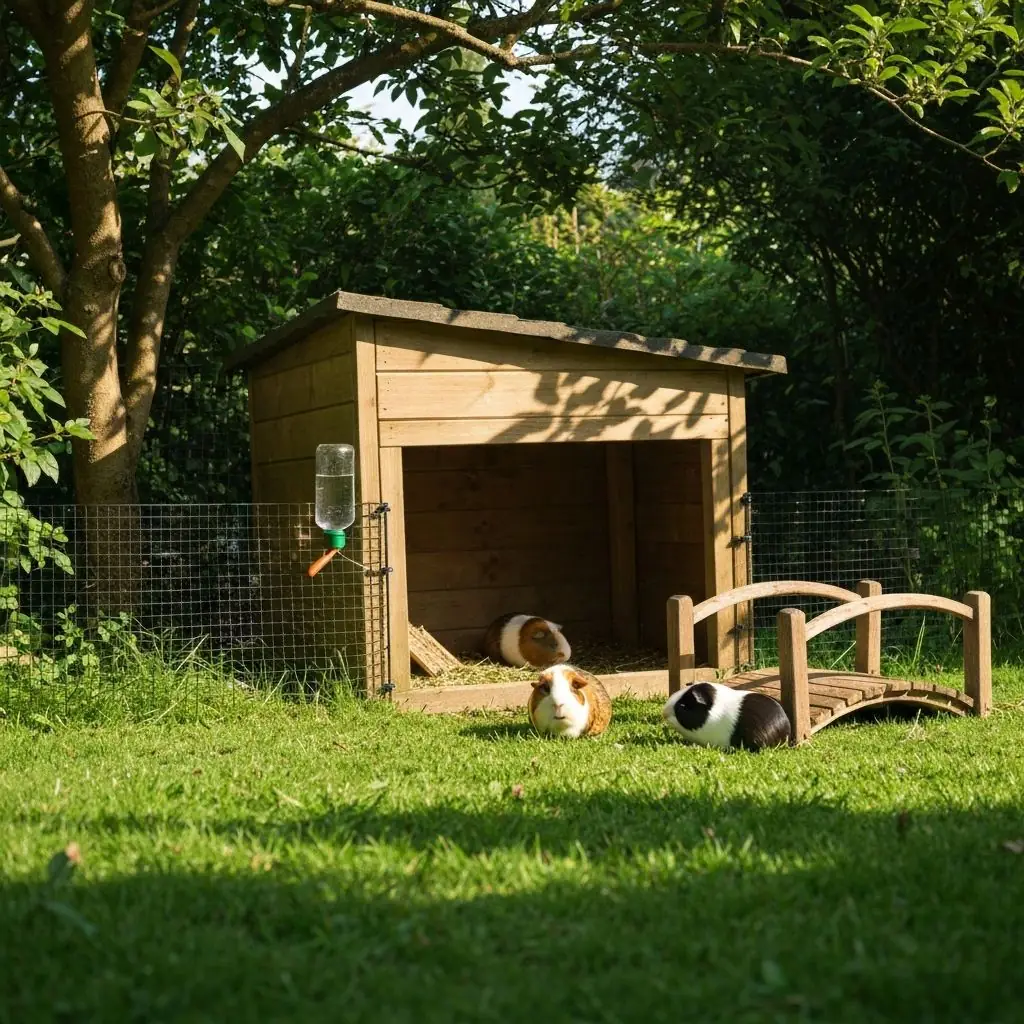
The RSPCA advises keeping animals and their hutches, runs and enclosures out of direct sunlight, with plenty of shade inside the enclosure too. A sun umbrella outdoors and closed curtains indoors both help.
Keep an eye on the direction of the sun, as you may need to follow it as the day goes on. A corner that sits in deep shadow at breakfast can be in full sun by lunchtime, so check the run again at midday.
Avoid glass rooms altogether. The RSPCA warns that greenhouses, conservatories and other glass buildings can heat up very quickly and become dangerous. A conservatory gets sold as the nicest room in the house, but on a bright afternoon it behaves like a greenhouse with a sofa in it.
Move the hutch or bring them in
PDSA's advice is to move the hutch into a shady area in a heatwave, and to make sure the run has shaded areas as well. The RSPCA says outdoor housing should be sheltered from direct sun and direct wind all year.
If they live indoors, choose a cool, airy room away from sunny windows. Wood Green says to keep the enclosure away from draughts all year and from hot sunny windows in the warmer months. A separate post covers winter, when the job runs the other way.
Airflow without a draught
For animals kept indoors, the RSPCA says opening a window can let a breeze in and help keep them comfortable. There is a catch, though: a cold draught blowing over small pets all day can become uncomfortable, or even dangerous, if they have nowhere to shelter. Offer moving air with a hide to retreat to.
Water and wet greens
They need fresh, clean water at all times, and the RSPCA says to provide extra during warmer spells because they will drink more. A few simple habits help:
- several bowls and bottles, so they can choose where to drink;
- changing the water several times, because it warms up in the heat;
- drenching their greens before you feed them.
Check bottles still work while you are there. The BSAVA guide notes they may spit back into the tube, so the mechanism needs a daily look.
Safe ways to help them stay cool
Frozen bottles, wrapped
The RSPCA suggests freezing a semi-full plastic bottle and wrapping it in a towel so they can lie against it. Put it in the exercise area, not the shelter: the RSPCA says it is safest not to put it inside, and inside the enclosure it could make them too cold. They can also get ice burns if they touch the ice directly, so a towel or an old sock goes round it every time.
Tiles and hides
A ceramic tile gives them a chilled surface to stretch out on. Try placing one on the floor under a box for a shaded spot, kept out of the sun so it does not get dangerously hot.
Swap plastic hides for wood. Wood Green warns that plastic pod or igloo houses can become very hot, which can be fatal, and recommends open-ended hides and those with several entrances. It also says to steer clear of plastic children's play houses, which can get very hot in the warmer months. Wooden houses, tunnels and hay to burrow in all make cooler alternatives.
One thing never to do: put them in a bath. Placing a guinea pig straight into cold water can send its small, sensitive body into shock.
Grooming and flystrike checks
Regular brushing removes dead hair, which the RSPCA says helps them keep cooler, and daily brushing is worth it in the heat.
The RSPCA says flystrike, fleas and ticks are more of a risk in warm, humid weather, and advises checking them twice a day for flystrike through the season. Check their bottoms daily too. If you spot maggots or a dirty, wet bottom, ring your vet straight away.
Signs of heat stress and heatstroke
Vets list these symptoms of heatstroke in a guinea pig:
- short, quick breaths, or struggling to breathe;
- drooling;
- acting very sleepy or lethargic;
- lying stretched out or flat on their belly;
- collapsing or falling unconscious;
- having fits.
Heatstroke is a life-threatening emergency, and the BSAVA guide lists breathing difficulties among the problems that need a vet.
What to do in an emergency
The RSPCA's advice if you suspect heatstroke is to move them to a cool, shaded place, wrap them in a cool, damp towel and phone your vet immediately. PDSA's general heatstroke first aid adds:
- Create airflow with a fan or by opening windows and doors.
- Offer drinking water, but do not force it.
- Be very careful not to stress small rodents with a soaking if they are not used to it.
- Do not cuddle them.
- Travel to the vet in an air-conditioned car or with the windows open, and keep cooling them on the way if someone can help.
The two charities word the towel advice differently, with the general first aid guide saying not to cover a pet with a wet towel, and that gap is one more reason to get your vet on the phone first and follow their instructions.
More on seasonal care: how to keep guinea pigs warm in winter and keeping guinea pigs calm during fireworks.
Frequently asked questions
- What temperature is too hot for them?
- The RSPCA says temperatures above 26°C can cause heatstroke, and anything above 24°C can already be uncomfortable.
- Should I bring an outdoor herd inside in a heatwave?
- A cool, airy room out of the sun is a good option. Avoid conservatories and other glass rooms, which the RSPCA warns can heat up very quickly.
- Can I put a frozen bottle in their hutch?
- Wrap it in a towel and leave it in the run or just outside the enclosure. The RSPCA says it is safest not to put it in their shelter.
- Can I bathe them to bring their temperature down?
- No. Putting them straight into a cold bath can send them into shock.
Sources
- RSPCA, Caring for rabbits and rodents in the summer and Guinea pig environment (checked 21 November 2026).
- PDSA, Keeping your guinea pigs cool in the summer: dos and don'ts, Keeping small pets cool in summer, The ideal home for your guinea pigs and First aid for heatstroke (checked 21 November 2026).
- Wood Green Pets Charity, Housing guinea pigs and enclosure requirements (checked 21 November 2026).
- BSAVA PetSavers, Guinea Pig Guide (2015) (checked 21 November 2026).