
How to Clean Guinea Pig Ears: Safe Checks and When to See a Vet
Quick answer
Key facts
A healthy ear is smooth, free of discharge and does not smell. Look inside the flap at every health check. If there is a little wax in the outer folds, wipe it away gently; never push anything into the canal.
- PDSA: gently lift the ear flaps during your daily health check.
- RSPCA: scratching or rubbing the ear, or head shaking, may mean mites.
- PDSA: itching, redness, lots of wax, discharge, pain or a bad smell all point to an ear problem.
- A head tilt, circling or rolling can mean the middle or inner ear is involved. See a vet the same day.
To clean your guinea pig's ears, hold them calmly, lift each ear flap and look inside, then wipe only the folds you can see with a piece of soft cotton wool. Never poke a cotton bud or anything else into the canal. Many pigs never need any ear cleaning at all, and anything beyond a little wax is a job for the vet.
Ear care belongs in the same weekly routine as brushing and nails, which our guinea pig grooming hub walks through step by step. The BSAVA PetSavers guide makes the same point: a grooming session is a good chance to check the coat, feet, nails, eyes, incisors and ear health in one go.
What a healthy guinea pig ear looks like
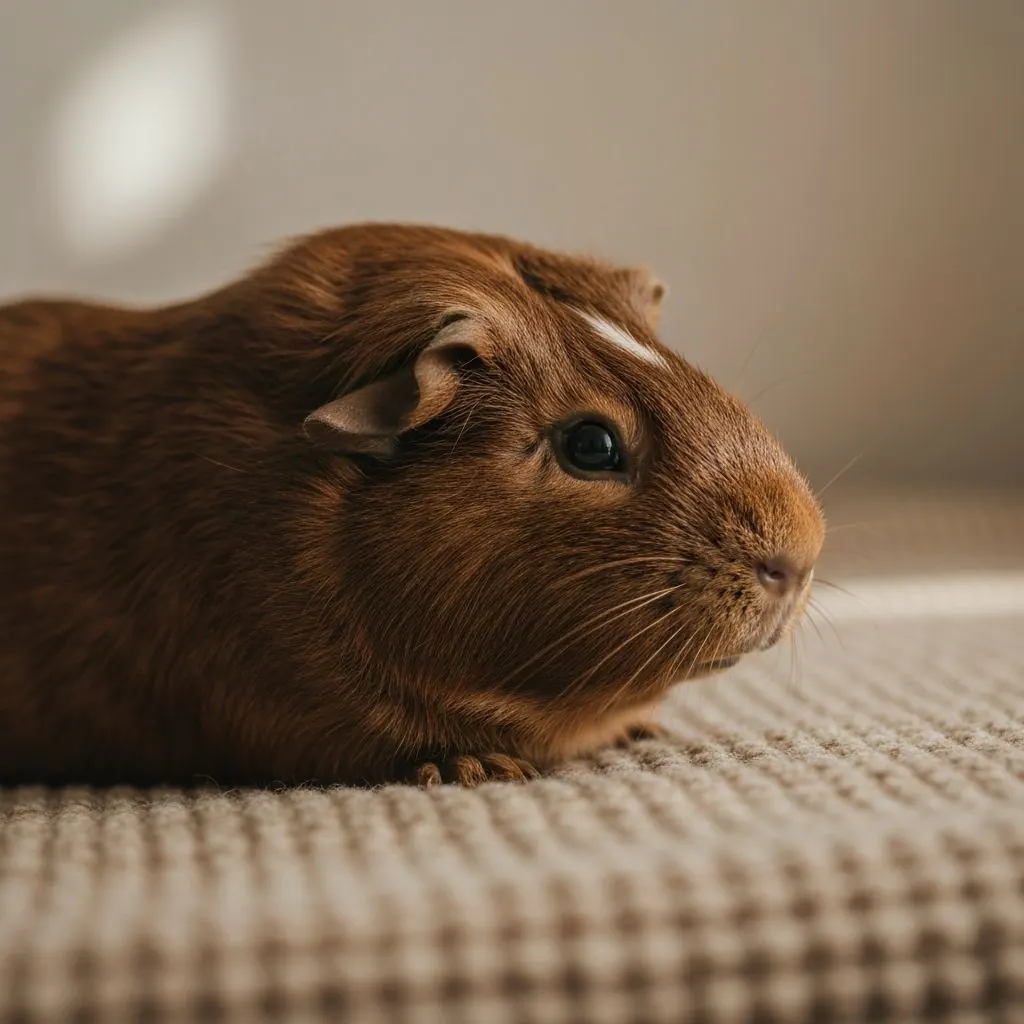
A normal ear flap is thin, smooth and clean, with no crust round the edges. Inside, you should see pale skin and, at most, a small smear of wax in the outer folds. There should be no discharge and no smell. Wood Green lists the ear, nose and mouth in its weekly check, checking that nothing is coming out of them.
Behaviour matters as much as looks. A comfortable cavy holds its head level, walks in a straight line and does not keep scratching at one side of its face. Knowing what your own piggy normally looks like is half the job, because that is what makes a change stand out.
How to check them
PDSA suggests a short health check every day, and says to gently lift the ear flaps while you are at it. You can usually spot early signs of a problem this way, before it gets painful.
The RSPCA's checklist also asks you to look at their ears, eyes and nose every day to make sure there is no discharge, and to have someone else do the checks if you are away. If you see any change that might mean your guinea pig is in pain, ill or injured, it says to see your vet immediately.
- Pick a calm moment. Sit on the floor or with a towel on your lap, so a sudden wriggle does not end in a fall.
- Support the body. One hand under the chest, the other under the back end. Hold close and keep it brief.
- Lift the flap. Fold it gently back with a fingertip and look into the folds. Your phone torch helps far more than the ceiling light does.
- Have a sniff. A bad smell is one of the signs PDSA lists, and you will often notice it before you see anything.
- Check the edges and skin. Look for crusts, scabs, flaking or bald patches round the face.
- Do the other side, then let them go with a piece of their favourite veg.
Wrestling a wriggly animal for a closer look rarely ends well for either of you, so a short, calm look every day beats one long struggle a week. The RSPCA says grooming needs to be introduced slowly and positively, and handling for checks is no different.
Do they need cleaning at all?
Often not. If you see a healthy-looking ear with only a little wax, the kindest thing is usually to leave it alone and keep checking.
Home cleaning is for the outer part only: a small amount of wax or dust sitting in the folds you can see, on an animal that otherwise looks and acts well. If there is lots of wax, a discharge, redness or a smell, PDSA treats those as signs of an ear problem, which is a reason to call the vet rather than to scrub harder.
Wiping the outer folds gently
- Wash your hands and have everything ready before you pick anyone up.
- Tear off a small piece of soft cotton wool, which PDSA prefers to buds for pet ears.
- Lift the ear flap and wipe the visible folds with slow, light strokes.
- Use a fresh piece for the other side.
- Let the area dry naturally, and take care not to drip water into the ear.
- Stop if they flinch, squeal or pull away hard. That can be a sign of pain.
The Potteries Guinea Pig Rescue describes gently cleansing the visible flaps and folds with a flannel. Ask your vet before putting any liquid into an ear, because the right approach depends on what is actually in there. If they suggest a product, follow their instructions rather than the bottle's.
PDSA also advises getting a pet properly checked by a vet before buying any over-the-counter treatment, and that includes an ear cleanser from a shop. The vet needs to know what is causing the problem first.
What never to do
- No cotton buds in the canal. PDSA's general advice for cleaning a pet's ear is cotton wool, not buds.
- No fingers or tools inside. PDSA warns that reaching too far into the canal can damage it.
- No soaking. If yours ever needs a wash, keep water out of the ear and dry thoroughly afterwards, as the MSD vet manual advises.
- No home treatment for mites or infection. The MSD manual notes that many common antibiotics are dangerous for guinea pigs, so leave medical care to a vet who knows the species.
A cotton bud feels like the obvious tool because that is what we use on ourselves, but their ear canal is small and easily hurt.
Wax, dirt and build-up
A little wax that matches what you usually see is fine. Wax that is suddenly heavier, darker, wet or smelly is different, and PDSA lists lots of wax or discharge among the signs of trouble. Bedding dust or a bit of hay stuck in the outer fold can simply be wiped away. Anything packed deep inside, or that comes back within a day or two, needs a professional look.
If you keep a long-coated breed, brushing round the head keeps loose bedding from collecting near the ear. Wood Green says long-haired guinea pigs need daily grooming to stop matting.
Signs that need a vet
The RSPCA reminds owners that guinea pigs are very different from cats and dogs, and advises registering with a vet who specialises in them. Book an appointment if you notice any of the following.
Mites and skin problems
The RSPCA says scratching or rubbing of the ear, or head shaking, may be a sign of mites. Wood Green adds that skin problems such as fur mites and lice are quite common, and lists scabby patches round the face and ears among the symptoms, along with itching, fur loss and flaky skin. Crusty edges are worth a vet check too, as they can have more than one cause.
Infection
Watch for redness, swelling, discharge, a bad smell or obvious soreness when the area is touched. The MSD manual says an ear infection in guinea pigs often affects the middle or inner ear and can come with respiratory disease. Chewing slowly or eating less can be a sign of pain, so mention any change in appetite to your vet. Diagnosis can need x-rays or a scan. The BSAVA PetSavers guide notes that their hearing is sensitive, and the MSD manual lists deafness among the possible signs of infection, so tell the vet if they stop reacting to sounds they usually notice.
Head tilt, circling or rolling
PDSA says that in extreme cases an ear problem can spread to the middle and inner ear and cause balance problems, such as holding the head to one side all the time, turning in circles or rolling over. Treat any of these as urgent and ring your vet the same day.
A yearly check-up with a vet experienced in the species, as the MSD manual recommends, is a good time to ask them to look inside each ear and show you what normal looks like, which makes every check at home easier to judge.
More on grooming: our guinea pig grooming guide, how to bath a guinea pig and cleaning the grease gland.
Frequently asked questions
- How often should I check my guinea pig’s ears?
- PDSA suggests a quick look during a daily health check, gently lifting each flap. Wood Green asks for a fuller health check every week.
- Is brown wax normal?
- A small amount in the outer folds can be. A sudden increase, a wet discharge or a smell are signs to see a vet.
- Can I use a cotton bud?
- Not inside the ear. Use soft cotton wool on the visible folds only, and never push anything into the canal.
- My guinea pig is tilting its head. What should I do?
- Call your vet the same day. A tilt, circling or rolling can mean the middle or inner ear is affected.
Sources
- PDSA, Guinea pig health and Ear problems in pets (checked 22 November 2026).
- RSPCA, How to take care of your guinea pigs (checked 22 November 2026).
- Wood Green Pets Charity, Your guinea pigs' health: what to look out for (checked 22 November 2026).
- BSAVA PetSavers, Guinea Pig Guide (checked 22 November 2026).
- MSD Veterinary Manual, Common health problems of guinea pigs and Routine care of guinea pigs (checked 22 November 2026).
- The Potteries Guinea Pig Rescue, First aid (checked 22 November 2026).