
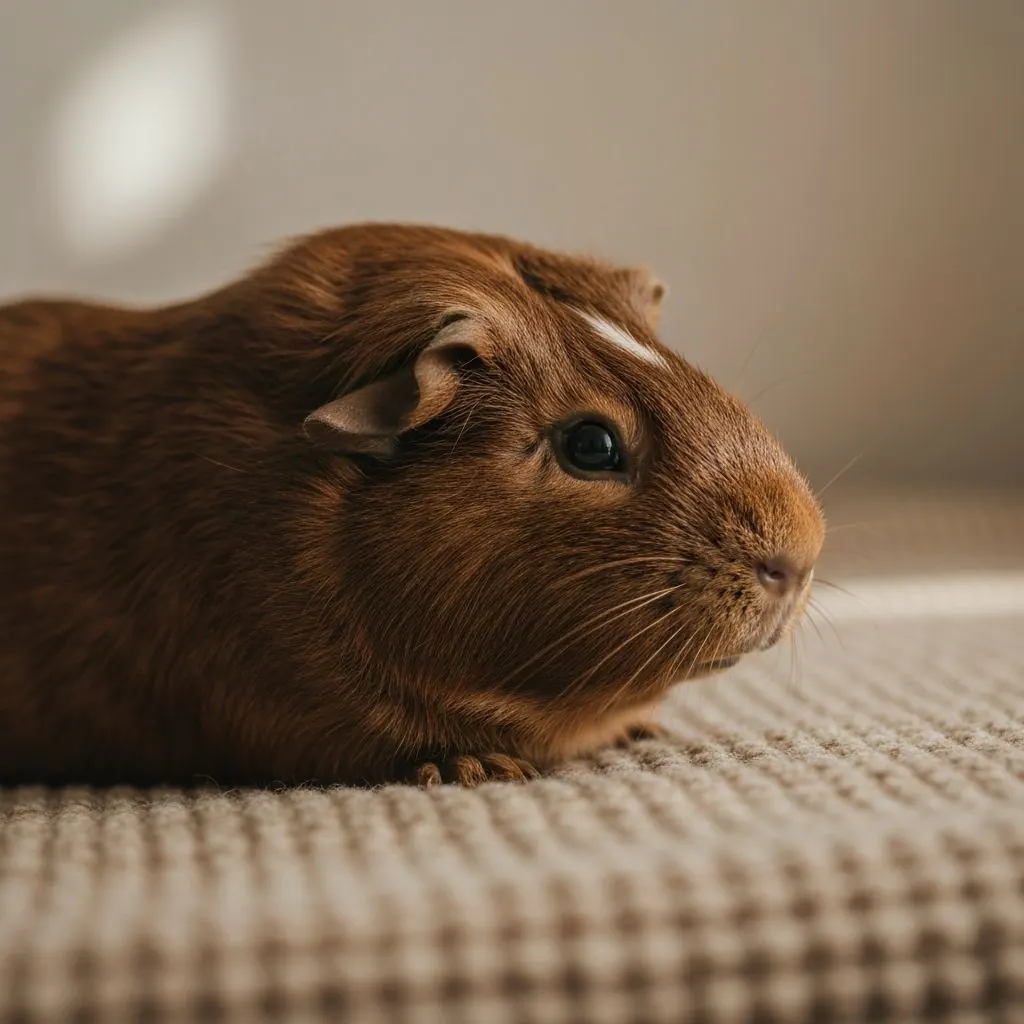
The Guinea Pig Grease Gland: What It Is, How to Clean It and When to Worry
Quick answer
Key facts
This oil-producing patch of skin sits on the rump, at the base of the spine. Every guinea pig has one, boars more obviously than sows. It only needs cleaning when it builds up.
- The BVNA says all guinea pigs have one, and it is more prominent in males.
- Its oily secretions are used for scent marking.
- A BVNA vet article softens heavy build-up with a gel hand cleanser on the dry coat, then shampoos the patch.
- See a vet for a lump, a sore or open wound, red or flaky skin, fur loss or any sign of pain.
The grease gland is a patch of oil-producing skin at the base of their spine, on the rump. Every cavy has one, and boars show it far more than sows. A dark, waxy patch there is normal. Clean it only when it builds up, gently and without a full bath, and see a vet if the skin underneath is sore, broken or lumpy.
It counts as everyday grooming rather than illness, which is why our main grooming page puts it alongside brushing and coat checks. This post covers the patch itself in more detail: what it does, how to tackle a build-up safely and what should send you to the vet.
What it is and what it does
Vets know it as the caudal gland. The MSD Veterinary Manual describes it as one of several sebaceous (oil-making) glands along the back and around the bottom that are used for scent marking. These glands are androgen-dependent, which means male hormones drive them.
A British Veterinary Nursing Association (BVNA) article on skin conditions says they produce varying amounts of black grease that sticks to the coat. On a white or ginger coat it shows up as a dark, waxy smudge. On a black coat you are more likely to notice it with your fingers, as a stiff, tacky clump of fur. A dark, waxy rump on a boar who is bright, eating well and otherwise his usual self is, on its own, simply part of being a boar.
Why boars get greasier
The BVNA article says these glands are more prominent in males, which fits the hormone link above. The MSD manual's photo of a male shows the oily look the secretions give the coat over the spot. Sows have the same glands, just less prominent ones. If you do find a greasy sow, treat her the same way and mention it at her next check-up.
One thing to keep separate: boars also have a rectal pouch just behind the bottom. MSD notes that it can become impacted with droppings, commonly in older, unneutered males. That is a different job from the rump, and your vet can show you how to check it.
How to clean a greasy patch safely
Only clean it when there is a build-up you can see or feel. If the coat over it is just a little shiny, leave it be. The method below follows the BVNA article, which softens an excessive build-up by working a gel hand cleanser into the dry coat and then shampooing the patch well afterwards.
What you need:
- An old towel you do not mind marking, since the residue is black.
- A small amount of the gel cleanser.
- A jug of warm water and a shampoo your vet has approved for small animals.
- A second dry towel, and a warm, draught-free room.
- A few favourite veg pieces for afterwards.
- Sit on the floor, or with a towel on your lap, and hold him securely so he cannot wriggle off and fall.
- Part the fur to find the patch and look at the skin first. If it is red, broken, swollen or lumpy, stop and ring your vet instead.
- Work a small amount of gel into the dry, greasy fur with your fingertips. Let it soften the clump rather than pulling at it.
- Wet and shampoo just the rump with warm water, keeping his head and ears dry, then rinse thoroughly so no product is left on the skin.
- Dry him completely with the towel and keep him warm until he is dry. The BVNA article dries with a towel and a hair-dryer on a low setting; if you use one, hold it well back and check the warmth on your own hand.
Expect some indignant squeaking, which the BVNA article puts down to protest rather than pain. A flinch or squeal every time you touch the same spot is a different matter, though. If a stubborn clump will not shift, it is kinder to soften it again over two or three short sessions than to tug it free in one.
Some online care guides suggest coconut oil to loosen it. We have not found UK veterinary guidance on it, so ask your vet before trying it. A full bath is a separate decision with its own risks, and our bathing guide, linked below, covers it.
When to see a vet
An oily coat there is normal. Damage to the skin underneath is not. Contact your vet if you notice any of these around the patch, drawn from the warning signs listed by Wood Green, BSAVA and the RSPCA:
- A lump or swelling.
- An open wound or sore.
- Red or flaky skin, or fur loss around the spot.
- Itching, nibbling at the rump, or suddenly biting you when you touch it.
- Signs of pain or illness, such as eating less, being quieter than usual or hiding more.
Only a vet can say whether a sore patch has an infection and what will treat it, and the RSPCA says to give only medicines prescribed for them. It also warns that they hide pain well, so contact a vet straight away if you suspect pain, illness or injury. A clear photo of the patch, and a note of when you first saw the change and whether he is eating normally, helps the vet see how things have moved on. Ringing the vet about a greasy bottom can feel a bit silly, but a raw patch hiding under the gunk is exactly the kind of thing that is easier to sort early.
Fitting it into a grooming routine
The BSAVA PetSavers guide treats grooming sessions as the chance to check the coat, feet and nails, eyes, ears and front teeth. The rump fits into the same few minutes. The RSPCA advises a daily check for illness or injury, and a weekly look at teeth and nails.
An extra wash is not a weekly chore. Look at the patch when you brush, clean it only when there is a real build-up, and keep the bedding clean and dry so there is less for sticky fur to pick up. Wood Green's coat check looks for clean, healthy skin with no wounds, no fur loss and no matted fur, which is a fair standard for the rump as well. If the coat there is also scurfy, the BVNA article notes that medicated shampoos can help with excess oil and scurf or a suspected fungal problem. Which one, if any, is your vet's call, so ask before buying one. Diet is part of skin care too: the BVNA article notes that a mild lack of vitamin C makes skin problems more likely.
More on grooming: our guinea pig grooming guide, how to bath a guinea pig and checking and cleaning guinea pig ears.
Frequently asked questions
- Do sows have a grease gland?
- Yes. The BVNA says all guinea pigs have one on the rump. It is more prominent in males, so a heavy build-up is more often a boar thing.
- Why is the build-up black?
- That is simply what it produces. The BVNA describes varying amounts of black grease that sticks to the surrounding coat.
- How often should I clean it?
- Only when there is a visible or sticky build-up. Check it whenever you groom, and leave a lightly shiny coat alone.
- Can I use an oil to loosen it?
- Some care guides suggest oils, but we found no UK veterinary guidance on it, so ask your vet first. The BVNA method uses a gel hand cleanser on the dry coat, then shampoo.
- When does it need a vet?
- If you find a lump, swelling, an open wound or scabs, red or flaky skin, fur loss, itching, or any sign of pain.
Sources
- British Veterinary Nursing Association, Virginia Richardson MRCVS, Management of skin conditions in guinea pigs (checked 22 November 2026).
- MSD Veterinary Manual, Miranda J. Sadar, Anatomy, physiology, and behavior and Photo of a male's rump (image library) (checked 22 November 2026).
- RSPCA, Health and welfare advice (checked 22 November 2026).
- Wood Green Pets Charity, Health: what to look out for (checked 22 November 2026).
- BSAVA PetSavers, Owner guide (2015) (checked 22 November 2026).