
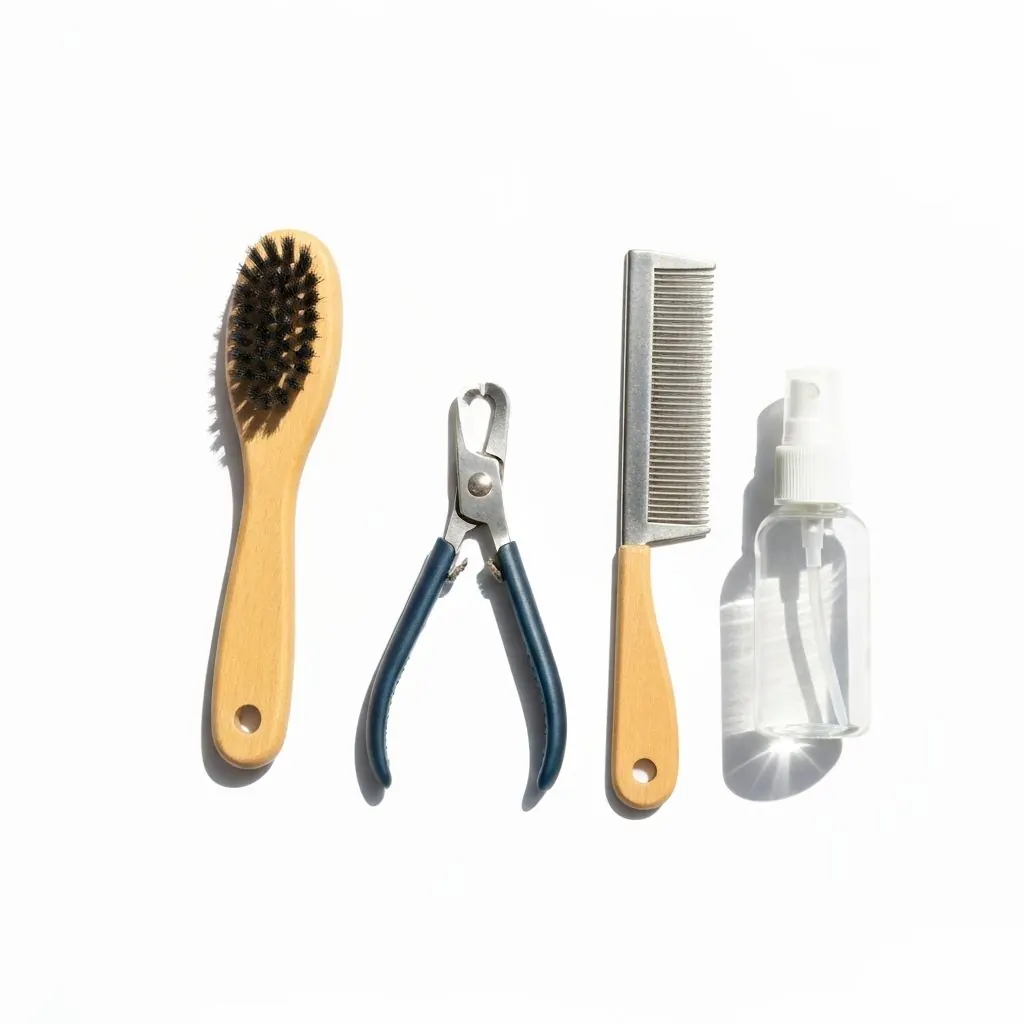
Guinea Pig Grooming Guide: Brushing, Nail Trimming, Bathing and Coat Checks
Most guinea pigs need a brush-through at least weekly, a claw trim every four to six weeks and, in most cases, no baths at all. How much help they need depends on fur type: a short-haired American needs far less attention than a long-haired Peruvian. The routine that works is the one built around your guinea pig's fur and kept consistent.
All guinea pigs require some level of help, even the ones that look tidy. They clean themselves and each other, but they cannot reach their own claws, cannot untangle a mat, and will not tell you about a sore patch of skin until it is well under way. A few minutes of hands-on attention each week covers all three.
How fur type changes grooming needs
| Fur type | Examples | How often to brush | Special needs |
|---|---|---|---|
| Short, smooth | American, Teddy | Weekly or as needed | Minimal, a quick check is enough |
| Rosettes (rough) | Abyssinian | Weekly | Check rosettes for matting and debris |
| Dense, curly | Rex | Every few days | Prone to trapping debris; use a soft brush |
| Medium-length | Coronet, some mixed breeds | 2–3x per week | Watch the crest and behind ears |
| Long, flowing | Peruvian, Silkie | Daily or near-daily | May need trimming around back end |
Brush and comb: tools and technique
For short-furred guinea pigs, a soft-bristled brush or a rubber mitt removes loose hair and stimulates the skin without discomfort. A soft brush is best for almost every pig; stiff bristles scratch. Brush in the direction the fur naturally lies, which for most smooth breeds is back toward the tail.
For long-coated varieties such as Peruvians and Silkies, a soft pin brush or a wide-toothed comb works better. Work through the fur gently from the tips inward toward the skin, untangling small sections at a time instead of dragging through from root to tip. Pay particular attention to behind the ears, the underside, and the area around the back end, where long fur can trap bedding and droppings.
Some of these guinea pigs benefit from keeping the hair around the back end trimmed shorter, particularly during warm weather. This is purely practical: it keeps them cleaner and makes hygiene easier to maintain. The full grooming guide covers this in more detail including how to approach a first trim.
Expect more loose fur during a moult. Shedding should be even across the body; you will simply find more guinea pig hair on the brush and in the bedding than usual. A couple of extra brush-throughs a week while it lasts stops loose fur from matting.
Keep sessions short, five minutes or so, and stop before your guinea pig gets fed up. Sit on the floor, or with a towel on your lap, so a wriggler has nowhere to fall from.
Trimming nails: when and how
Claws grow continuously and need trimming every four to six weeks for most adult guinea pigs. Long claws catch on fabric bedding, can snag on cage bars, and may cause discomfort when walking. In severe cases, overgrown claws can curve back and grow into the pad.
Use small clippers designed for small pets. Look for the quick, the pink blood vessel inside each claw. On light-coloured claws it is clearly visible; dark ones need more care, and a torch held behind the claw can help you see it. Clip only the tip, well clear of the quick. If you cut the quick, it will bleed; have a small amount of cornflour or styptic powder to hand to stop the bleeding.
On dark claws, avoid cutting more than a sliver at a time. Several small snips are safer than one confident chop, and you can always take a little more next week.
Many guinea pigs are calmer for a trim when wrapped gently in a towel so they feel secure. Work methodically through each paw: there are four toes on each front foot and three on each back foot. A second person to hold makes the job far easier. Our dedicated nail clipping guide has the step-by-step approach in full.
Baths: rarely needed, often overdone
Guinea pigs clean themselves effectively, and a healthy guinea pig in a clean enclosure very rarely needs a wash. Washing strips the natural oils from the fur and skin, can cause stress, and in cold conditions can lead to chilling.
The occasions when a wash is genuinely appropriate include: a guinea pig who is badly soiled and cannot clean themselves (elderly or mobility-limited pigs); skin conditions where a vet has prescribed a medicated wash; or specific parasite treatments. For routine care, spot cleaning with a damp cloth is almost always enough.
If a full wash is necessary, use only guinea pig-safe shampoo. Human shampoo, baby shampoo and any product not designed for the species are all out. Use warm water, keep it brief, and dry your guinea pig thoroughly and gently in a warm room. Do not point a hairdryer directly at them.
Ears, eyes and teeth
A weekly once-over is the easiest time to look at the bits of your guinea pig that a brush never touches.
Ears. They should look clean, with no discharge, no odour and no heavy wax. Most pigs never need ear cleaning. An ear that smells, looks crusty or keeps getting scratched is one for the vet.
Eyes. They should be bright and clear. Any discharge, cloudiness or a wet patch of fur below the eye is worth a vet's look.
Teeth. Guinea pig teeth grow continuously, which is why hay matters so much. Gently lift the lip and the front teeth should look even. This quick look, along with weighing weekly, is the simplest home health check and dental monitoring between vet appointments. Drooling, changes in chewing or weight loss can all point to the back teeth.
Boars and the grease gland
Boars, older ones in particular, can build up dried secretions on the gland at the base of the back. It is a circular patch of skin that turns greasy and gunky over time, mats the surrounding fur and smells fairly unpleasant.
A small amount of coconut oil or a specialist cleaner, worked in gently and wiped away, usually loosens it. Not every boar needs this regularly, so look at it during your weekly once-over and deal with it only when it needs doing.
The five-point skin and fur check
Adding a quick skin and fur check to each brush-through catches problems while they are still small. Combine this with your daily care checks for the most reliable picture of each animal's condition.
- Check for bald patches or thinning. Seasonal moulting sheds evenly; patchy or sudden hair loss warrants investigation. See our article on hair loss causes for what to look for.
- Check the skin underneath. Part the fur and look at the skin surface. It should be clean and a normal skin colour. Redness, flakiness, crusty areas, or spots are not normal.
- Check for parasites. Look for any movement in the fur, or black specks (which can indicate mite droppings). Mites themselves are microscopic, but their effects, intense scratching and irritated skin, are visible.
- Check the back end. Clean and dry. Persistent soiling around the back end is a welfare concern and often a sign of digestive issues or mobility limitations.
- Check behind and inside the ears. Clean, no discharge, no odour, no excessive wax build-up. Dirty ears with odour may indicate infection.
If anything in this check concerns you, the health page is a good place to triage next steps.
An easy grooming routine at home
Here is a simple schedule for a typical pet guinea pig. Adjust it for fur type and age.
- Every day: a quick look at eyes, nose and back end while you feed, and spot-clean anything soiled.
- Every few days to daily: brush long-coated and curly breeds.
- Weekly: brush smooth breeds, weigh, and check ears, teeth and skin. For boars, look at the gland on the rump.
- Every four to six weeks: trim claws.
- Only when needed: spot cleaning, with a full wash kept for heavy soiling or a vet's advice.
Tie it to something you already do, such as cleaning out, and it soon becomes habit. Pigs that are handled calmly and often tend to tolerate it better, and a pet that sits still for a brush is far easier to check over at home when something seems wrong.
Toys and treats help too. A favourite piece of veg during and after handling builds a positive link, so your guinea pig starts to see the brush as a prelude to food.
More on grooming: how to bath a guinea pig, cleaning the grease gland and checking and cleaning guinea pig ears.
Frequently asked questions
- How do I get my guinea pig to tolerate grooming?
- Start with very brief sessions using a soft brush, during a time when the guinea pig is already calm. Offer a small piece of vegetable to associate the process with something positive. Gradually increase the duration as tolerance builds. Never restrain a guinea pig forcibly for grooming — a distressed animal learns to dread the brush.
- Can I use human or cat shampoo on a guinea pig?
- No. The pH of guinea pig skin is different from that of humans or cats, and products not designed for them can cause irritation. Use only guinea pig-specific products or products your vet has recommended.
- My guinea pig has matted fur. What should I do?
- Small mats can often be worked out gently with a wide-toothed comb, working from the tip inward. Larger or very tight mats may need to be carefully cut out with blunt-ended scissors. If the mat is close to skin, or the animal is distressed, a vet or experienced groomer is the safer option.
- Do boars need any specific grooming?
- Older boars often accumulate a build-up of dried secretions in the grease gland at the base of the back — a circular area of skin that can become gunky over time. It smells unpleasant and needs occasional cleaning with a small amount of coconut oil or a specific product. Not all boars need this regularly, but it is worth knowing about.