
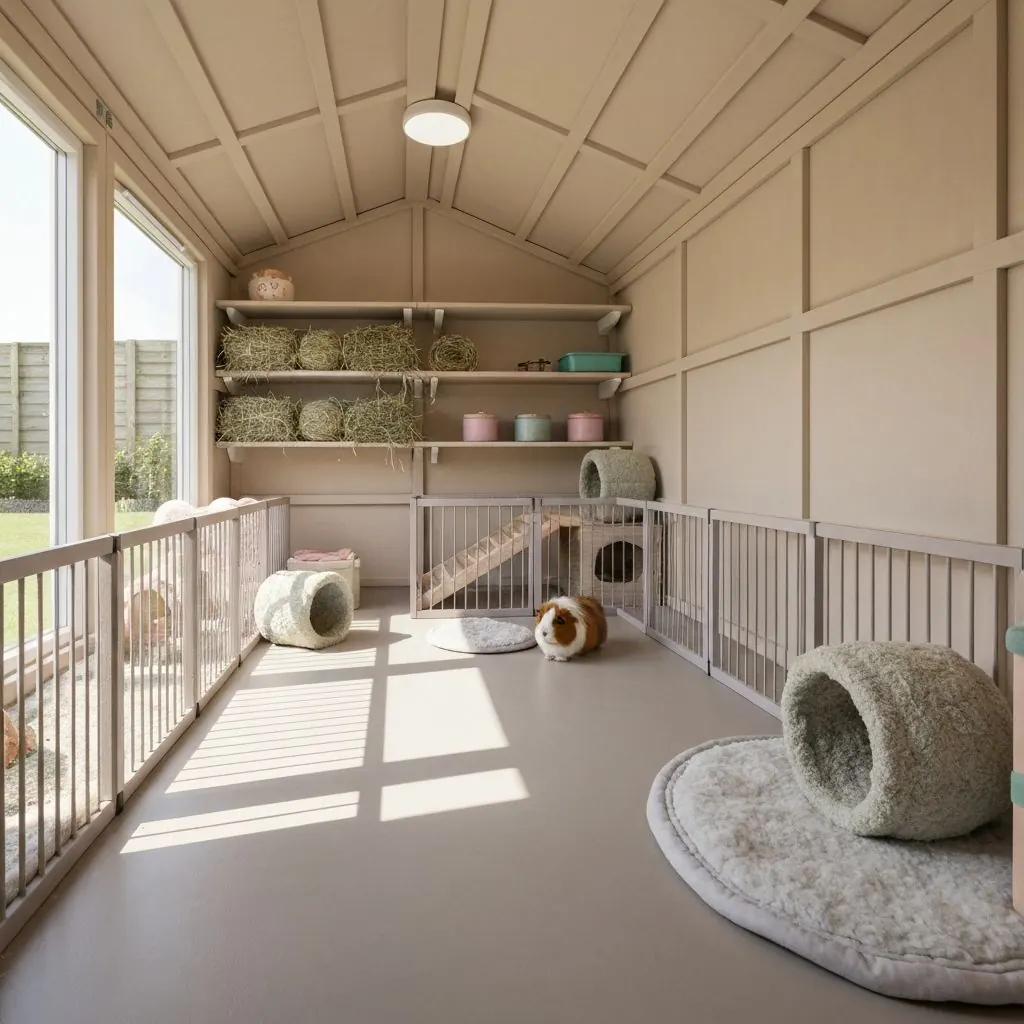
Guinea Pig Shed Temperature: What Is Safe for Guinea Pigs in Summer and Winter
Quick answer
Key facts
UK welfare charities put the comfortable range for guinea pigs at roughly 15 to 20°C. Below 15°C they can become chilled, and from the mid-20s upwards heat becomes a danger, so the air inside the building needs checking all year round.
- Charity figures for the ideal range sit between 15 and 20°C, with 17 to 20°C the narrower band.
- PDSA says anything above 24°C can be uncomfortable, and above 27°C could lead to heatstroke.
- When it drops below 15°C, guinea pigs housed outside should come in.
- A min/max thermometer at floor level shows the overnight low and the afternoon high.
Guinea pigs are comfortable at roughly 15 to 20°C. Below 15°C they can become chilled, and from the mid-20s upwards they start to struggle with heat, so a garden building needs to stay inside that band day and night, summer and winter. Check it with a min/max thermometer rather than by feel.
A well-planned outbuilding can give a herd far more room than a hutch, and our sheds guide explains choosing and fitting one out. This post deals with one job only: knowing whether the air inside is safe, and what to do when it is not.
The safe temperature range for guinea pigs
The figures vary a little between charities, but they all point the same way. Guinea pigs do best in conditions close to the ones we find comfortable in our own homes.
- Ideal: the RSPCA says room temperatures of 17 to 20°C are ideal. PDSA, the UK vet charity, puts their ideal living range at 15 to 20 degrees.
- Too chilly: the RSPCA says below 15°C they can become chilled, and that outdoor guinea pigs should move inside at that point.
- Getting too warm: PDSA says anything above 24°C can be uncomfortable for them.
- Heatstroke risk: the RSPCA gives 26°C as the point above which heat can cause heatstroke, and PDSA links anything above 27°C to it.
One more point matters as much as the numbers. Guinea pigs don't cope well with big swings, so a space that goes from mild to freezing overnight is a problem even when the daytime reading looks fine. The idea that a fur coat makes them hardy outdoor animals has a lot to answer for.
How to measure it properly
Greatfield, a home-run rescue in Kidderminster, advises monitoring the temperature inside the room or building with a thermometer. The most useful type is a min/max thermometer, which records the highest and lowest readings since you last reset it. A single glance at lunchtime only tells you about lunchtime.
- Put it where your herd lives. Guinea pigs spend their lives at floor level, so fix the thermometer low down near the enclosure, out of reach of teeth, rather than up by the roof where warm air collects. PDSA points out that their bodies are very low to the ground, so they can get cold and dirty on their bellies.
- Keep it out of direct sun. A sensor in a sunbeam reads the sunbeam, not the room.
- Reset it at the same time each day. Morning works well: you see the overnight low straight away and catch the afternoon high the following day.
- Write the readings down. A week of figures in a notebook shows you how fast the space heats up on a sunny day and how far it drops on a clear night.
A min/max thermometer is one of the cheapest bits of kit you will buy for your herd, and the most honest. The awkward truth is that a building which feels pleasant when you pop in at midday can be a very different place at 3am in January.
PDSA's summer advice warns that wooden hutches, sheds and runs can get very hot in the sun, and once the sun goes down on a winter evening the warmth goes with it. Garden centre buildings are designed for lawnmowers, and lawnmowers do not mind a scorching afternoon. Lining the walls is the usual way to slow those swings, and our insulation post explains the materials. Airflow matters just as much, which the ventilation guide deals with.
Where the housing sits makes a difference too. PDSA asks for a hutch to be weatherproof and raised off the ground, and Greatfield describes a suitable outbuilding as windproof, waterproof and preferably raised off the ground.
What the readings mean
Here is how the charity figures above translate into action when you check the thermometer each morning.
- Below 15°C: too chilly. Either bring the building back up safely or move the animals inside, as covered further down.
- 15 to 20°C: the comfortable band. Keep checking, especially if the gap between the low and the high is wide.
- Above 24°C: starting to be uncomfortable. Add shade and airflow now, before the afternoon peak.
- 26 to 27°C and above: heatstroke territory. Cool the space or move them somewhere cooler, and watch closely for the signs below.
A big gap between your overnight low and daytime high is worth acting on even when both figures sit inside the band, because sudden changes are what these animals handle worst.
Signs they are too cold
Greatfield says that if you notice your guinea pigs shivering, hunched up or less active, they may be too chilly, and you should take action straight away.
The RSPCA health guidance adds that changes in normal behaviour, such as eating less, being quieter or hiding more, can be an early sign of illness or pain. Because guinea pigs hide pain well, they may suffer before you notice. If eating or drinking habits change, or droppings reduce or stop, consult your vet straight away, as they could be seriously ill.
Wood Green notes that outdoor living carries a risk of them becoming cold and damp during the winter, and that indoor housing gives a dry, warm environment with a reduced risk of fungal and respiratory issues. Chill and damp together are the combination to avoid.
Signs of heat stress and heatstroke
Heatstroke is an emergency. Wood Green's pet advice lists these signs in guinea pigs:
- fast breathing
- drooling
- confusion
- lethargy
- loss of balance
- loss of appetite
- seizures
- unconsciousness
PDSA adds struggling to breathe, short and quick breaths, and collapsing. If you see any of these, Wood Green says to move them into a cool room or shaded area, do not place them in cold water, and call a guinea pig-friendly vet immediately. PDSA also says to call your vet straight away. Please don't wait to see if they perk up; ring first, then follow what the vet tells you.
When it is too hot
A reading above 24°C is your cue to act, and getting ahead of it on a forecast scorcher is better still. Start with the building itself.
- Shade it. PDSA says never to leave an enclosure in direct sunlight, and to move wooden housing to a well-shaded part of the garden where you can. For a herd with outdoor access, it also asks for shaded areas in their run.
- Let air move. PDSA describes a through draught of cool air so it doesn't get too hot inside, and Wood Green says plenty of airflow helps.
- A fan, used safely. For a converted outbuilding or a room in the house, Wood Green suggests a rotating fan, provided it is safe to do so, with any wires tucked away or covered with cable protectors.
Then help the guinea pigs themselves cool down.
- Frozen bottles, wrapped. PDSA suggests freezing a water bottle, wrapping it in a towel or sock and placing it just outside the enclosure, as guinea pigs have very sensitive skin and can get ice burns from direct contact.
- Something cool to lie on. Wood Green recommends a ceramic tile or two, or cold, damp tea towels around the enclosure.
- Ditch the plastic igloos. Wood Green warns that enclosed plastic hides retain heat and can cause heatstroke. Wooden houses with several entrances let hot air move through.
- Plenty to drink. PDSA says they must always have fresh, clean water, with several bowls or bottles, changed often so it stays cool.
- Fresh, fluffy hay. Wood Green says a fresh pile gives them somewhere to burrow and keep cool.
If the space still climbs into the danger zone on hot afternoons despite all this, it is safer to move your herd somewhere cooler for the worst of the day than to hope it holds.
Keeping them warm when it turns chilly
When the overnight minimum starts drifting towards 15°C, it is time to prepare. Wood Green describes guinea pigs snuggling up together when it is chilly, so a companion is part of the plan, and a pair tucked nose to tail in a deep nest is about as contented a sight as you will find in any garden.
- Extra to burrow into and to eat. Wood Green advises extra hay for them to bury themselves in, and PDSA notes they need extra calories in the colder months to stay warm.
- Snug hides. Wood Green suggests filling hides with soft forage and adding towels or blankets.
- Keep it dry. PDSA says to change bedding regularly so it stays fresh and dry, and Wood Green warns that a damp living space can cause serious health issues.
- Wrap up the enclosure but keep the airflow. Wood Green suggests fitted hutch covers, or blankets and tarpaulin, to keep out frost and wind. PDSA adds that there must still be enough airflow inside.
- Stop water freezing. PDSA advises wrapping bottles in bubble wrap or an old sock, moving the ball of the bottle regularly so it cannot freeze in place, and checking bowls at least twice a day.
Heaters and electrics
Greatfield recommends keeping an outbuilding above 15°C with a safe, thermostatically controlled heater, and says never to use heat lamps or exposed electricals inside the enclosure. PDSA mentions an animal-safe heat pad under a water bowl. Choose products made for pet use, keep cables away from the animals, and check your thermometer after you switch anything on, so you know the fix has not overshot into the warm end of the range.
When to bring guinea pigs indoors
The charity line is clear: once temperatures fall below 15°C, move them inside. If your thermometer shows the space dropping below that and you cannot keep it up safely, it is time.
- Older or poorly ones first. Wood Green says older or unwell guinea pigs may struggle to regulate their body temperature and will benefit from coming inside over the winter.
- Same space, different room. Wood Green asks for an indoor setup the same size as the outdoor one. A porch or conservatory can work well, PDSA says, to avoid them over-heating in a warm house.
- Garages only without cars. PDSA lists a car-free garage as an option, and Wood Green says a large garage can work as long as it is not used by cars or other vehicles. In PDSA's words, car fumes could be fatal.
- No daily shuffling. Wood Green advises against bringing them in at night and putting them out by day, as the swings are hard on them.
- Wait before moving back. Wood Green says to wait until it is much warmer and consistent, and Greatfield says to keep them in until it is reliably above 15°C, usually late spring.
It works the other way too. PDSA says it is not advisable to move guinea pigs that live inside out to the garden in the colder months, as the sudden change can make them ill.
Everyday checks through the year
The thermometer tells you about the air; your own eyes tell you about the herd. A quick daily round catches most problems early.
- Read and reset the thermometer at the same time each morning.
- Check water for ice on frosty mornings and for warmth on hot afternoons.
- Watch who comes to eat. Anyone hanging back at feeding time needs a closer look, since eating less can be an early sign of illness.
- Check bottoms in warm spells. The health guidance quoted earlier asks for the fur and skin around the rear end to be checked twice a day in warm conditions, because soiled fur can attract flies and lead to flystrike.
- Weigh them as nights draw in. Wood Green recommends regular health checks and keeping an eye on weight through the colder months.
- Keep on top of cleaning. Wood Green notes that cleaning may need to happen more often in winter, when their time in the run is reduced, and PDSA wants grass time skipped on chilly, damp days. PDSA also asks for the exercise area not to get too wet or muddy.
- Ease them into grass time. Wood Green notes that a herd given time on the grass only now and then need time to acclimatise to the temperatures outside.
More on shed set-ups: insulating a guinea pig shed and shed ventilation for guinea pigs.
Frequently asked questions
- What temperature is too cold for guinea pigs?
- Below 15°C they can become chilled, and UK charities say to bring guinea pigs housed outside into the house at that point.
- How hot is too hot?
- PDSA says anything above 24°C can be uncomfortable and above 27°C could lead to heatstroke. The RSPCA puts the heatstroke risk from 26°C.
- Where should the thermometer go?
- Low down near the enclosure, out of direct sun and out of reach of teeth. A min/max type shows you the overnight low and the daytime high.
- Can guinea pigs live in a garage in winter?
- Only if no car uses it. Wood Green says a large garage can work if vehicles are kept out, and PDSA warns that car fumes could be fatal.
Sources
- RSPCA, Guinea pig environment and Guinea pig health (checked 21 November 2026).
- PDSA, The ideal home for your guinea pig, Keeping guinea pigs warm in winter, Keeping your guinea pigs cool in the summer and Beat the heat (checked 21 November 2026).
- Wood Green Pets Charity, Caring for guinea pigs, Cold weather tips for guinea pigs and How to care for small pets in the hot weather (checked 21 November 2026).
- Greatfield Small Animal Rescue, Can guinea pigs live outdoors year round? (checked 21 November 2026).