
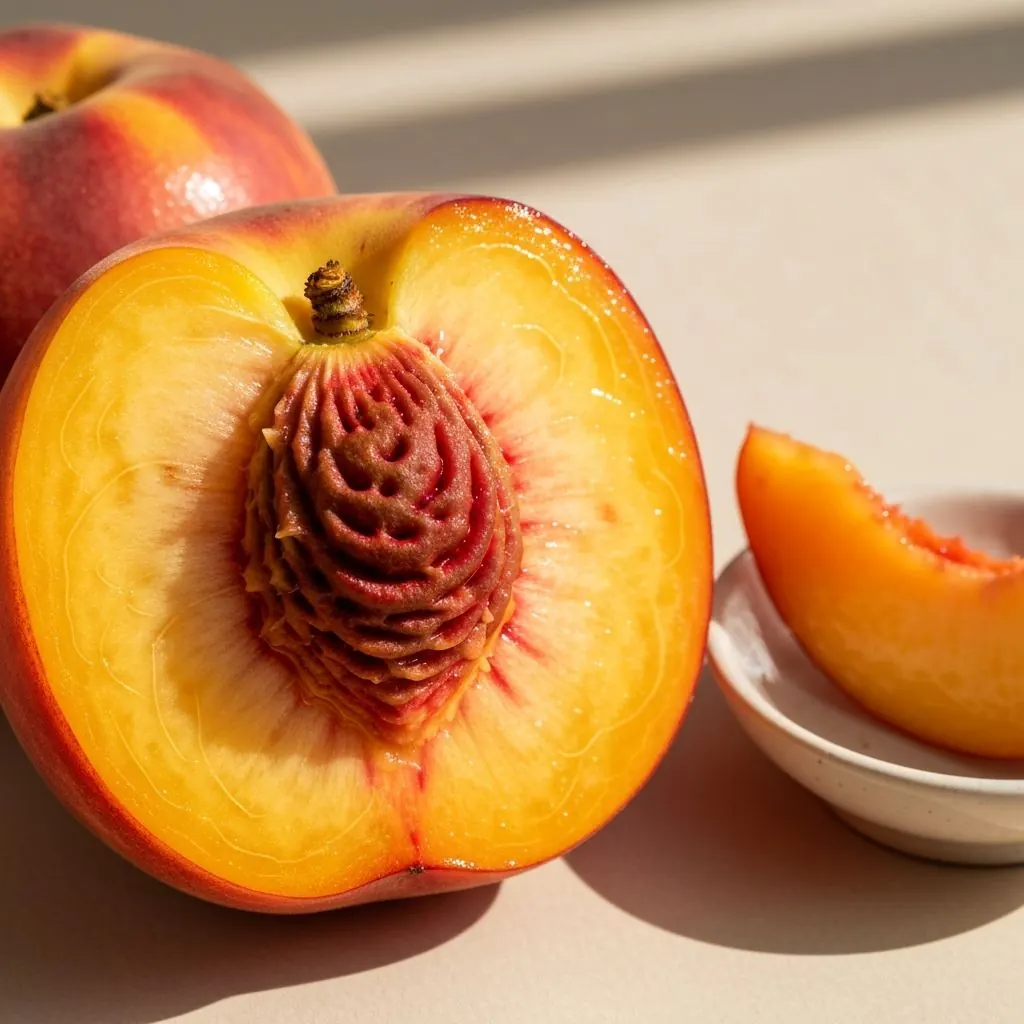
Can Guinea Pigs Eat Peaches? Seeds, Skin, Portion Size and Safer Fruit Options
Yes, guinea pigs can eat peach flesh in very small portions. The stone must be removed completely, because it contains compounds that are harmful if chewed. The skin is technically edible but tougher to digest, so peeling is the safer habit. Peaches are high in sugar, so keep portions small and offer them no more than once a week at most.
That is the whole answer for anyone standing in the kitchen with a ripe one in hand and a pig shouting from the hutch. The rest of this guide covers why the fruit belongs in the treat tin, how to prepare it properly, and what to do if something goes wrong.
Is the flesh safe for a guinea pig?
The flesh of a ripe peach is safe in small amounts. It contains some vitamin C and fibre, and most of them find it appealing. The issue is not toxicity — it is sugar content and portion discipline. The fruit is noticeably sweeter than berries or apple, and regular offerings add up to a meaningful amount of dietary sugar, something a gut built for fibrous forage does not thank you for.
For context on how this fruit sits within a wider best fruits for guinea pigs overview, it belongs in the "occasional, small portion" group alongside mango and melon: enjoyable in moderation and best kept occasional.
The RSPCA puts fruit in its treat group, to be given in small amounts a few times a week, and warns that the high sugar or calcium content of treat foods can cause health issues. Wood Green suggests feeding treats once or twice a week to avoid too much sugar. A small cube on one of those days fits comfortably inside both.
What the fruit actually offers nutritionally
It is easy to assume that anything fresh and colourful is a vitamin boost. The numbers say otherwise. USDA FoodData Central lists raw yellow peach at about 6.6 mg of vitamin C and 8.4 g of sugars per 100 g. Raw yellow bell pepper, by comparison, comes in at about 184 mg of vitamin C per 100 g.
In other words, a guinea pig would get far more of the nutrient that matters from a slice of pepper than from a whole bowl of the fruit, and with a fraction of the sweetness. That is the real reason fruit stays a treat. It is pleasant, it is safe in tiny amounts, and it is a poor way to meet any nutritional need.
Guinea pigs cannot make their own vitamin C, so it has to come from food every day. Fresh vegetables, herbs and a plain, fresh pellet do that job. Fruit is a bonus on top.
The stone: remove it completely
The hard pit at the centre must be removed before any of the fruit goes near a guinea pig. It contains amygdalin, a compound that can release cyanide when broken down. A guinea pig will attempt to gnaw through it if given the chance, so do not leave this to luck. Take it out, put it straight in the bin, and only then cut the flesh.
The same rule applies to every fruit of this type: plums, apricots, cherries, nectarines. The flesh is generally fine in small amounts; the centre is not. If you prepare fruit on a board your herd can reach during floor time, clear it before they do.
Should you peel it?
Peach skin is not toxic, but it is fibrous, can carry pesticide residue, and is harder for a guinea pig to digest than the flesh. If you leave it on, wash the fruit thoroughly under running water first. If you prefer the simpler approach, peel it. Either way is acceptable as long as the centre is gone and the portion is small.
The fuzz is mostly a texture issue. Some eat round it with visible distaste, which is their right.
How much is a safe portion?
| Detail | Guidance |
|---|---|
| Safe part | Flesh only (peel or wash first) |
| Unsafe parts | The hard centre: remove it entirely |
| Portion size | Very small piece, roughly a 1–2cm cube of flesh |
| Frequency | Once a week maximum for healthy adults |
| Temperature | Room temperature, not cold from the fridge |
| Preparation | Washed, centre removed, cut into small pieces |
That cube is per guinea pig. If you keep a pair or a trio, cut one piece each and hand them out at the same moment, otherwise the boldest animal eats everyone's share and the rest learn a lesson about life.
Remove anything left uneaten within an hour or so. Soft, sugary fruit spoils quickly in warm bedding and attracts flies, which is the last thing an outdoor hutch needs in July.
Introducing it for the first time
The RSPCA advises avoiding sudden changes and introducing new foods gradually, and this fruit is no exception. Offer a piece smaller than the usual portion, on a day when nothing else new has gone into the bowl, so you know what caused any change you see.
Check droppings over the next day. Normal, firm droppings mean it suited your pig. Soft or sticky ones mean it did not, and it can come off the menu without any loss: there is nothing in the fruit a guinea pig needs.
When to skip it
A guinea pig with a history of digestive sensitivity, loose stools, or weight concerns is better served by skipping fruit treats altogether or choosing lower-sugar options like raspberries or strawberries. Being sweeter and juicier than most berries, it is more likely to trigger soft stools in sensitive animals.
If you introduce the fruit and notice signs of digestive upset, such as very soft droppings, reduced appetite, or an unusually still guinea pig, pull it from the diet and offer plain hay and water for 24 hours. Most mild reactions resolve without intervention. A pig that stops eating altogether, looks hunched or has no droppings needs a vet the same day, because the gut can slow down quickly.
Tinned and dried versions are a separate matter. Tinned fruit usually sits in syrup or juice, and drying removes the water and concentrates the sugars into a smaller, chewier piece. Neither belongs in the hutch.
Safer alternatives with better nutrition
If you want to offer fruit that also contributes to vitamin C-rich foods in the diet, strawberries and kiwi are both better choices than peach. Strawberries are lower in sugar and provide useful vitamin C. Kiwi is excellent for vitamin C but should be offered in very small amounts due to its acidity.
Better still, look to the vegetable drawer. The RSPCA lists bell peppers, parsley, celery, cucumber and romaine lettuce among the foods to offer often. A pig that gets those daily has no need for fruit at all, and will still be delighted when it turns up.
For a complete picture of the daily diet plan, where fruit sits alongside hay, pellets, and vegetables, the daily feeding article has the full breakdown.
For how fruit fits around hay, pellets and daily veg, see our guinea pig feeding guide.
Sources
- RSPCA: Guinea pig diet
- Wood Green: Guinea pigs, your day-to-day guide
- USDA FoodData Central: Peaches, yellow, raw (FDC 169928)
- USDA FoodData Central: Peppers, sweet, yellow, raw (FDC 169383)
More on veg and fruit: best vegetables for guinea pigs, best fruits for guinea pigs, can guinea pigs eat peppers and can guinea pigs eat tomatoes.
Frequently asked questions
- Can guinea pigs eat canned or tinned peaches?
- No. Tinned fruit is typically preserved in syrup or juice that is high in sugar and often contains additives. Only fresh fruit is appropriate for guinea pigs.
- Can guinea pigs eat nectarines?
- Yes, on the same basis as peaches — remove the stone completely, wash the skin or peel it, and offer only a very small amount of flesh occasionally. Nectarines are slightly lower in sugar than peaches.
- My guinea pig ate a tiny amount of peach stone. What should I do?
- A very small amount is unlikely to cause immediate harm, but contact an exotics vet for advice rather than waiting to see what happens. Do not attempt to induce vomiting — guinea pigs cannot vomit.
- How often can I give peaches?
- Once a week at most for a healthy adult guinea pig, in a very small portion. On the other six days, vitamin C needs are better served by fresh vegetables rather than fruit.