
Best Fruits for Guinea Pigs: Safe Choices, Portions and How Often to Feed Them
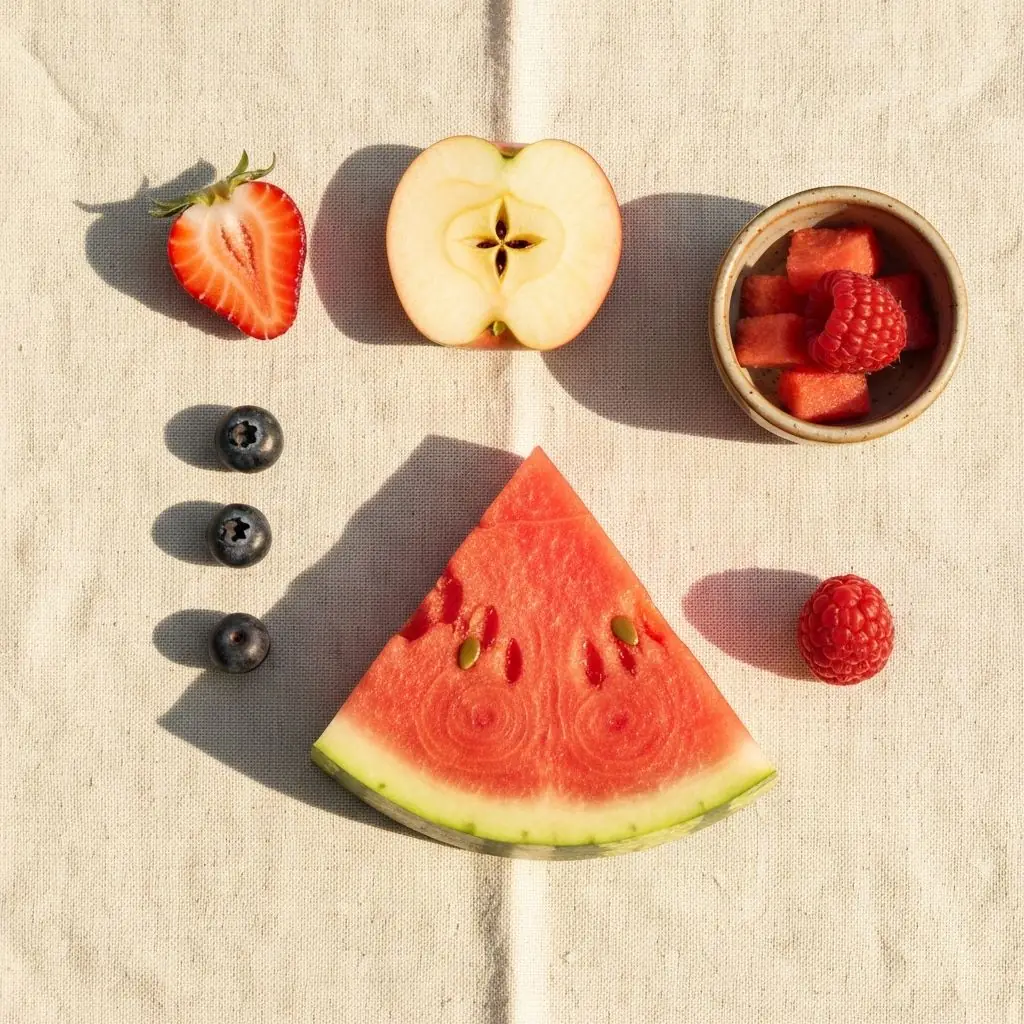
Guinea pigs can eat a modest selection of fresh fruit as an occasional treat — not as a daily staple. Fruit is too high in sugar to form any meaningful part of their diet. The safest options include strawberries, blueberries, apple (without seeds), and watermelon, offered in thumbnail-sized portions no more than two or three times a week.
A treat for guinea pigs, not a food group
Before the list, the honest context: fruit is not something guinea pigs need. Their diet is built around hay — unlimited, all day, every day — supported by fresh leafy vegetables and a measured portion of pellets. If you follow a sensible guinea pig feeding guide, fruit barely registers as a daily concern.
The problem is that fruit is sweet, they enjoy it, and it is easy to overfeed without realising, and every sweet extra leaves less room in a small stomach for hay. High sugar intake contributes to digestive upset, soft stools, and weight gain over time. Fruit should function more like a reward than a regular food — something offered occasionally, in a portion a guinea pig could demolish in under a minute.
Safe fruits: portions and frequency
These are the fruits that work reliably in tiny amounts. All should be washed, served at room temperature (not cold from the fridge), and offered without pips, stones, or tough stalks.
| Fruit | Safe portion | Frequency | Notes |
|---|---|---|---|
| Strawberry | 1 small berry | Up to 3x weekly | Good vitamin C source; remove stalk |
| Blueberry | 2–3 berries | Twice weekly | Mild; fine for most pigs |
| Apple | One thin wedge | Twice weekly | Remove pips and core entirely |
| Watermelon | Thumbnail-sized piece | Twice weekly | Remove seeds; rind is fine in tiny amounts |
| Melon (cantaloupe) | Small cube | Once weekly | Sweeter; limit accordingly |
| Pear | One thin wedge | Twice weekly | Remove pips; quite sugary |
| Raspberry | 1–2 berries | Twice weekly | Low sugar relative to other fruits |
| Peach | Tiny piece of flesh | Once weekly | Remove stone completely — see our note on can guinea pigs eat peaches |
| Kiwi | Teaspoon of flesh | Once weekly | Excellent vitamin C but quite acidic |
| Mango | Small cube | Once weekly | Very sweet; rare treat |
The best fruit for guinea pigs, one by one
The table gives the quick version. Here is a little more on each, so you can choose with your own pigs in mind. Every option below is a treat; none of them is needed for a healthy diet.
Strawberry
One of the most useful fruits to give, because it carries a fair amount of vitamin C for its sweetness. Wash it, pull off the stalk and green top, and halve a large berry. One berry per pig is enough, and a good amount for a treat.
Blueberries
Mild and easy to portion: feed two or three berries at a time. They are popular with cautious eaters because they are soft and not sharp. Rinse them well, as they often come in punnets that have sat in the fridge.
Raspberries
Among the less sugary choices, which makes them a good pick if your guinea pig is carrying extra weight. One or two berries is plenty. They spoil fast, so only buy what you will use within a day or two.
Apple
A thin wedge with the core and every pip removed. Apple is one of the easiest treats to find year round and most of them love it. The RSPCA suggests a quarter of an apple as a treat, which is plenty to share between a pair.
Pear
Treat pear like apple: thin, cored, no pips. It is juicier and quite sugary, so keep it to a couple of times weekly at most, and less if your guinea pig's droppings soften.
Watermelon
Mostly water, which makes it a pleasant summer treat. Remove the black seeds. Feed a thumbnail-sized piece, and the pale rind is fine in tiny amounts.
Cantaloupe melon
Sweeter than watermelon, so a thumbnail-sized cube once weekly is the limit. Take off the skin and seeds before you give it.
Kiwi
Excellent for vitamin C, but sharp and acidic. A teaspoon of peeled flesh is the most to offer. If a pig gets sore lips or turns its nose up, drop it.
Mango
Very sweet, so this one is a rare treat. A cube of ripe flesh, with no skin and nowhere near the large central stone.
Peach
Flesh only, in a tiny piece, with the stone removed completely. It is sugary, so feed it once weekly at most.
What to limit and what to avoid
Limit these
Grapes and bananas are popular but are significantly higher in sugar than most other fruits. Grapes should be quartered and offered rarely — not more than once a week at most. Bananas should be a very occasional sliver, and no more.
Avoid entirely
Rhubarb is toxic to guinea pigs and should never be offered. Avocado is dangerous, and the RSPCA lists it, along with coconut and citrus fruits, among the foods to avoid because they can be harmful. Oranges and other citrus are acidic enough to make mouths sore, so leave them out and choose a berry instead. Any fruit with a pit or stone should be stripped completely before offering the flesh — this includes cherries, plums, apricots, and peaches. The pips of apples contain trace amounts of cyanogenic compounds; they are not worth the risk when removing them takes two seconds.
Preparing treats safely
Wash everything, even fruit labelled organic. Give it at room temperature, not straight from the fridge — cold food can cause digestive upset. Remove any seeds, pips, stones, or tough outer rinds. Cut into pieces small enough that the guinea pig eats it quickly and you can see how much was consumed.
Remove uneaten fruit from the enclosure after an hour or so. Fermenting fruit sitting in warm bedding is a hygiene problem and will attract flies.
What happens if guinea pigs overdo it
The most immediate sign is usually soft or looser-than-normal droppings. If you notice your guinea pig has raided an accidental supply or been overfed fruit, pull it from the diet entirely for a few days and return to hay, water, and plain leafy greens. Most mild digestive upsets resolve this way without vet intervention.
If soft stools persist beyond 24–48 hours, the guinea pig stops eating, or you notice any other concerning signs, contact an exotics-savvy vet. Prolonged digestive disruption can escalate quickly in a small animal. Our page on signs of diarrhoea in guinea pigs covers what to watch for and when it becomes urgent.
A note on vitamin C and fruit
Guinea pigs cannot synthesise their own vitamin C, so they rely on fresh produce to keep scurvy at bay. While some fruits, such as strawberries and melon, do provide useful vitamin C, vegetables are generally better sources and lower in sugar. Red and yellow bell pepper is probably the most efficient vitamin C food you can offer, and it is something a guinea pig can have every day without the sugar load that fruit carries.
Do not rely on fruit to cover that need. Use it as a treat on top of an already varied diet. For a fuller picture of what guinea pigs need every day, the daily diet article breaks down the whole routine.
Sources
More on veg and fruit: best vegetables for guinea pigs, can guinea pigs eat peppers, can guinea pigs eat tomatoes and can guinea pigs eat peaches.
Frequently asked questions
- Can guinea pigs eat fruit every day?
- Not ideally. Fruit is high in sugar and should be an occasional treat rather than a daily component of the diet. Two to three small portions per week of a low-sugar fruit is plenty for most healthy adult guinea pigs.
- What is the best fruit for guinea pigs?
- Strawberries and raspberries are among the most reliable choices — they are relatively low in sugar compared to bananas or grapes, provide some useful vitamin C, and most guinea pigs enjoy them. Small portions of apple and watermelon also work well.
- Can guinea pigs eat frozen fruit?
- It is better to avoid frozen fruit, or at minimum to thaw it fully to room temperature first. Cold food can shock the digestive system. Fresh is always preferable.
- Can baby guinea pigs eat fruit?
- Young guinea pigs have more sensitive digestive systems. It is sensible to hold off on fruit altogether until they are at least three to four months old and have a well-established hay-based diet.
- My guinea pig refused a fruit I offered. Is that normal?
- Very normal. Guinea pigs have individual preferences and some are naturally more cautious about new foods. There is no obligation to offer fruit at all — it adds nothing nutritionally that a good vegetable selection cannot cover.