
Guinea Pig Treats and Snacks: Healthy Choices, Portions & What to Avoid
Quick answer
Key facts
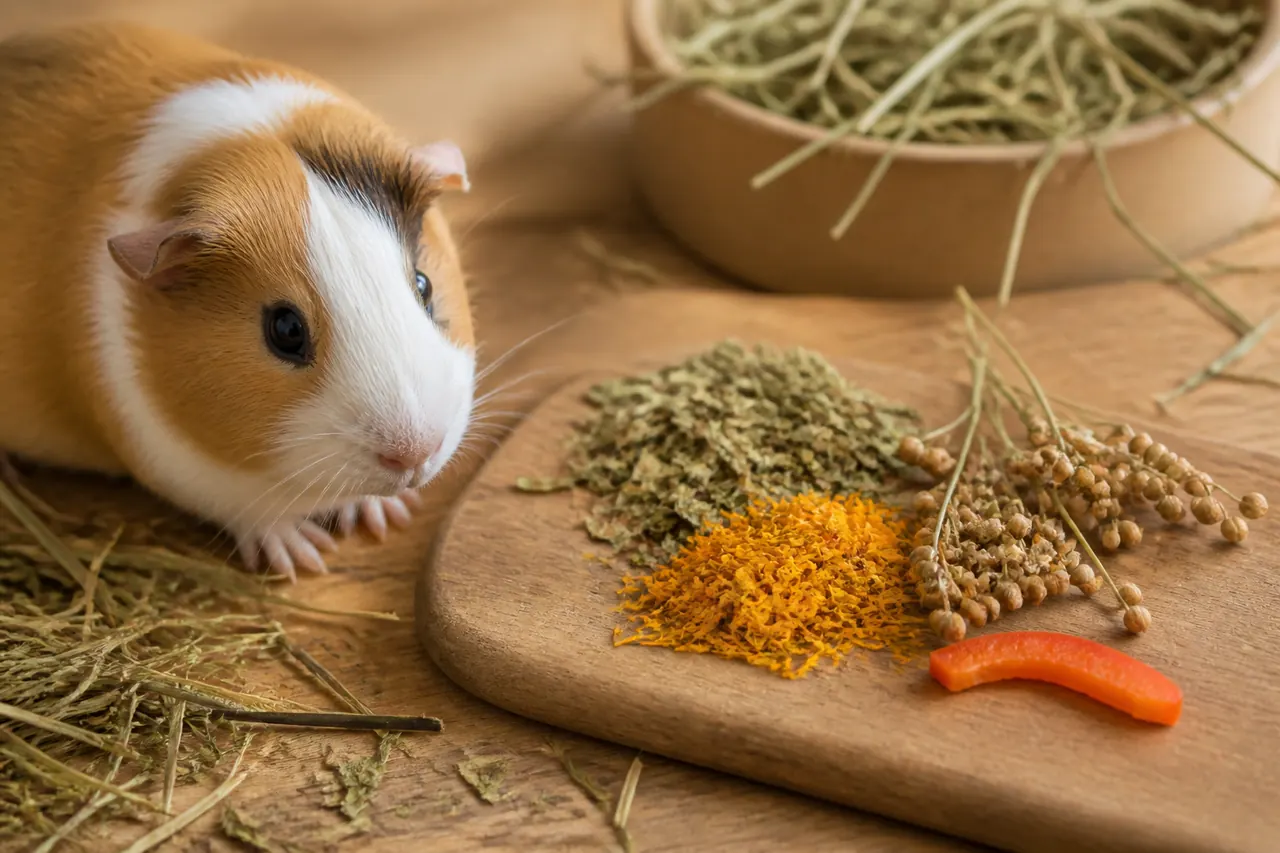
Healthy guinea pig treats are simple, natural and tiny — herbs, dried botanicals and small produce pieces work better than sugary shop-bought extras. Offer roughly once a week or two and keep the everyday menu unchanged.
- Read ingredient lists; avoid sugar, honey, cereals and sweet coatings.
- Fresh veg or herbs from the daily allowance can double as hand rewards.
- Hide dried botanicals in hay to make a small amount more interesting.
- Never use treats to replace normal food if appetite drops — contact a vet.
A treat should add interest to your guinea pig's routine, not become another meal. The best choices are simple, natural and easy to portion: a small piece of suitable fresh veg, a sprig of herbs or a pinch of dried flowers.
This guide covers what to give your pet, how often and how to make a tiny reward last. For everyday feeding context, see the feeding guide and what guinea pigs should eat every day.
Herbs and greens first
Herbs, dried flowers and tiny pieces of veg suit guinea pigs far better than sugary shop-bought bites.
Check the label
Skip sugar, honey, cereals, seeds and sweet coatings. Recognisable ingredients matter more than packaging.
Small and occasional
About once every week or two is a common guide, and the everyday menu stays the same.
What Makes a Good Snack for Guinea Pigs?
Guinea pigs are herbivores, so any extra should fit a fibre-first guinea pig diet. Hay makes up most of what they eat, with small daily portions of pellets and fresh vegetables.
Herbs and Leafy Greens
Fresh herbs and leafy greens are the easiest win, and they cost little more than whatever is already sitting in the salad drawer. A leaf of romaine lettuce saved from the daily bowl works as well as anything sold in a packet.
Vegetables With Vitamin C
Guinea pigs cannot make their own vitamin C, so it has to come from their food every day. A sliver of a familiar vitamin-rich vegetable is a reward that also does a job.
Fruit, Sparingly
Give fruit only occasionally, in small portions, because of its sugar content. See best vegetables for guinea pigs and best fruits for guinea pigs for safe choices.
Natural Rewards or Shop-Bought Snacks?
You do not need a specially made product to reward your pet. Blue Cross notes that commercial products are often high in sugar and are not necessary in the diet.
Fresh Options
A tiny piece of veg or a few strands of fresh grass work well for hand feeding. Pick grass by hand from an untreated area, never lawnmower clippings.
Dried Herbs and Flowers
Dried dandelion, marigold and mint add different textures. Blue Cross uses herbs and flowers such as dandelions, marigolds, basil, coriander, cress, mint and dill in its guinea pig foraging guidance.
Picking Your Own Plants
If you collect plants yourself, correct identification is essential. Avoid anything exposed to pesticides, weed killers, heavy traffic or contamination from other animals.
How to Check the Label
Whether you shop online or in a pet store, turn the packet around before you buy.
Ingredients to Skip
- added sugar, honey or syrup
- cereals, nuts and seed mixes
- sweet coatings, yoghurt drops and coloured pieces
Vegetable Biscuits and Pellets
Judge vegetable biscuits by their full recipe, and take the same advice when choosing guinea pig pellets.
Are Snack Bundles Worth Buying?
Pet shops have discovered that the word "bundle" sells, and the Christmas versions tend to be the worst offenders, with more ribbon than hay.
What a Good Bundle Looks Like
The better bundles look like a meadow: dried grasses, timothy hay, plain petals and leaves. The worse ones look like a biscuit recipe, with cereals, syrups and colourings.
Price per Gram
Loose dried marigold usually costs less than the same petals in a gift box. Guinea pigs are many things, but impressed by presentation is not one of them.
Turning Rewards Into a Treasure Hunt
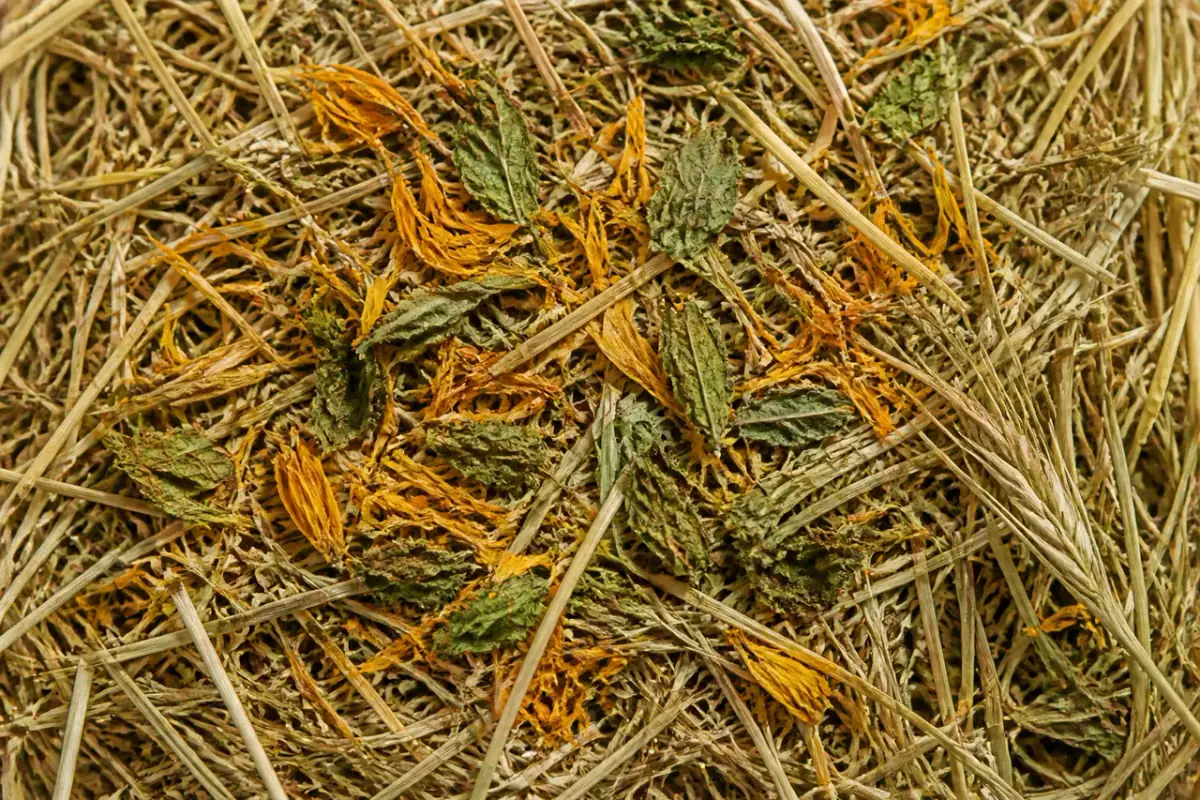
Guinea pigs naturally spend much of the day searching and grazing, so give a small reward as an activity.
Hide It in the Hay
Tuck a few dried herbs into a fresh pile of hay or a simple box. Blue Cross recommends this kind of setup to encourage natural searching behaviour. Quality still matters here — see types of hay for guinea pigs.
- Start with a tiny amountUse a pinch of dried herbs rather than a pile that would change the day’s calorie balance.
- Hide it in the hayScatter pieces through a fresh pile of hay or a simple hunt box so searching becomes part of the reward.
- Keep interaction calmOffer a small hand reward during quiet time. Novelty comes from how you present it, so portions can stay small.
Spread It Out
Scatter tiny pieces around the enclosure or inside a tunnel so your guinea pigs have to sniff and explore.
Enrichment Without Extra Food
Tunnels, hiding spots, chew toys and room to explore provide guinea pigs with stimulation and no calories.
How Often Should Guinea Pigs Get Extras?
Once Every Week or Two
The veterinary charity PDSA advises offering something extra around once every week or two, and reducing the day's other food so your pet does not get too many calories. Its advice also suggests hiding a small amount of dried herbs in everyday feeding material, and it notes that weight gain can be a sign of overfeeding fresh food or other parts of the diet.
A piece taken from the daily vegetables allowance is a gentler treat than fruit or a commercial product given on top.
One Herd, One Rota
If several people care for the same pets, agree who gives extras and when. In a busy household the guinea pigs usually work out who the soft touch is long before the adults do.
Keep an Eye on Weight
Weigh your pets regularly to spot gradual gain hidden under the fur. Extra weight tends to creep on one kind hand-out at a time.
When Guinea Pigs Should Skip the Snack
Sugary Shop Snacks
Honey sticks and similar sweet products are particularly poor choices for dental health. Guinea pigs have teeth that grow continuously and need fibrous food such as hay and grass to wear them down.
Human Food
Cereals, sweets and other processed foods are not suitable just because your pet shows interest. A guinea pig staring at your biscuit is pure optimism, and it does not make the biscuit any safer.
Illness, Vet Treatment and Diet Changes
If your pet has digestive problems, is gaining weight or is having veterinary treatment, extras can complicate a managed diet, so ask your vet for advice first and see the health guide for warning signs.
Homemade Snacks for Guinea Pigs (No Oven Required)
Homemade pet rewards sound like a baking project, but the best ones involve no baking at all.
Air-Dried Herbs
Parsley, coriander or basil from a windowsill pot, hung somewhere warm and dry for a few days, becomes a crumbly home-grown reward that costs pennies. Skip recipes for baked banana bars, which concentrate sugar and starch.
One New Ingredient at a Time
Offer one new ingredient at a time in a tiny amount, then watch appetite and droppings for a day or two before repeating it. If something causes soft droppings twice, it is off the menu, however enthusiastically it was received.
More on the everyday diet: what guinea pigs should eat every day, vitamin C for guinea pigs and safe herbs and forage.
Frequently asked questions
- Can treats help build trust with a shy guinea pig?
- Yes. Offering a small reward by hand can encourage gentle interaction and help your guinea pig become more comfortable approaching you over time.
- Can two guinea pigs share one treat?
- Yes, provided it can be divided safely and each animal receives an appropriate amount. With animals housed together, separate small pieces can also prevent one individual from taking the entire serving.
- Are dried flowers suitable as rewards?
- Some are, provided the plant species is known to be safe and has not been chemically treated. Dandelion and marigold are among the flowers included in Blue Cross's guinea pig guidance.
- Can I use part of the normal daily food as a reward?
- Yes. This can be a practical way to interact without automatically adding extra food. For example, reserve a small portion of an appropriate daily vegetable and offer it later by hand or through an enrichment activity.
- Should I keep several different types at home?
- There is no need to maintain a large collection. A few suitable options used occasionally can provide enough variety, and rotating how they are presented creates novelty without constantly introducing new ingredients. A small tin of dried petals, one packet of plain herbs and whatever the vegetable drawer offers is a perfectly respectable arsenal.
Choose simple ingredients, keep portions small and think about presentation, and the diet stays built on hay, greens and pellets.