
Types of Hay for Guinea Pigs: Timothy, Meadow, Orchard & More
Quick answer
Key facts
Adult guinea pigs need continuous access to good-quality grass hay such as Timothy, meadow or orchard. Alfalfa is a higher-calcium legume usually reserved for young, pregnant or nursing animals, not healthy adults.
- Hay supports digestion, dental wear and natural grazing behaviour.
- Timothy, meadow and orchard grass differ in softness and stalk structure.
- Choose clean, dry, long-strand hay with a fresh grassy smell.
- Never let the hay supply run out — refill before piles are empty.
Choosing good-quality hay is less about finding the most expensive pack and more about knowing what makes a good everyday choice. Texture, freshness, plant variety and age all affect what your pigs prefer and how much they actually eat.
For most adults, a long-strand grass hay is the everyday option: clean, dry, with plenty of long strands and a fresh smell. For how hay sits beside pellets and vegetables, see what guinea pigs should eat every day and the main feeding guide.
Grass hay first
Long-strand everyday options suit most healthy adults — texture differs by variety and cut.
Chew and digest
Long strands support continuous grazing, dental wear and the fibre gut health depends on.
Freshness matters
Clean, dry, long-strand hay with a grassy smell is more useful than the most expensive pack label.
Why Hay Sits at the Top of the Menu
Cavies are built to graze for long periods. Their teeth grow continuously, and long strands keep the jaw working in the side-to-side grind that wears those teeth down naturally.
The gut is built the same way. As hindgut fermenters, they rely on a steady flow of fibre to keep digestion moving. Hay should make up most of the diet and be available day and night, in several piles, so each animal can graze whenever it chooses.
If that sounds like a lot of eating, it is. A healthy guinea pig regards grazing as a full-time occupation with occasional breaks for sleeping and complaining. Long gaps without fibre are a problem in the making, which is why a reliable supply matters more than which variety you buy.
The Everyday Grass Options Compared
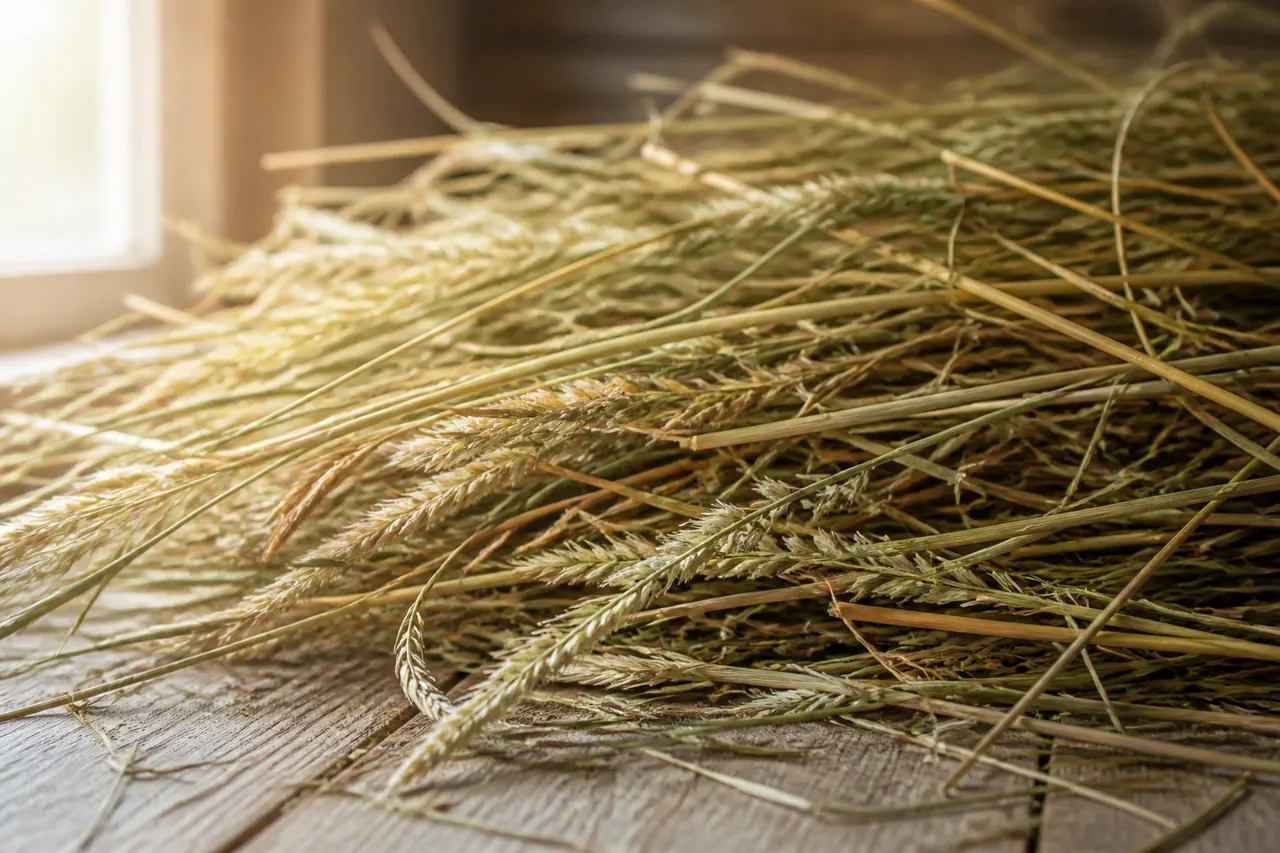
Timothy hay is a popular choice for healthy adults because its mix of stems, leaves and seed heads gives different textures. One batch may be coarse and stalky, the next softer and leafier, depending on the harvest.
Meadow hay is a mix of grasses, so its look and texture vary from batch to batch. Orchard hay tends to be softer and suits pigs that leave coarse stalks behind. Blends of several grass hays add variety to grazing, and some owners rotate between them through the year.
No single variety will suit every animal. The best hay is fresh, appropriate and eaten readily, and trying a small pack first saves waste before you commit to a large bag.
| Type | Typical use |
|---|---|
| Timothy hay | Everyday choice for most healthy adults |
| Meadow | Mixed grasses; texture varies by batch |
| Orchard | Softer option when coarse stalks are refused |
| Mixed blends | Varied textures for more engaging grazing |
| Alfalfa | Higher calcium/protein; for young, pregnant or nursing animals only |
First Cut, Second Cut: Why the Same Name Varies
The name on the pack is only half the story. The same field, mown at different points in the season, produces noticeably different results, which is why one delivery arrives stalky and golden and the next is soft, green and leafy under an identical label.
A first cut is taken early in the season. It has more stem, more seed heads and the most fibre, and first-cut timothy is usually the coarsest of the lot. A second cut regrows through the summer and is softer and leafier, the sensible middle ground for many owners. A third cut, where available, is softer and richer again, and tends to be the one fussy eaters finally deign to touch.
None of this runs from bad to good. A strong chewer does well on coarse first-cut material, while an older or convalescing animal may manage a leafier texture more comfortably. If the pack does not state the cut, the texture will tell you within seconds of opening it.
How to Choose the Right Hay for Your Pets
Look beyond the packaging claims and inspect the product itself.
- Smell and drynessIt should smell pleasantly grassy, not stale or musty, and feel dry with no damp or mouldy sections.
- Structure and cleanlinessLook for long strands with stalks and leaves, and avoid packs with excess dust, mould or contamination.
- Store cool and dryKeep purchased hay ventilated and away from moisture — a large bag only saves money if storage is sound.
Then watch what is left after feeding. If most of one batch is repeatedly discarded, trying another cut is more useful than refilling with the same product.
Dust, and Why It Matters More Than It Sounds
Your pets spend much of the day face-down in the pile, and fine particles can irritate the airways and eyes of an animal that lives nose-first. Persistent sneezing, watery eyes or noisy breathing after a new batch arrives are health signals worth taking seriously.
Packs labelled "dust-extracted" have been mechanically cleaned of the finest particles, which is usually worth paying for indoors. The cheap check: shake a handful over a bin bag in good light. A faint golden shimmer is normal; a small weather system is not.
How Much Hay Is Enough?
Healthy adults need constant access rather than a measured serving. As a working rule, offer a pile at least the size of each pig, per day, and treat that as the floor. Buying in bulk is usually cheaper, provided you can keep it genuinely dry. A bale in a damp shed is compost with extra steps.
Do not judge supply by the size of the pile alone. It can still look full after the favourite leaves and soft strands have gone, so check what each animal is actually eating.
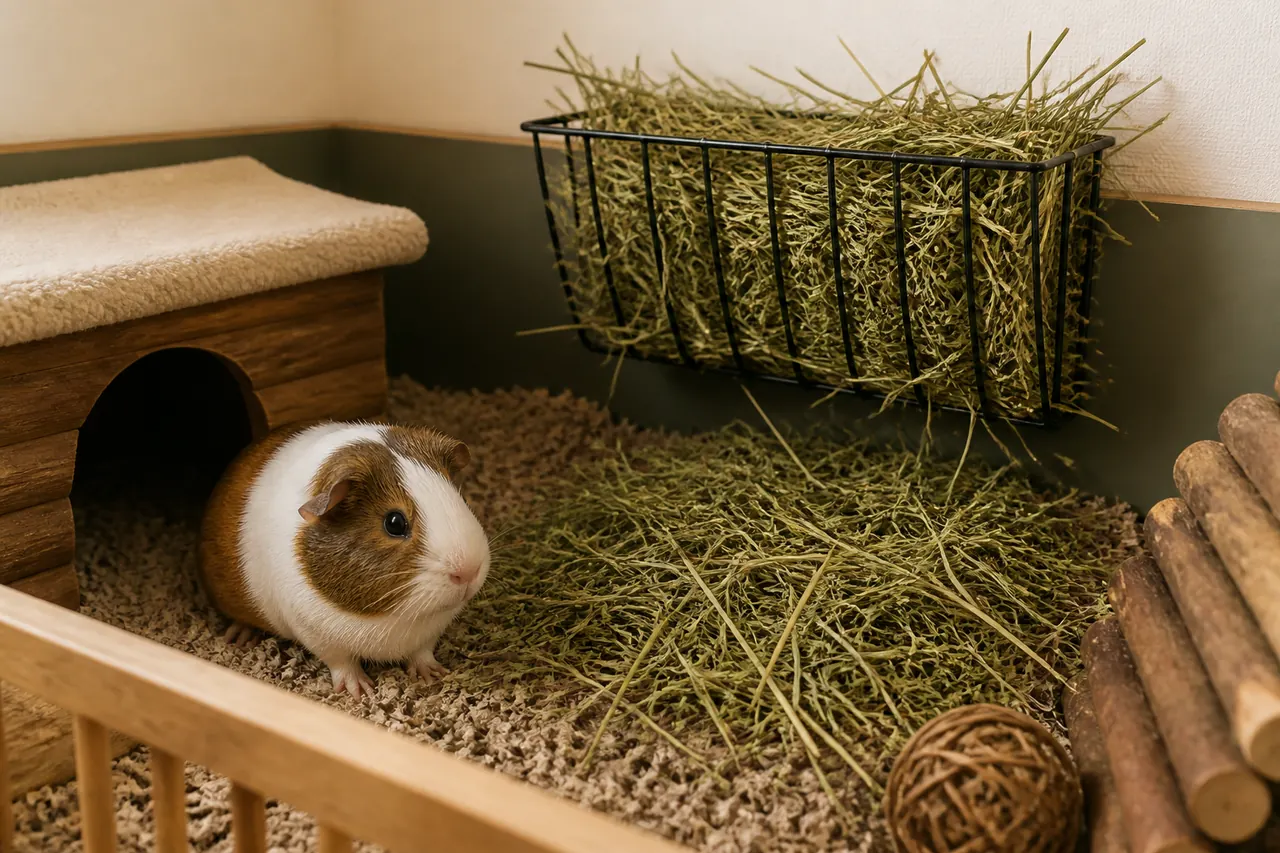
A hay feeder keeps strands off damp bedding and slows trampling, while a floor pile suits the way cavies graze: head down, at ground level, ideally sitting in the food. Use both, and spread the supply across two or three spots so lower-ranking individuals can eat in peace. Remove wet or soiled portions and replace them with clean hay, which also helps you tell normal waste from a genuine drop in appetite.
Alfalfa Hay: When Is It Appropriate?
Alfalfa is a legume, a different kind of plant from the grasses used for everyday adult hay, and it contains more calcium and protein. Veterinary guidance commonly reserves it for young, pregnant or nursing animals. Two bags can look much the same and still differ nutritionally, so check the plant type on the label.
If your pet has urinary, dental or digestive concerns, discuss the right hay with a vet, and never reduce access to long-strand hay unless a vet advises it. See the health guide for when appetite or chewing changes need urgent attention.
Keeping the Supply Fresh and Appealing
Buy an amount you can keep dry and use while it still smells fresh. Check each handful for damp or foreign material, and refresh feeding spots rather than piling new hay on old, soiled material.
Some pigs accept a new harvest without comment; others notice the change in smell and texture straight away, so a gradual switch between batches helps fussy eaters. If one turns its nose up, offer a handful from a fresh bag or try a softer or coarser cut, and keep monitoring how much is eaten, because appetite is a core health measure in these animals.
A sudden refusal is different from ordinary preference. If a pig stops eating, produces fewer droppings, drools, loses weight or seems uncomfortable when chewing, seek veterinary help promptly. Dental conditions such as malocclusion and digestive problems both affect appetite. Vegetables, pellets, vitamin C and fresh water all have their roles, but none replaces the long-strand hay that keeps teeth and gut working.
More on hay and pellets: alfalfa vs Timothy hay and guinea pig pellets.
Frequently asked questions
- Is it safe to leave hay in the enclosure all day?
- Yes. Hay should remain available as an essential food source throughout the day. Remove any wet or heavily soiled portions and replace them with fresh hay so your pet always has clean hay available.
- Can guinea pigs go 24 hours without hay?
- No. Guinea pigs need constant access to hay because their digestive system relies on regular fibre intake. If your pet stops eating hay even when a fresh supply is available, contact a vet promptly.
- Can it be used as bedding too?
- It can become part of the bedding as animals move it around, but material in sleeping and toilet areas becomes contaminated more quickly. Always maintain a separate, clean supply intended for eating.
- What if my pet only eats soft pieces?
- A preference for particular textures is not unusual. Try another cut or suitable variety rather than restricting access. A significant reduction in overall intake, particularly alongside weight loss or difficulty eating, needs veterinary attention.
- Are rabbit products suitable?
- Some plain products marketed for a rabbit may also be suitable, but always check the ingredients and quality rather than relying on the animal shown on the packaging. Blends sold for other species can include richer ingredients guinea pigs do not need, so read the label rather than the picture.