
Guinea Pig Enrichment Ideas to Keep Your Herd Busy and Active
Quick answer
Key facts
Keeping them busy means giving your piggies things to do that match how they naturally behave: searching for food, hiding, tunnelling, chewing and exploring, with company of their own kind and room to move.
- The RSPCA says they are inquisitive and, without enough to do, may get bored and suffer.
- Use their normal daily food for foraging games rather than adding extra treats.
- PDSA asks for an exercise area of at least 2m x 1m, and bigger is better.
- The RSPCA warns against plastic toys that can be chewed and swallowed.
The best guinea pig enrichment ideas cost almost nothing: hide their daily hay and forage so they have to work for it, give them boxes and tunnels to explore, safe wood to gnaw, and a big, changing space shared with a friend. Swap things around every few days so it stays new.
Keeping them busy sits alongside the everyday basics in our general care guide: food, housing, health checks and handling. This post is about the fun part, the things that fill their day.
Why guinea pigs need things to do
The RSPCA describes them as inquisitive animals that, without enough to do, may get bored and suffer. They are active for long stretches too: its ten facts page says they can be awake for up to 20 hours a day, which is a lot of hours to fill in a bare cage.
According to the RSPCA, a combination of space, toys and things to explore keeps them from getting bored, and they generally enjoy toys they can gnaw, forage or hide in. Those three words make a handy checklist for anything you add. Signs that one is unhappy, in the RSPCA's list, include hiding nearly constantly and chewing the cage bars.
Foraging ideas that use their daily food
Searching for food is the easiest instinct to tap into. The RSPCA Solent branch's suggestion is to take their daily allowance of nuggets or hay and offer it in different ways, and not to give too many treats when you do it. A handful of greens or the usual nuggets, scattered or hidden, keeps them busy without changing what they eat. Wood Green Pets Charity suggests a whole menu of homemade ideas:
- Kebabs and forage trees. Stuff cardboard toilet rolls with forage, thread them on a willow stick and stand a few in a cardboard box.
- Forage bags. Half-fill a paper bag with dried grass and mix in some forage. Cut the handles off first, as Wood Green advises.
- Plant pots. Hide food under an upturned pot so they have to work out how to reach it.
- Herb planters. Grow mint or lemon balm under an upturned hanging basket, so they nibble the leaves and the roots survive.
- Mock hedges. Hanging baskets or magazine racks packed completely full, so little legs cannot get trapped, then hung for browsing.
A paper bag of forage makes a surprising amount of noise for something so small, and rustling through it seems to be half the appeal. The Solent branch also lists stacking cups, forage mats, puzzle feeders and treat balls, and suggests mixing a small handful of a different hay, such as timothy, in with their usual one for a change of taste and texture.
Hides, tunnels and cardboard
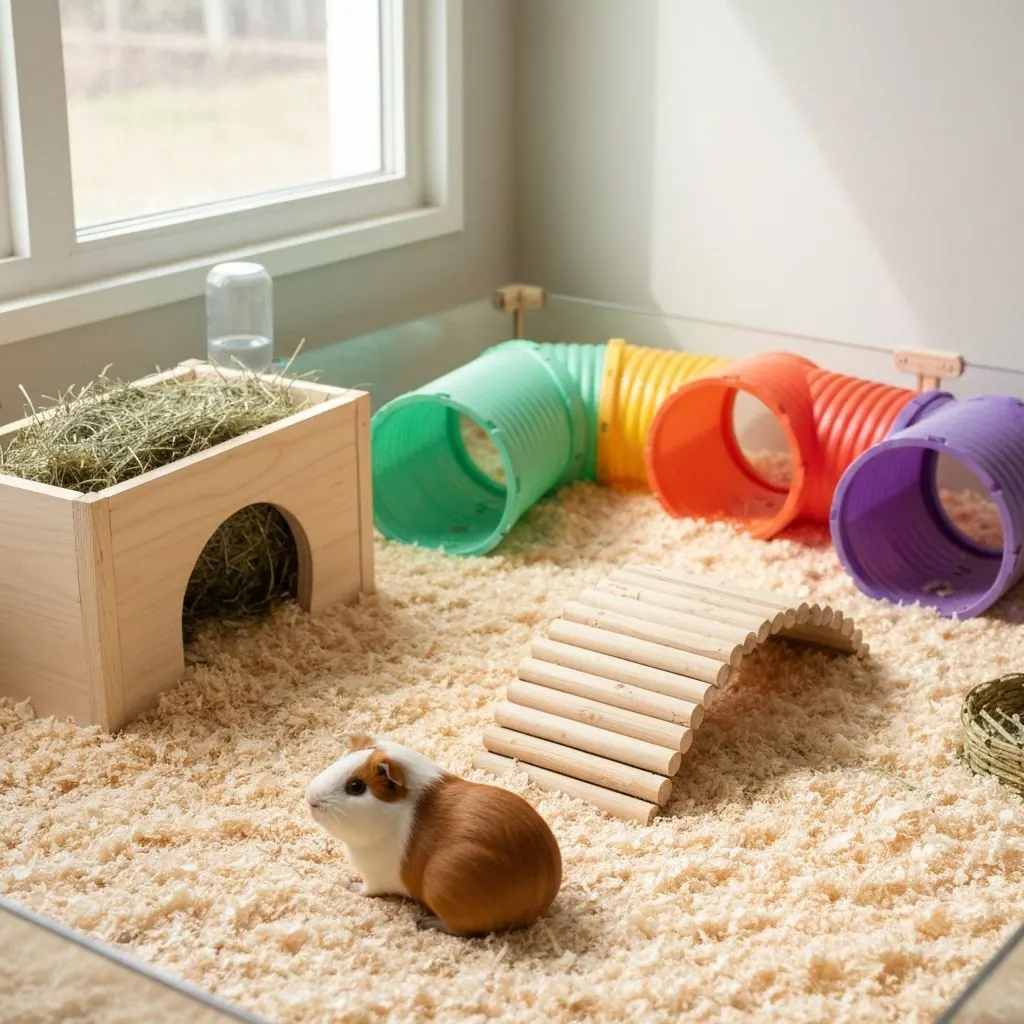
As a prey species, they need constant access to safe hiding places such as pipes and shelters, says the RSPCA, which also notes that they like to tunnel and need materials that allow it. PDSA asks for lots of tunnels, shelters and hides in their exercise area so they can move around confidently, explore and hide if they want to.
Cardboard is the cheapest option going. Wood Green's tip is to cut several piggy-sized holes in each box so there are multiple ways in and out, which matters when two of them decide they want the same box. The cheapest toy in the house is often the box your last online order arrived in, as long as you peel off any tape and labels first. Bendy stick bridges make good hiding spaces too, Wood Green says, and a cat carrier lined with newspaper and plenty of bedding works as a ready-made den.
Things to chew
Wood Green notes that they love gnawing on apple tree branches and willow twigs. Its stick bundle idea is simple: tie 10 to 12 willow or apple sticks tightly round the middle and hang the bundle where they can reach it. Shop-bought willow balls offer the same wood in another shape. The RSPCA's warning is the one to remember when shopping: plastic toys that can be chewed and swallowed are unsuitable. Pet-shop shelves still carry plenty of brightly coloured plastic, and a lot of it ends up as something to walk around.
Space, company and exploring
No toy makes up for a cramped home or a lonely one. PDSA says they need a large hutch and constant access to a big exercise area, at least 2m x 1m and ideally a grassy one, moved regularly so there is fresh grazing. The BSAVA guide adds that there are significant health benefits to letting them graze on grass and get regular sunlight, and suggests a mobile run or ark for herds kept mainly indoors. Supervised floor time indoors is another option, which we cover in a separate post.
Room to move does more than pass the hours. The BSAVA guide links exercise space to avoiding obesity and osteoporosis, and says free roaming indoors should only happen under strict supervision. Outdoors, PDSA asks you to keep the exercise area from getting too wet or muddy, with no standing water, and to move it each day if it gets dirty or much of the grass has been eaten. A fresh patch of lawn is new ground to explore and graze.
Company matters just as much. The RSPCA calls them very social animals that need to interact with other friendly guinea pigs, and says many also enjoy playing with people. Its ten facts page adds that gentle handling from an early age helps them stay calm around people, so quiet time with you is part of the mix too.
Keep it fresh: rotate and rearrange
The RSPCA Solent branch recommends toy rotation and changing things around in the enclosure. Move a hide to the other end, swap a tunnel for a box, put the forage somewhere new. You do not need a big budget, just a habit of changing a few things every few days.
Expect a few flops: the toilet-roll kebab you spent ten minutes making may be ignored in favour of the box it was standing in. That is useful information, so make more of what gets used and recycle the rest.
Introduce new things gradually. The RSPCA explains that, as prey animals, they tend to freeze when they meet something unfamiliar, and that hiding places help them feel secure, so put a new box or bag near a familiar hide rather than in the middle of open floor. You will soon see whether it is working. The RSPCA says popcorning is often thought of as the happy little jump they do when excited, and the loud “wheek-wheek” as a sound of excitement. A herd that is out exploring, rustling and chewing through the day is a herd with enough to do; one that stays tucked away or gnaws the bars needs more space, company or variety.
What to avoid
The Solent branch says to do your research before offering anything new, to make sure it is suitable. A few rules cover most things:
Swallowable plastic is out, as the RSPCA warns. Check that hanging baskets and racks are packed so legs cannot get caught. Remove handles, tape and staples from anything paper or cardboard. Keep extras small, since foraging works perfectly well with their normal food. Clean toys and shelters along with the rest of the home, which PDSA reminds owners to do. Finally, avoid hard or cold surfaces in any play area; PDSA says concrete and very hard floors can give them sore feet.
More on everyday guinea pig care: guinea pigs and rabbits living together, how to weigh a guinea pig, whether guinea pigs can live alone and picking up a guinea pig safely.
Frequently asked questions
- What is the easiest activity to start with?
- Hiding part of their normal daily food in a cardboard box, paper bag or upturned plant pot. It costs nothing and uses an instinct they already have.
- Do they actually play with toys?
- The RSPCA says they generally enjoy toys they can gnaw, forage or hide in. Balls and plastic gadgets tend to matter far less than food, hides and space.
- How often should I change their set-up?
- Little and often. Rotating toys and moving hides around every few days keeps the space interesting without unsettling them.
- Are cardboard boxes safe?
- Plain cardboard is widely used. Remove tape, labels and staples, cut more than one doorway, and replace boxes once they are soiled or chewed down.
Sources
- RSPCA, Behaviour and needs and Ten facts before getting them (checked 22 November 2026).
- RSPCA Solent Branch, Enrichment ideas (checked 22 November 2026).
- Wood Green Pets Charity, How to make them feel at home (checked 22 November 2026).
- PDSA, The ideal home (checked 22 November 2026).
- BSAVA PetSavers, PetSavers care guide (2015) (checked 22 November 2026).