
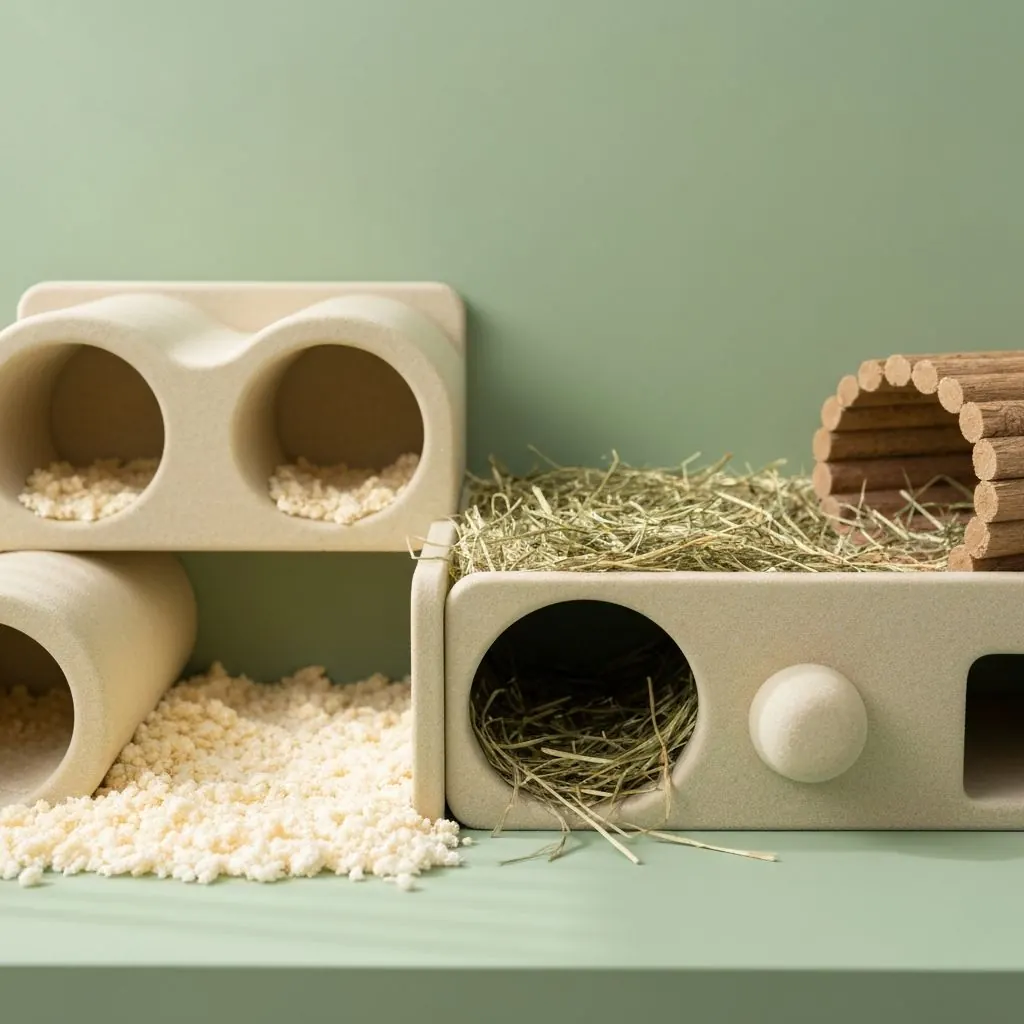
Why Does My Guinea Pig Cage Smell? Causes, Fixes and Vet Signs
Quick answer
Key facts
The sharp odour is ammonia from urine left sitting in damp litter. A daily scoop of wet patches, an absorbent dust-free floor covering, a weekly strip-out and good airflow deal with it. An odour that follows one animal can be a health sign.
- The RSPCA asks for a daily spot tidy and a thorough going-over at least once a week.
- BSAVA PetSavers says the floor covering should be changed often enough to keep damp out and stop ammonia building up.
- The PDSA says deodorising chemicals are not suitable for small pets.
- Blood in the wee, straining or squeaking when weeing, or wetness and odour around the back end all need a vet.
The sharp, catch-in-the-throat odour from an enclosure is ammonia, given off as urine sits in damp litter. Lift wet patches every day, use an absorbent, dust-free floor covering, strip it out weekly and keep fresh air moving, and the pong usually goes. If it follows one animal, call your vet.
Sometimes the cause is the setup, sometimes the routine, and now and then it is one of the piggies who needs a check-up. This guide works through each in turn. Our cleaning out guide has the full daily and weekly routine step by step, so here we stay with finding the source and fixing it.
Where the whiff comes from
Work out what you are smelling before you buy anything new. Get your nose close to a few spots: the corner they use as a toilet, the floor under each hide, the patch below the water bottle and the hay pile. One of them will usually be worse than the rest, and that tells you where to start.
- Urine and ammonia. Wee left in damp litter gives the classic eye-watering odour. BSAVA PetSavers says the floor covering needs changing frequently to keep the environment free of damp, reduce the build-up of ammonia and clear away droppings.
- Leaky bottles. Wood Green Pets Charity notes that bottles can often leak and are tricky to scrub out. A bottle that drips slowly through the night can leave one corner wetter than anything the piggies manage on their own.
- Old food. The PDSA advises throwing away uneaten fresh food and nuggets every day so it does not go stale or mouldy. Greens pushed under a hide are easy to miss.
- Wet hay. A hay pile that sits in the toilet corner or under a drip soaks up wee and turns musty. Start from good hay as well: Wood Green warns against short, brown or yellow, dusty-smelling hay.
- The residents themselves. A veterinary nursing article by Virginia Richardson explains that all of them have a grease gland on the rump, more prominent in males, which produces a black grease that sticks to the coat. Because the gland is more prominent in boars, give his rump a quick look whenever you pick him up before you blame the litter for every whiff.
Wood Green adds a job that is easy to overlook: males over a year old need their penis area cleaned gently with damp cotton wool every few months. Left alone, a cheese-like build-up can form and stop them weeing normally, and that area can carry a strong odour long before anyone thinks to look.
Bedding that cannot keep up
The floor covering has one job in this story: pull wee away from feet and hold it until you lift it out. The RSPCA recommends dust-free, absorbent wood shavings supplemented with hay, and BSAVA suggests a floor covering 2 to 5cm deep, which is a lot more than the thin sprinkle some cages come with. The PDSA guide to lining enclosures describes several absorbent options:
- compressed paper litter, which it calls softer and less dusty than sawdust and says soaks up wee well;
- soft wood-pulp litter sold in bales for horses, which it says keeps odours low;
- vetbedding, a thick veterinary fabric that absorbs wee away from your piggy and is used by many indoor owners.
On top of the absorbent layer, the PDSA suggests fresh hay, straw or shredded paper for snuggling into, and the RSPCA wants that bedding to be safe to eat, such as dust-free hay. Sawdust is the one to skip: the PDSA says it can irritate the lungs because it is very dusty. The Vet Times article mentioned below also advises avoiding cedar shavings, citing anecdotal reports of breathing and skin effects in several small species.
Whatever you pick, look for “dust-free” or “dust-extracted” and untreated. The PDSA warns that dusty materials can cause breathing problems in small pets, and in a separate article it suggests paper-based litter or fabric as lower-dust choices. If you use fleece liners, keep a spare set so a wet one can come out the same day, in the same way the PDSA asks for wet shavings to go daily.
The PDSA also notes they can be litter trained. A shallow tray of absorbent litter in the corner they already favour, with a hay rack beside it, gathers most of the wee into one place you can lift in seconds. Scented litters and “fresh linen” sprays mostly add a second perfume on top of the first, and the PDSA says plainly that deodorising chemicals are not suitable for small pets.
A cleaning routine that keeps on top of it
The RSPCA says spot cleaning should happen daily, with a deep clean at least once a week, and that how often you do the big job depends on the size of the enclosure and the number of animals in it. A Vet Times article on rodent respiratory disease by Elisabetta Mancinelli goes further for rodents in general, suggesting at least twice weekly, without causing stress.
Every day: these four jobs take a few minutes once you have a dustpan, a small brush and a bag for the compost or bin kept next to the enclosure.
- Lift out any wet or dirty shavings and litter, as the PDSA advises.
- Bin leftover fresh food and nuggets before they turn.
- Wash the food and water containers before refilling them. BSAVA says water in sipper bottles must be replaced daily, because they can spit back into the tube, and the mechanism checked.
- Pull out any soggy hay and top the rack up with fresh.
There is no litter clever enough to replace the daily scoop, so budget five minutes with a dustpan and the weekly job stays a small one.
Every week, and a full strip monthly: the PDSA asks for a more thorough going-over of the hutch once a week. Once a month it suggests emptying it completely, scrubbing it inside and out with a cleaner that is safe for animals, and scrubbing the toys, shelters and other accessories too. Its key point is the last one: only let them back in once everything is completely dry, because damp left under fresh litter is the start of the next bad odour. Hides, tunnels and hay racks collect wee underneath, so lift and check them every time.
If the tray has a chalky white crust that will not shift, that is urine scale, which needs its own method, linked at the end of this guide.
Runs and exercise areas count as part of the home. The PDSA suggests moving an outdoor exercise area each day, especially if it gets dirty or muddy, and ideally using grass with no standing water. A run left on the same churned patch for a week will start to niff whatever you do indoors.
Indoors, the same thinking applies to free-roam time. BSAVA advises that roaming indoors is only strictly supervised, and a puddle soaked into a rug or the gap behind the sofa can be the whiff you are blaming on the enclosure, so check where your piggies have been playing as well.
Reading the odour: a quick troubleshooter
Once you have sniffed round, match what you found to the likely cause. These are the patterns the sources above point to, and the fix for each.
- Sharp and back within a day of a full strip-out. Too little litter to hold the wee, or the toilet corner is not being lifted daily. Deepen the floor covering towards the 2 to 5cm BSAVA suggests and add a litter tray in that corner.
- Musty or sour rather than sharp. Old food, damp hay or mould somewhere. The PDSA wants hay and litter kept free of mould, so check under hides and behind the hay rack.
- One soaked corner. Usually a drip from the bottle or a favourite toilet spot. Test the bottle over a sink, and put the most absorbent litter where they go most.
- The odour is on an animal. Check the rump and back end. The veterinary nursing article above notes they often get soiled or matted with litter around the rump, and Wood Green lists wetness and odours there as things to watch.
- Odour plus loose droppings. BSAVA lists diarrhoea among the signs of illness that mean contacting a vet, so treat it as a health question first and a housekeeping one second.
Air, space and the size of the cage
The same Vet Times article says ventilation and cage cleanliness are particularly important for controlling the build-up of ammonia, and lists overcrowding and poor ventilation among the housing problems behind breathing disease in rodents. The RSPCA asks for indoor housing that is well-ventilated and away from direct heat sources.
Room conditions count too. BSAVA puts the ideal range at 16 to 24°C with a relative humidity of 30 to 70%, so a steamy utility room or a spot by the radiator is a poor home on more than one count. It also advises keeping them away from fumes, such as from smoking, fires or cars. We would keep plug-in fresheners and room sprays away from the enclosure for the same reason.
Space matters as well. More animals on less floor means more wee per square foot, so small cages whiff faster, which is why the RSPCA links how often you deep clean to enclosure size and group size. Open a window in the room when you do the weekly strip so the air clears quickly. Outdoors, the PDSA wants a hutch that is weatherproof and raised off the ground, and BSAVA says raising hutches helps avoid damp and draughts. Your nose is a better gauge than the calendar: if the odour reaches you as you open the door, the routine needs tightening, whatever day of the week it is.
When a smelly guinea pig is a vet problem
An enclosure that whiffs after a missed scoop is a housekeeping problem. A change you cannot explain is different, especially when the odour follows one animal rather than one corner. Wood Green asks owners to keep an eye out for wetness around the back end, weight loss, odours and small amounts of blood in the urine. It also says keeping the enclosure tidy, free of damp and lined with the correct bedding helps reduce skin problems, so a tidy home pays off in more than one way.
- Weeing problems. The PDSA lists blood in the wee or around the enclosure, and straining or being vocal when urinating, as signs of bladder trouble. Wood Green says even one painful squeak while toileting can be a warning sign.
- Changes in the wee itself. Langford Vets lists straining, blood, or a change in urine content or colour. It explains that excess calcium in the diet leaves the body in urine and can cause sludgy pee in the bladder, which may lead to crystals or stones.
- Impaction in older boars. Wood Green says this can affect males from about three years old: the anus bulges and a large ball of droppings appears to be blocking it. It is smelly and can be fatal if missed.
- Breathing signs. Noisy breathing, discharge from the eyes or nose, or difficulty breathing. The PDSA warns that upper respiratory infections can quickly become fatal if left untreated, and says a regular tidy and dust-free litter help lower the risk.
- Flystrike risk. The RSPCA asks owners to check the area around the rear twice a day in warm weather to help prevent flystrike.
More on cleaning: removing urine scale from a guinea pig cage.
Frequently asked questions
- How often should I clean out the enclosure?
- The RSPCA asks for a daily spot tidy and a thorough going-over at least once a week, more often for a small cage or a bigger group.
- Can I use an air freshener or scented litter?
- Best not. The PDSA says deodorising chemicals are not suitable for small pets, and that dusty materials can cause breathing problems.
- Do boars have a stronger odour than sows?
- Both have a grease gland on the rump, but it is more prominent in males and its black grease sticks to the coat. Wood Green also advises gently wiping around the penis of males over a year old every few months.
- Is a strong ammonia odour harmful?
- Vet Times notes that ventilation and cleanliness matter for keeping ammonia down, and the PDSA warns that respiratory infections can quickly become fatal. Noisy breathing or a runny nose needs a vet.
Sources
- RSPCA, Guinea pig environment and health (checked 21 November 2026).
- PDSA, The ideal home for your guinea pig, Lining your pet's cage and Five common health problems in guinea pigs (checked 21 November 2026).
- Wood Green Pets Charity, Your guinea pig's health: what to look out for and Your day-to-day guide (checked 21 November 2026).
- BSAVA PetSavers, Guinea Pig Guide (checked 21 November 2026).
- Langford Vets, Bladder stones in guinea pigs (checked 21 November 2026).
- Vet Times, Elisabetta Mancinelli, Respiratory diseases in rodents (checked 21 November 2026).
- British Veterinary Nursing Association, Virginia Richardson, Management of skin conditions in guinea pigs (checked 21 November 2026).